Only 16 weeks to repair flood bank on the Derwent.
Our impact
16
Project duration – inception to delivery
2310 t
Locally sourced rock armour placed
238
Loads of specialist waste discharged
4370 t
Tonnes of silt removed
Tonnes of silt were removed.
Storm damage
Following winter storms, signs of slippage on a flood bank on the River Derwent in Derby appeared. Environment Agency surveys revealed a 30m long, 6m wide scour trench on the riverbed, with a depth of 7m, with significant erosion to sections of the riverbank.
Urgent works were required to stop further erosion and prevent potential future destabilisation of the raised flood embankment.
Failure of the bank would pose a significant risk, as it protects major infrastructure: including an ambulance depot, a sewage treatment works, a major carriageway and a number of critical industrial sites utilising chemical processes, which would become toxic if introduced to the watercourse.
Jackson and its supply chain were engaged with a remit to start within weeks. The project had to be finished before the salmon spawning season at the beginning of October, allowing a 16-week-window to complete the works.
Balancing act: Vehicle movements are restricted to protect wildlife including over-wintering as well as nesting birds.
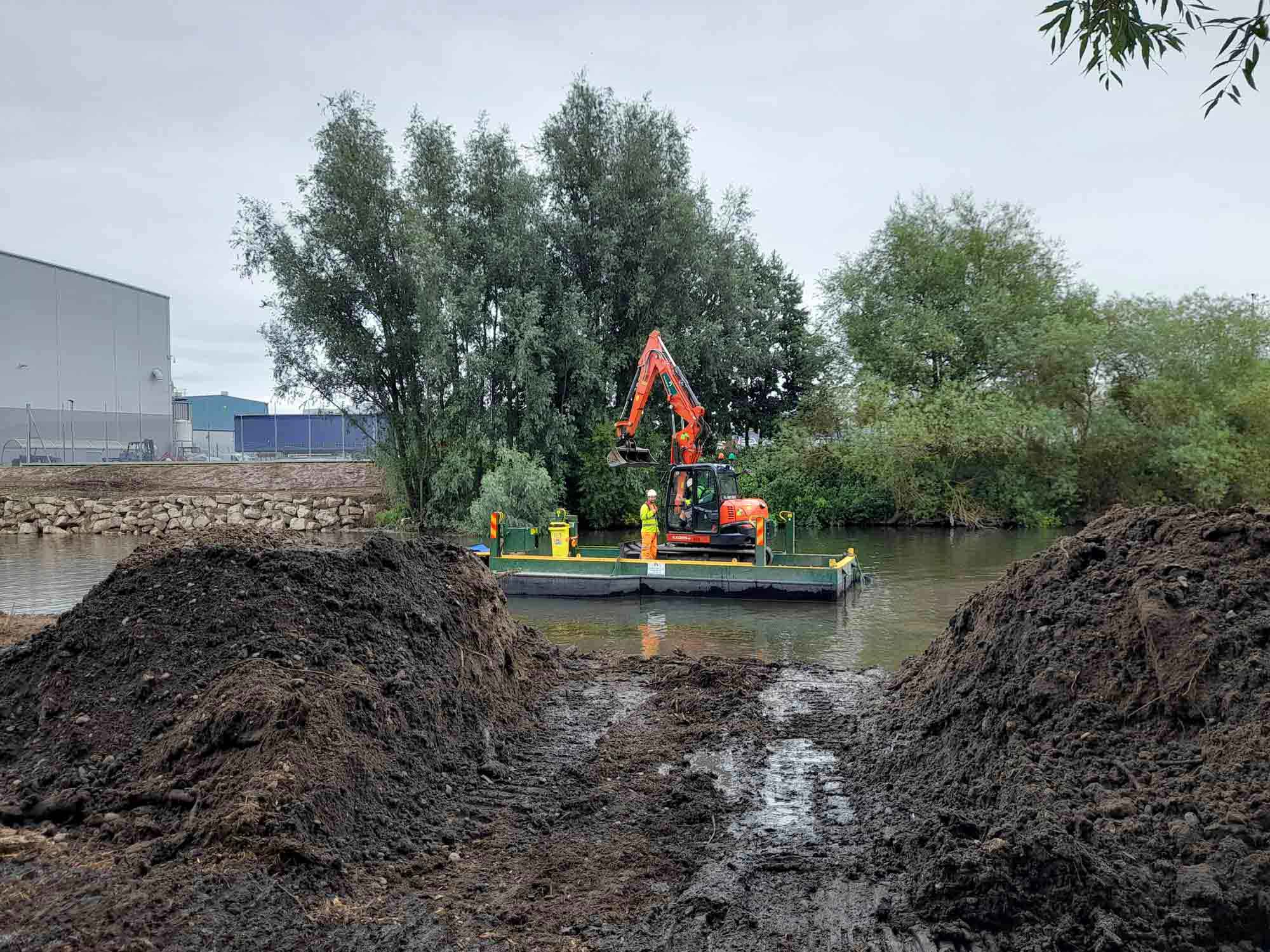
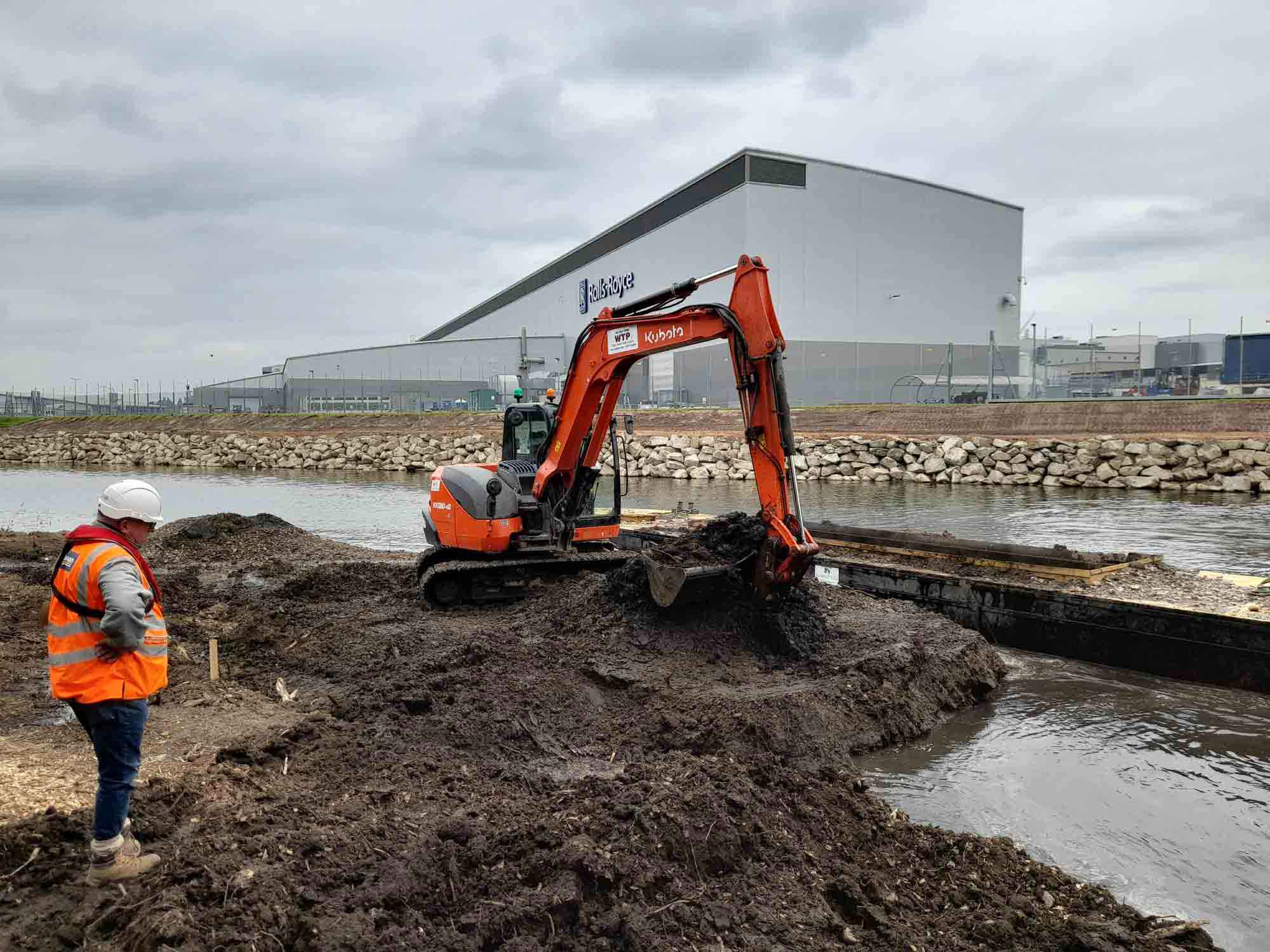
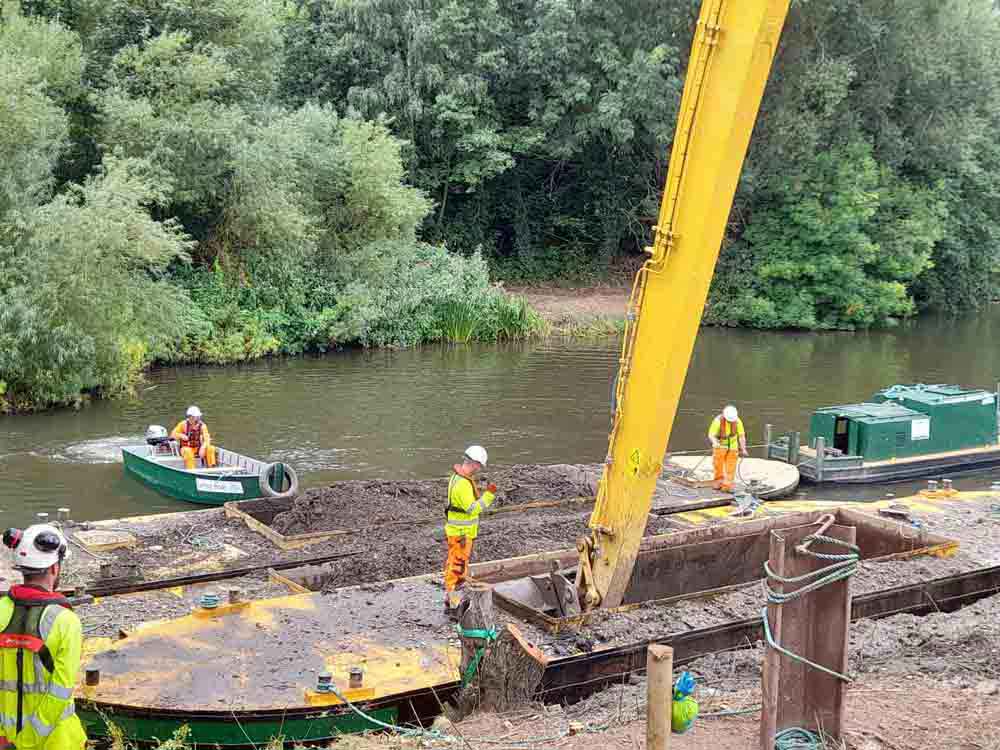
Barges were used to transport the silt downriver.
Cranes and crayfish
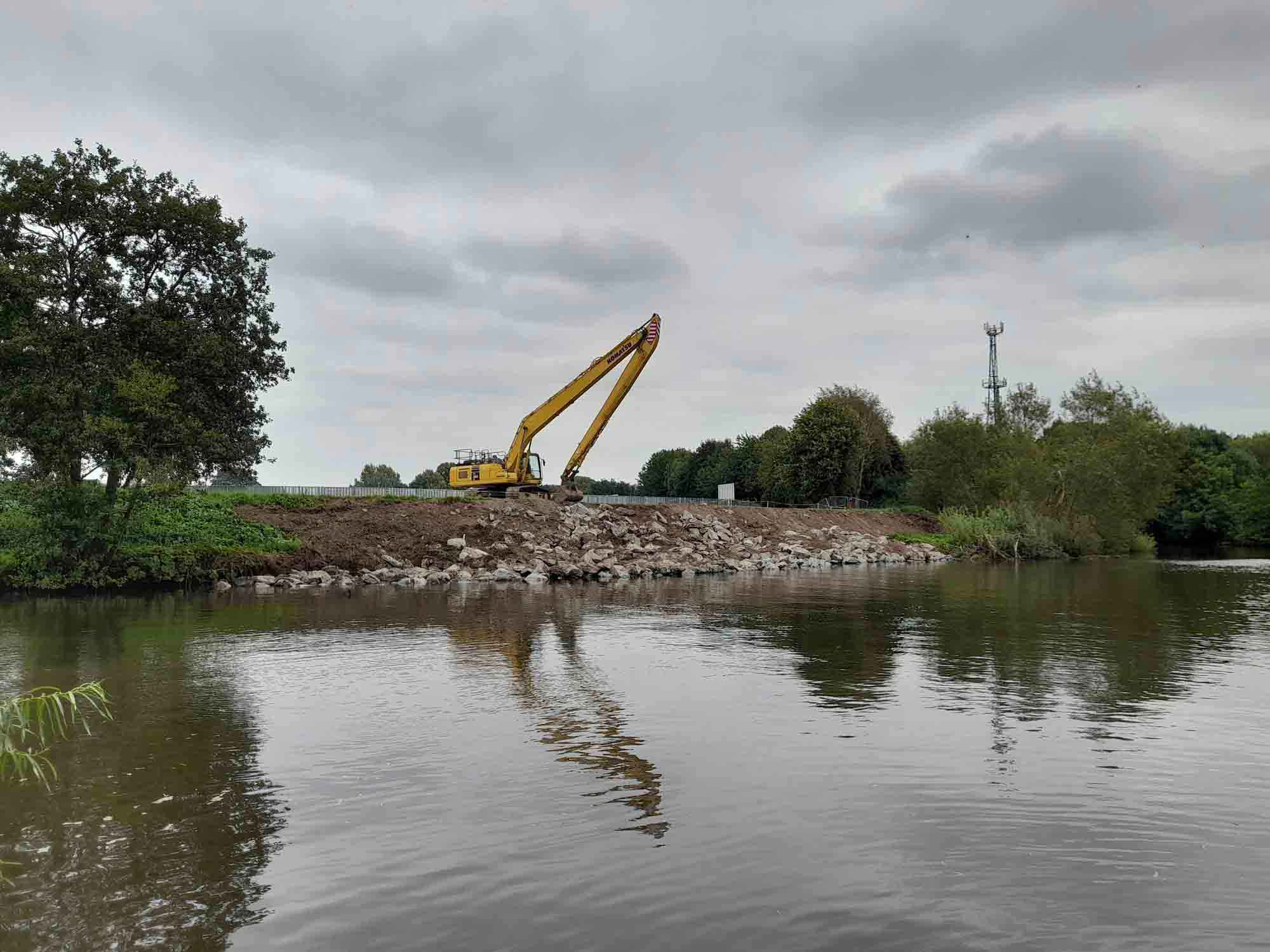
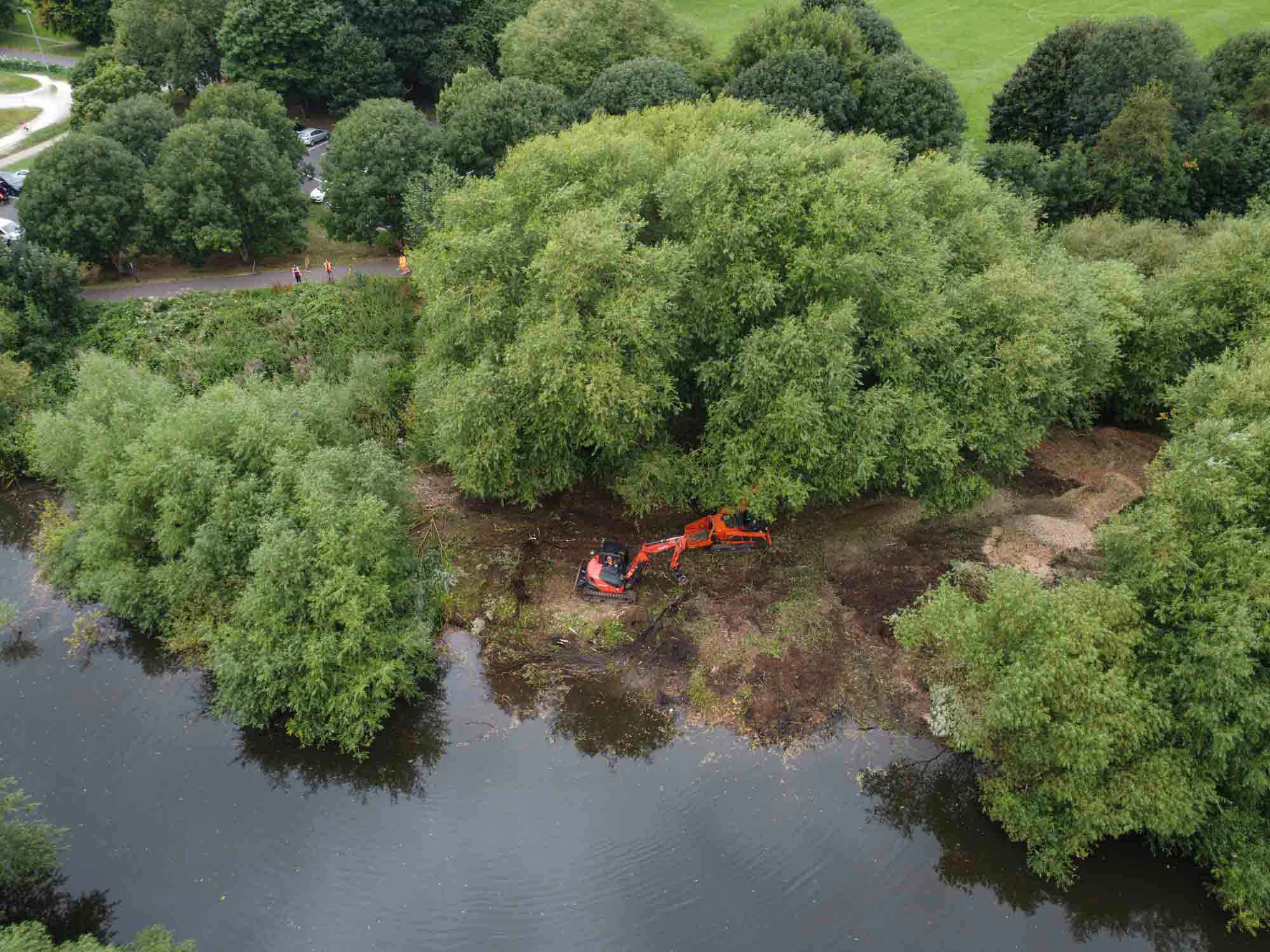
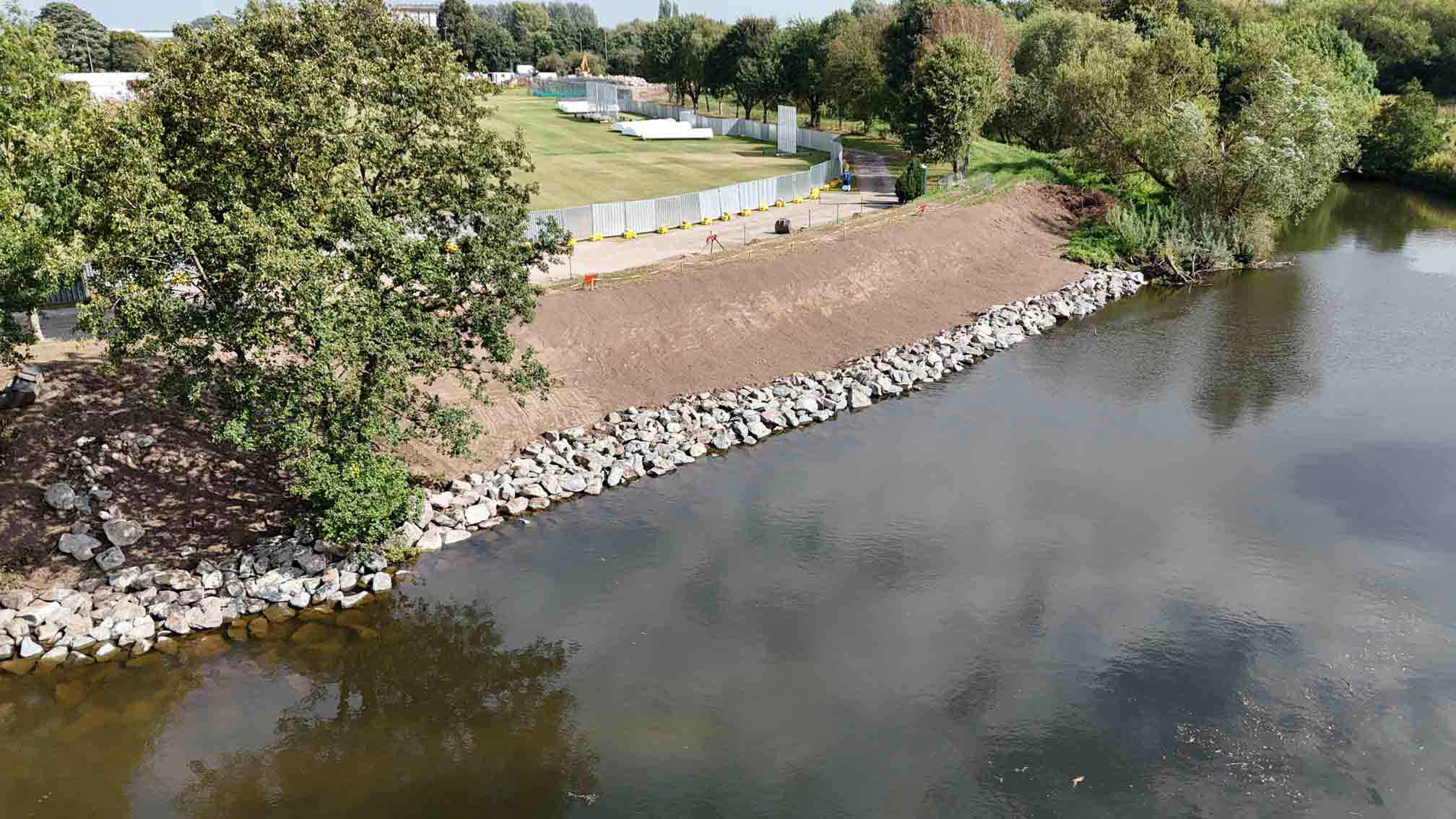
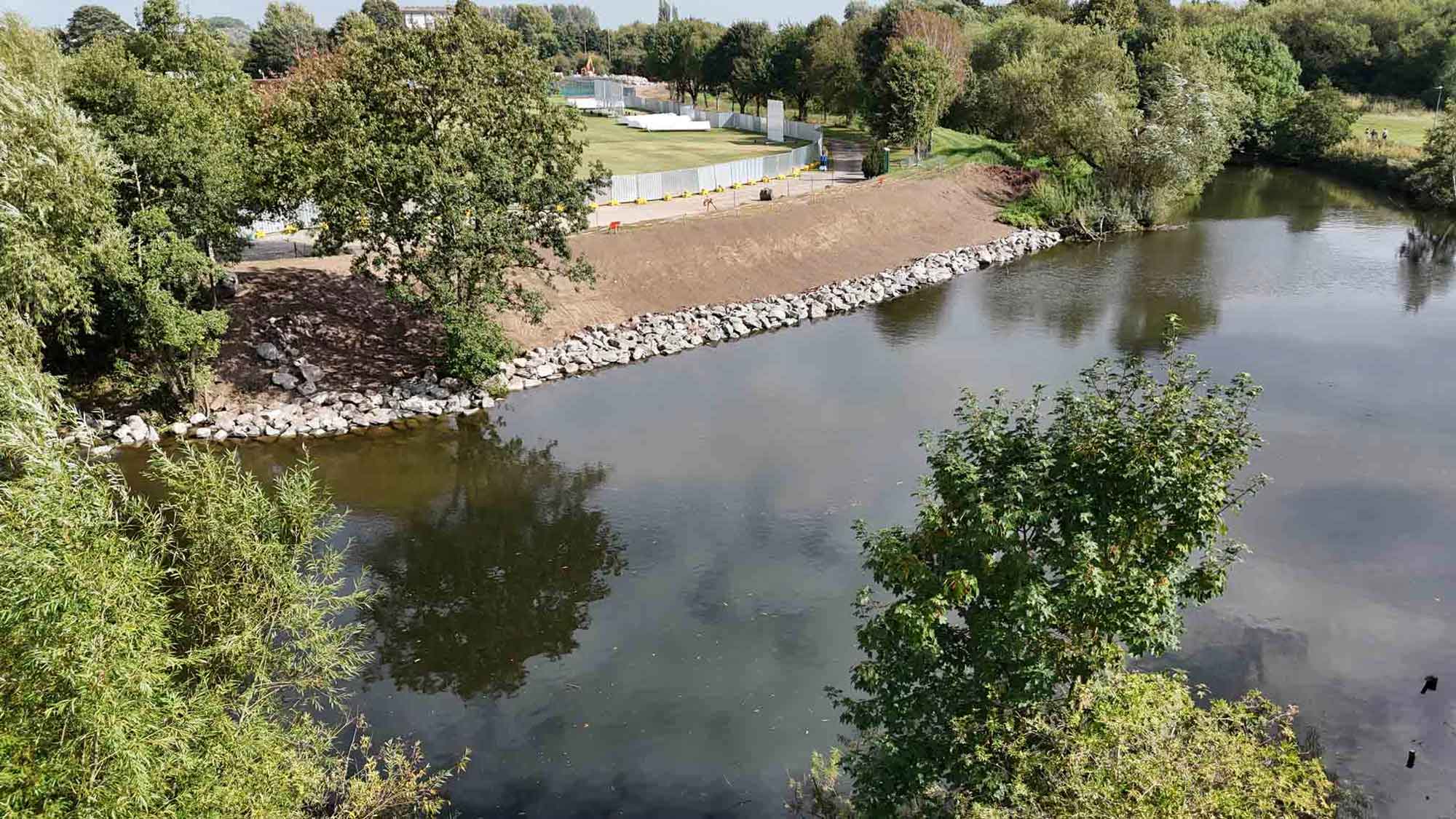
After extensive vegetation clearance on the west bank, the team removed 4,370t of silt from the bank and river, and placed 2,300t of rock armour on the east bank.
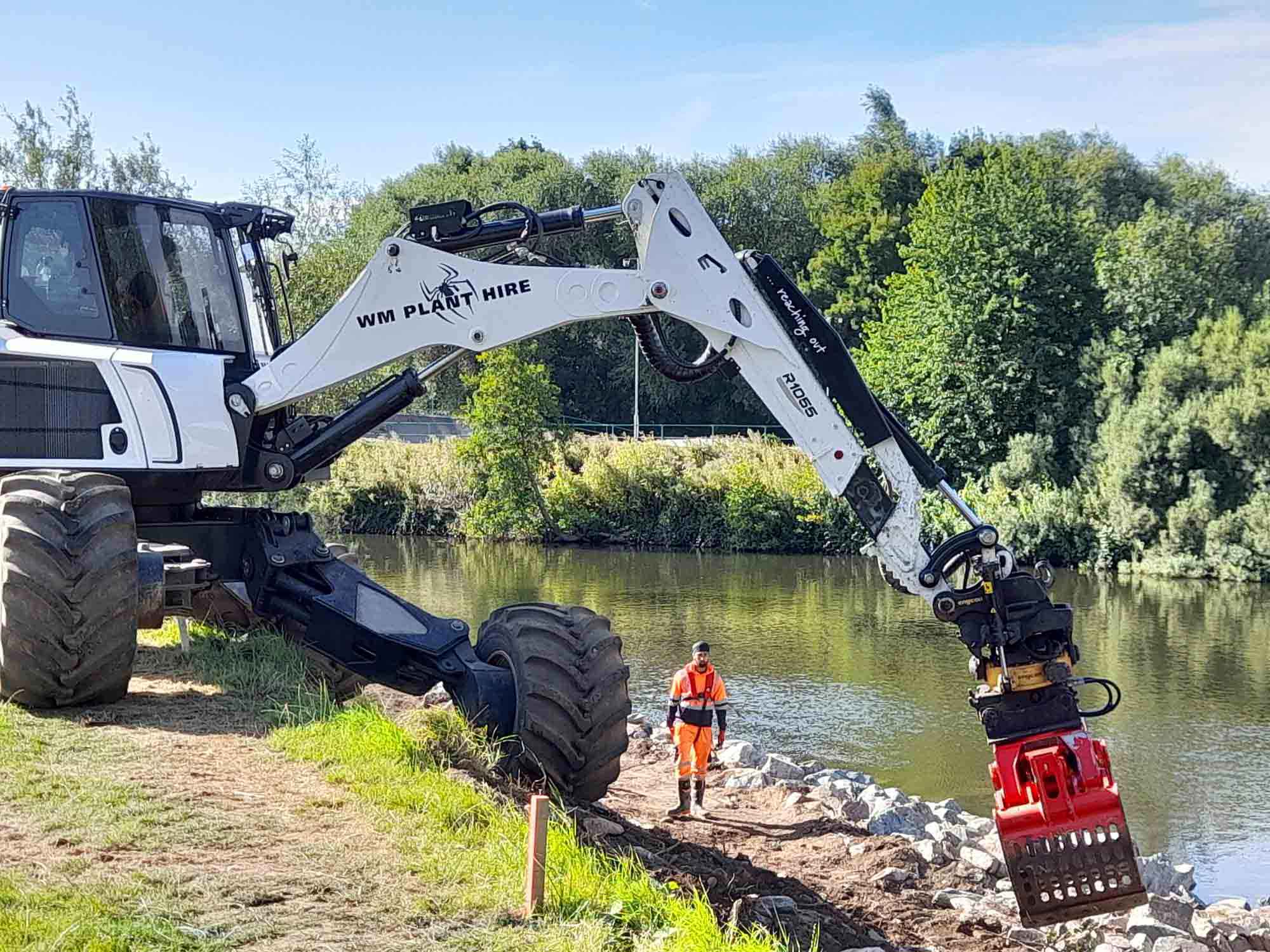
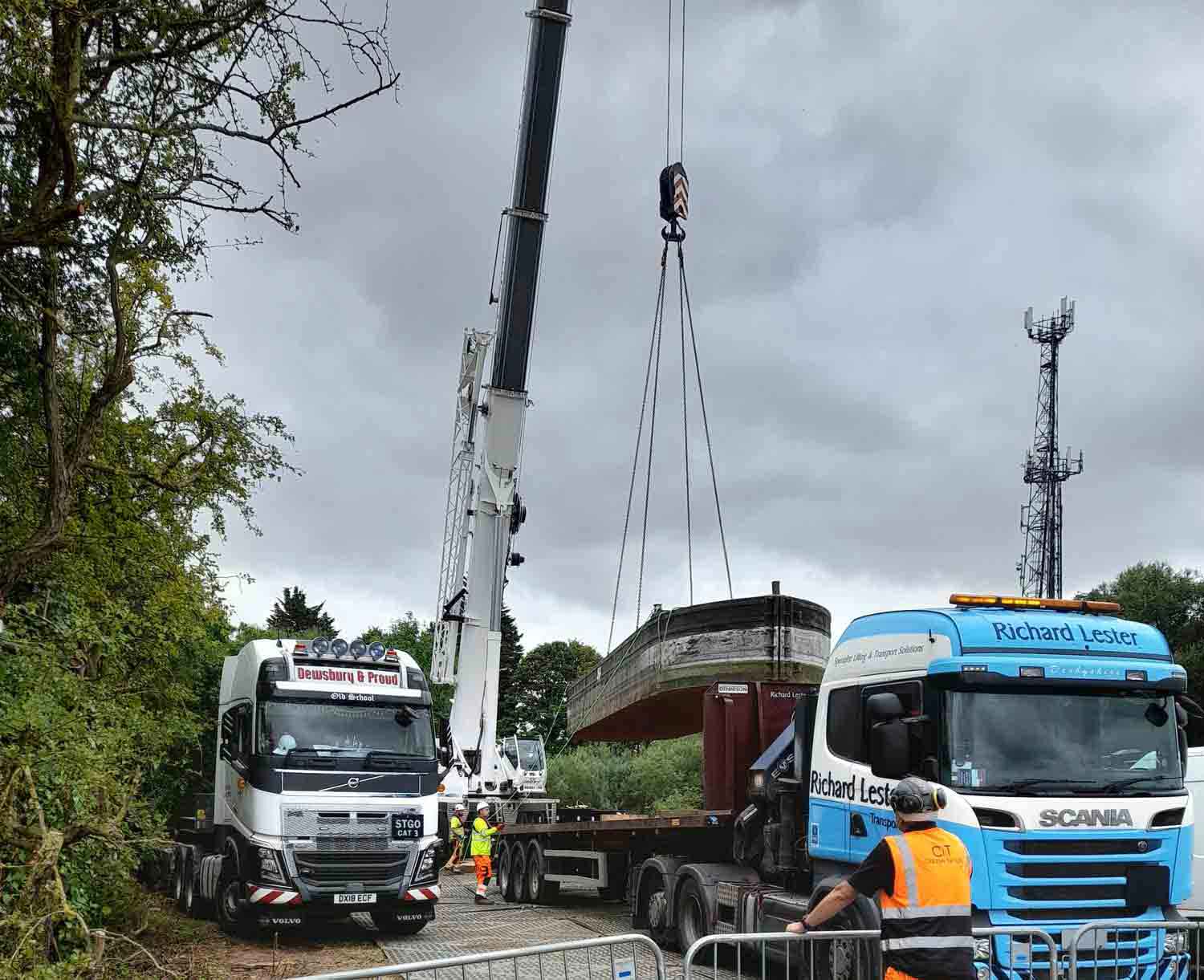
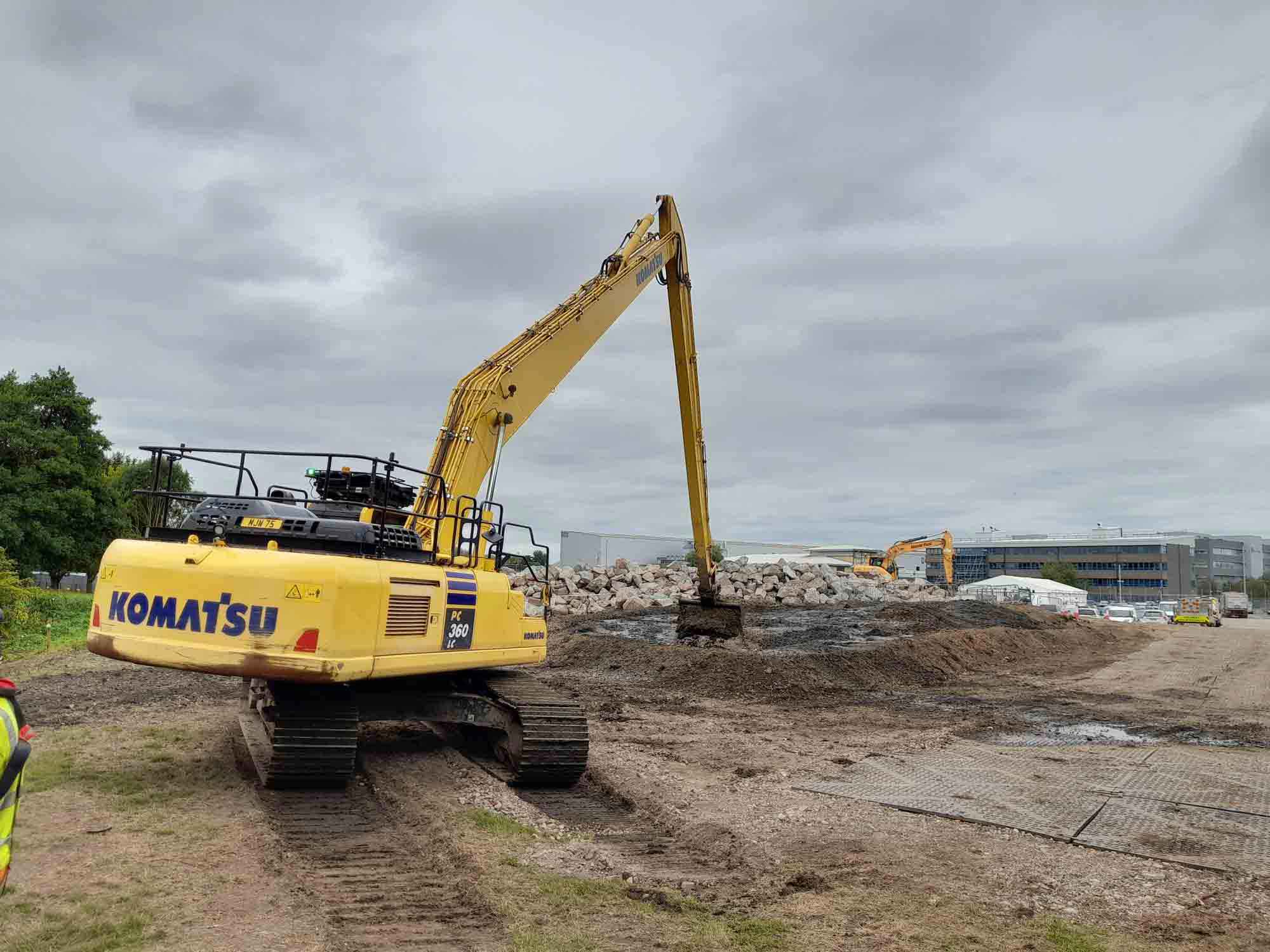
The specialist plant utilised on the project included a 300t crane, a 35t long reach excavator, a 15t spider excavator, five barges with 30t capacity and a pontoon-mounted excavator. A full-time water safety team was also on hand.
The barges were used to transport the silt downriver to a compound where it was lifted onto land by a long-reach excavator. The silt contained non-native signal crayfish and native white-clawed crayfish, as well as invasive Himalayan balsam, so had to be carefully monitored before being discharged to a specialist waste facility in Peterborough.
Liaising with neighbours
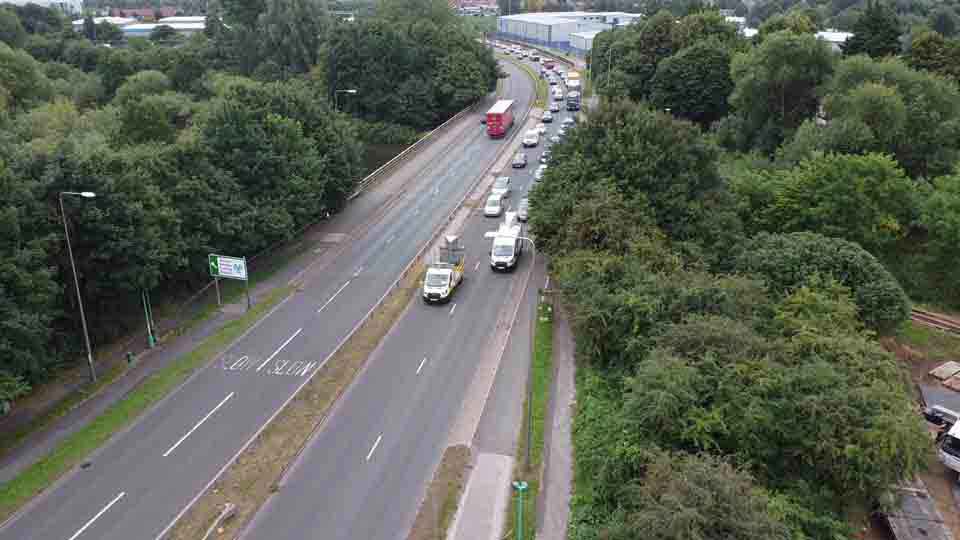
With no slip road out of the compound, rolling roadblocks were employed to slow the traffic on the A5111 to enable the 30t trucks to get onto the road.
The project involved intensive stakeholder engagement with a neighbouring cricket club, car firm BCA and the owners of a nearby BMX track, which hosted the National Championships during this time.
The project was successfully completed weeks before October 1st – the cut-off date for the river works due to the start of the salmon spawning season.
The team placed 2,300t of rock armour to build up the bank.