Infrastructure works on the largest business and logistics park in East Anglia.
Our impact
50,000
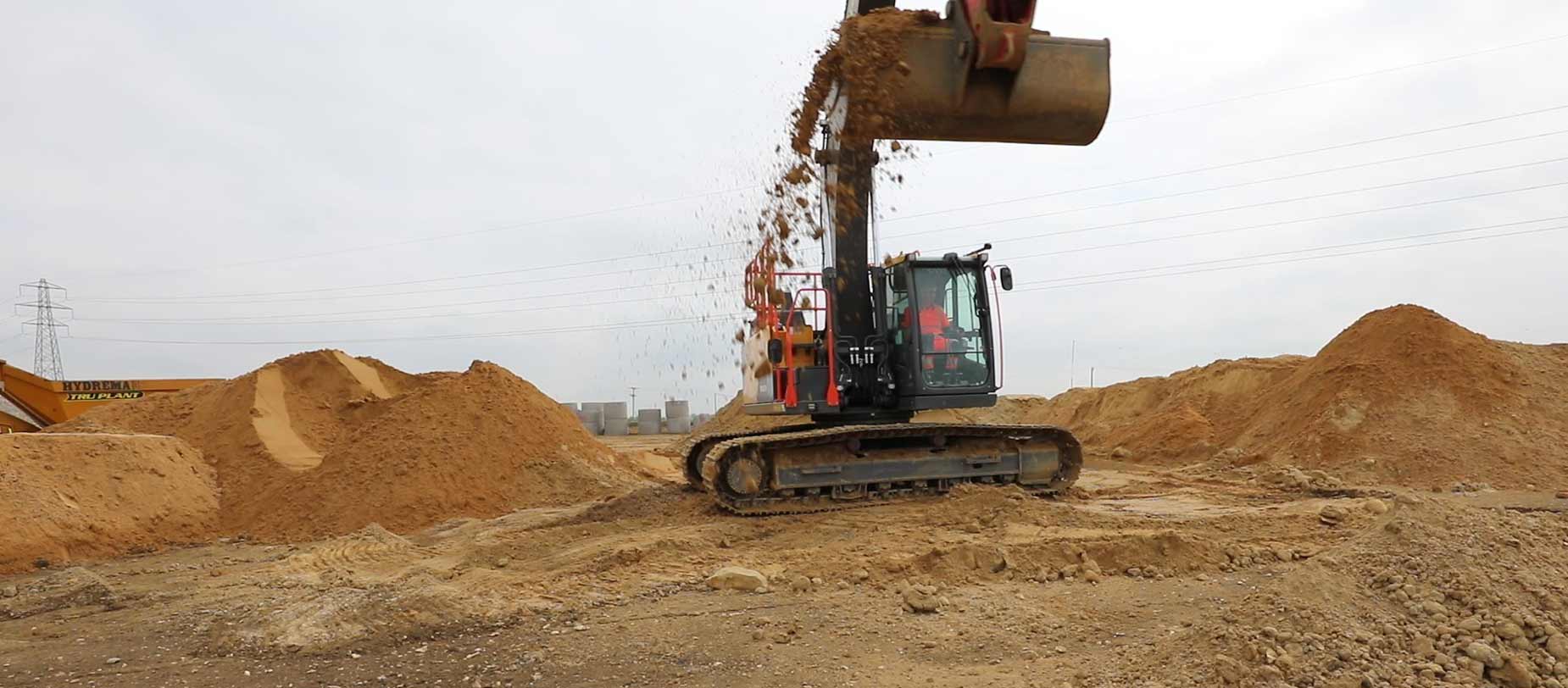
50,000m3 excavated material remained onsite
6250
Estimated number of ‘muckaway’ lorry movements avoided
16,000
16,000m2 of type 1 aggregate not needed
20
Days cut from programme by using large auger
Jackson oversaw the delivery of a series of infrastructure works at Gateway 14.
The largest of its kind in East Anglia
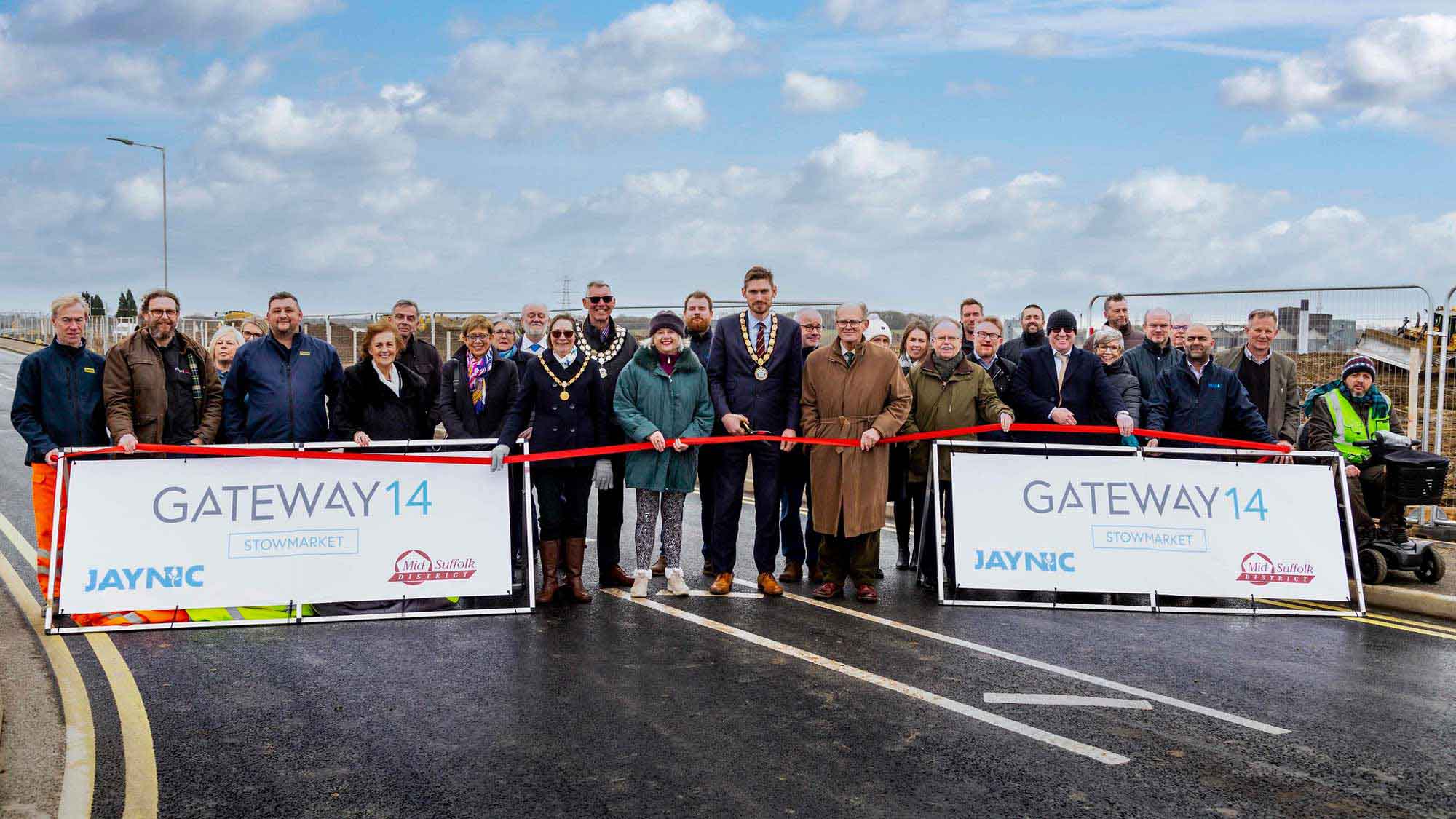
With our head office located in Ipswich, Suffolk, we were delighted to win the contract to deliver a series of infrastructure works for the new low-tax, low-regulation zone Gateway 14 – a handful of miles down the road near Stowmarket.
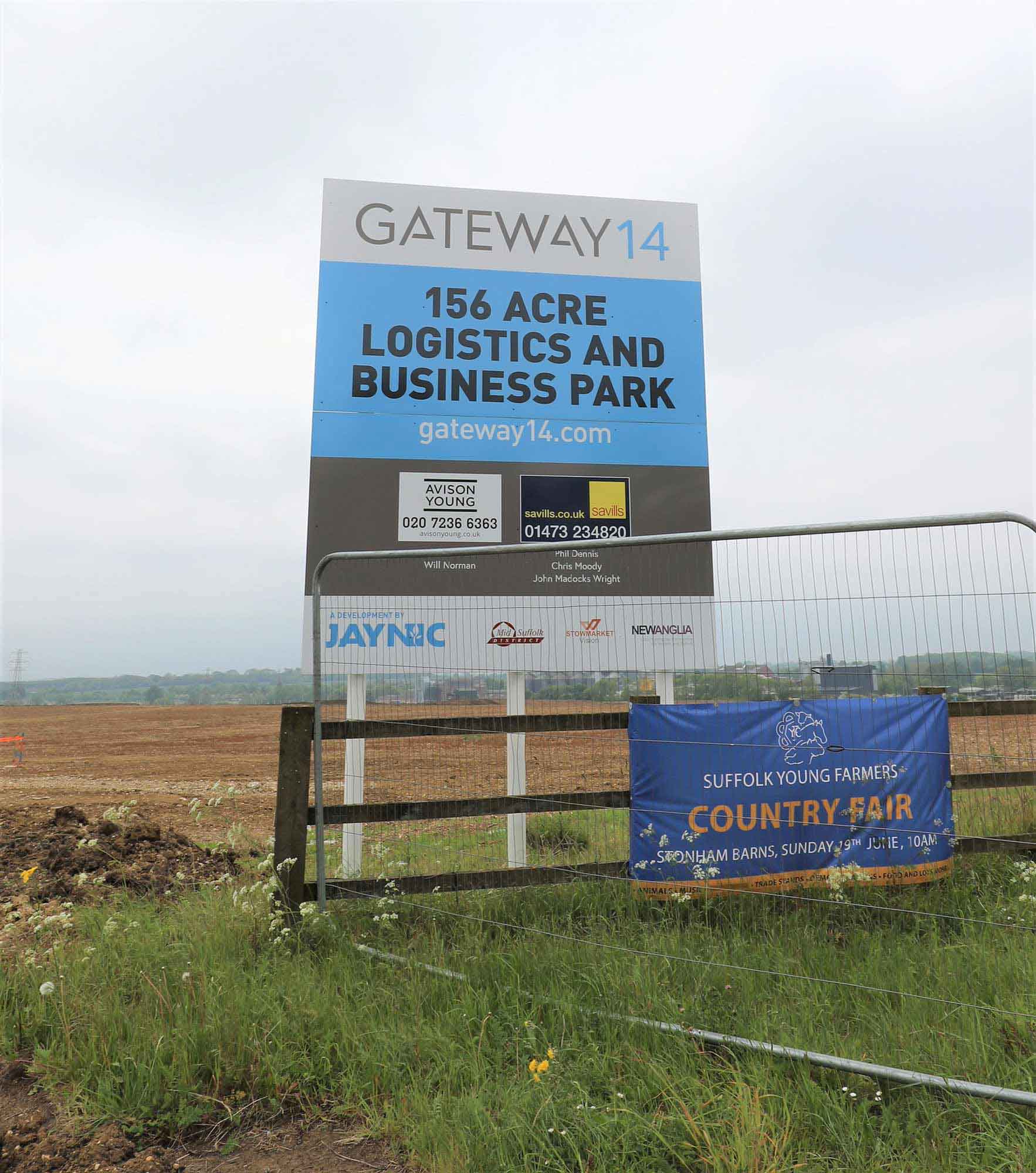
Part of Freeport East, the 50-acre business, innovation and logistics park was designed to be the largest of its kind in East Anglia.
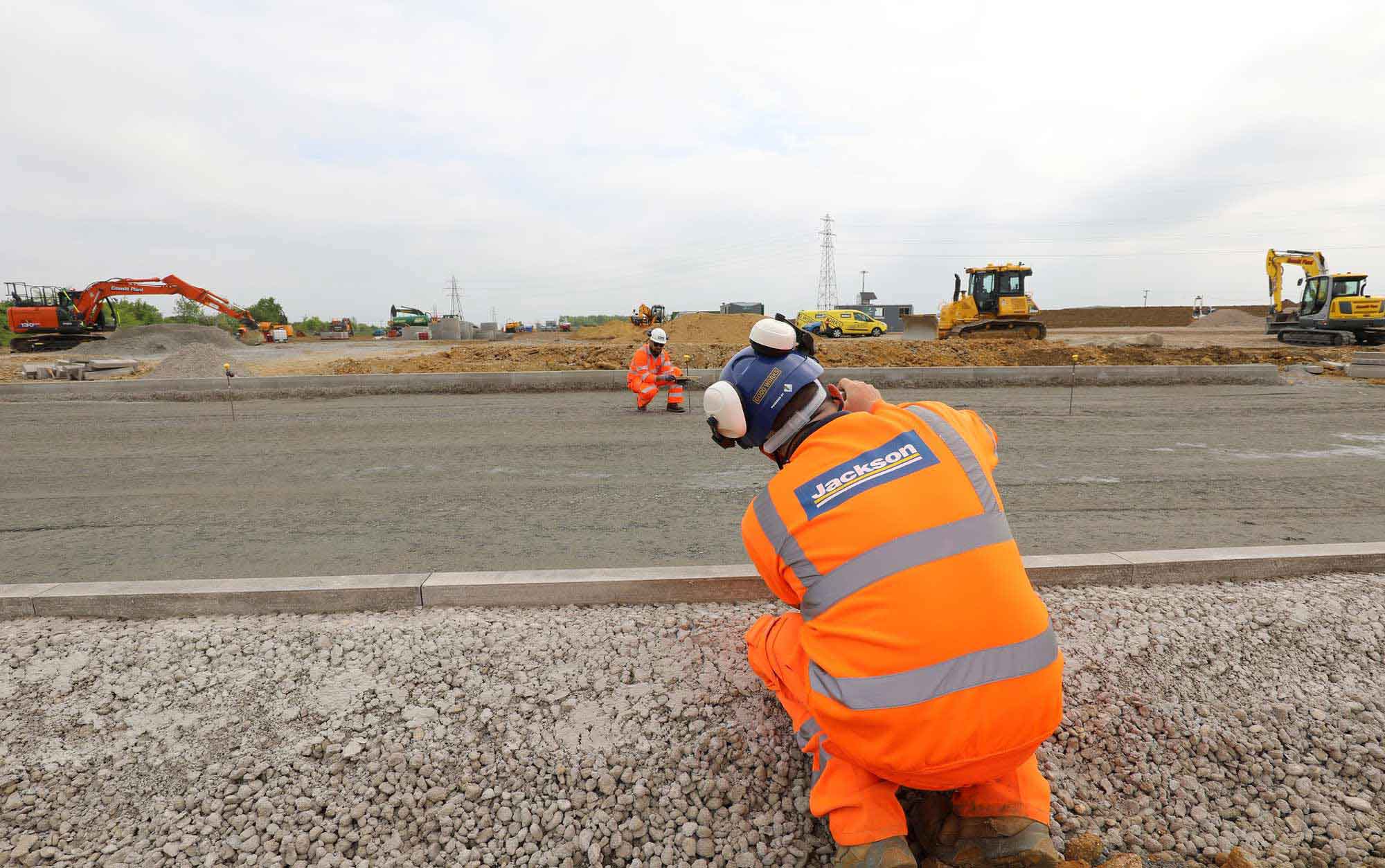
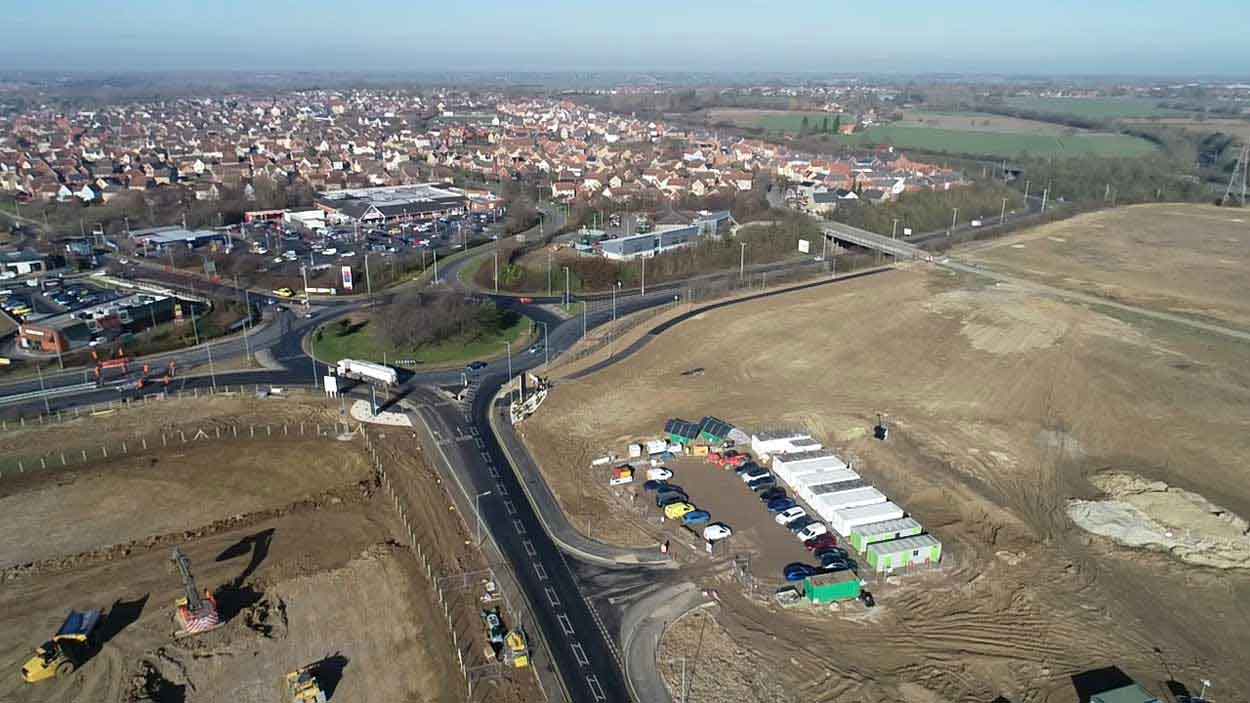
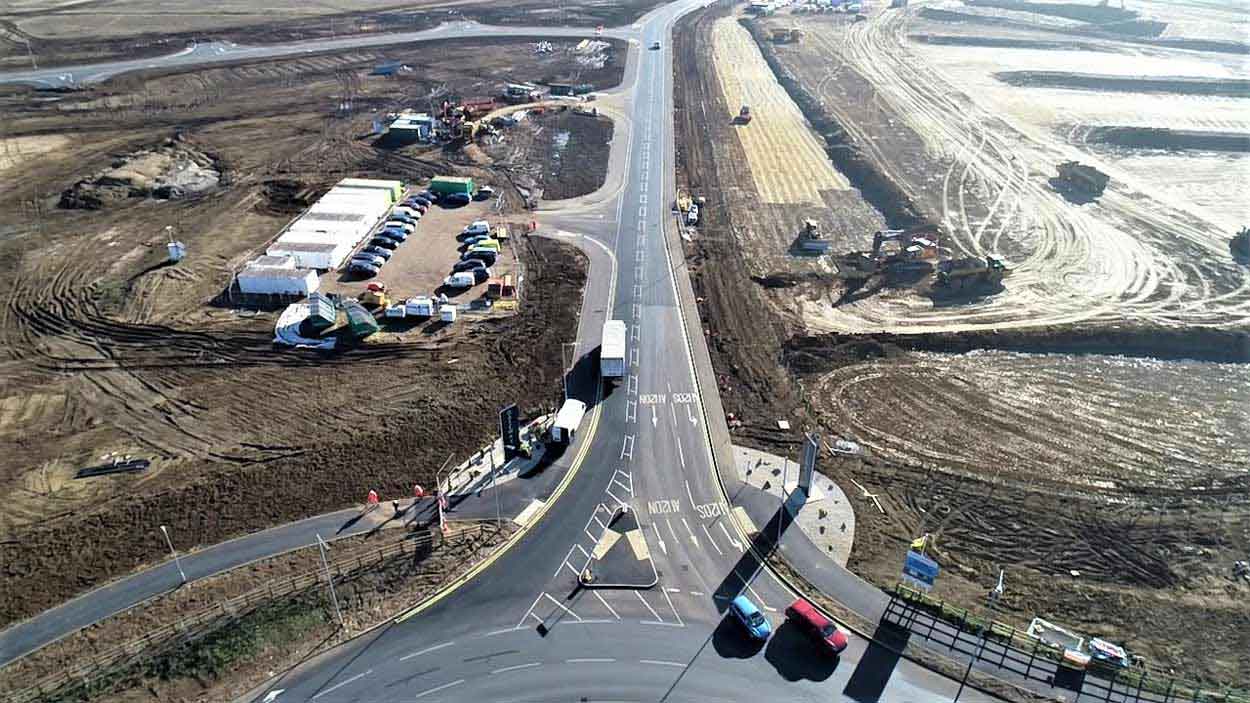
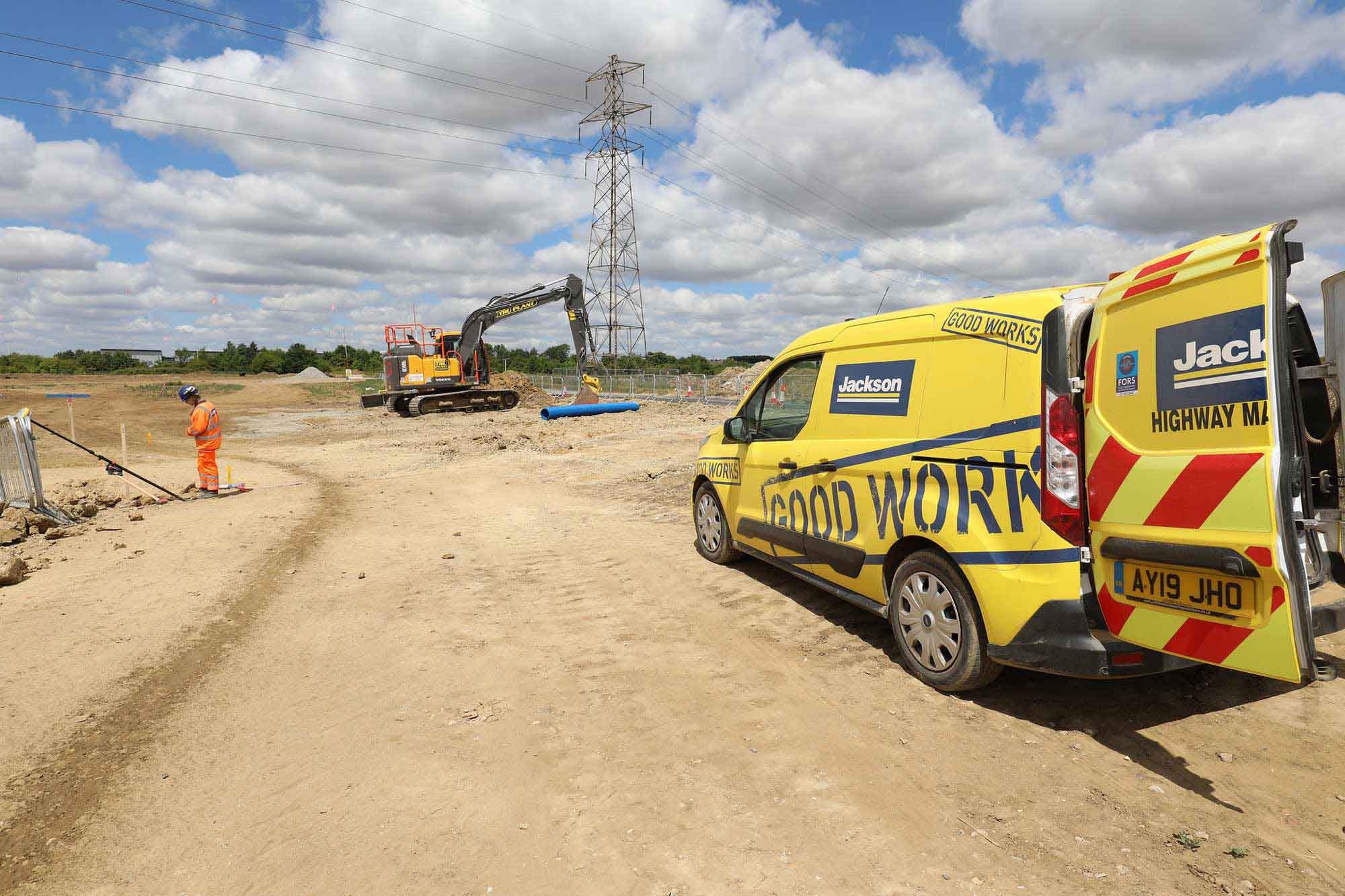
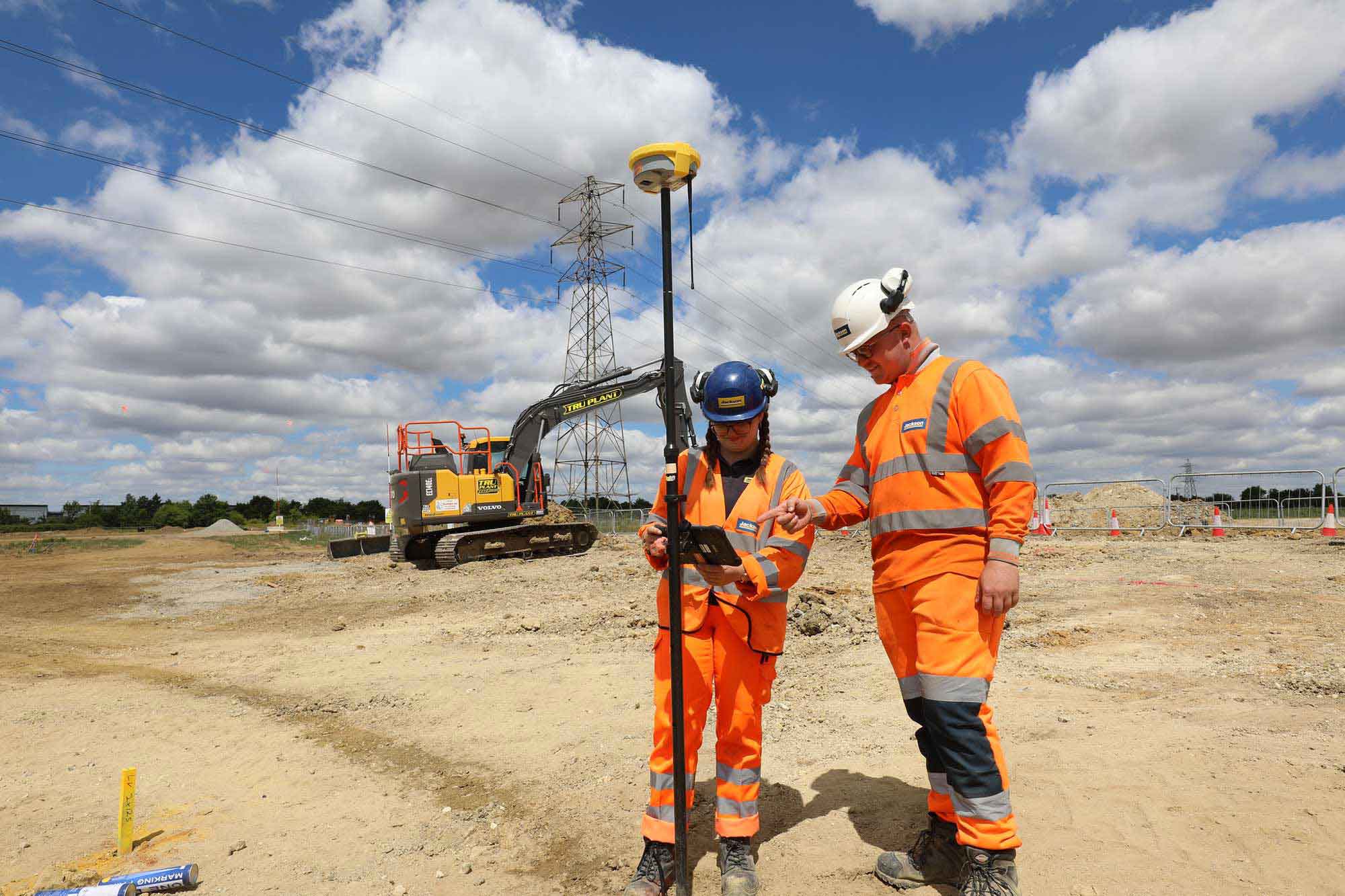
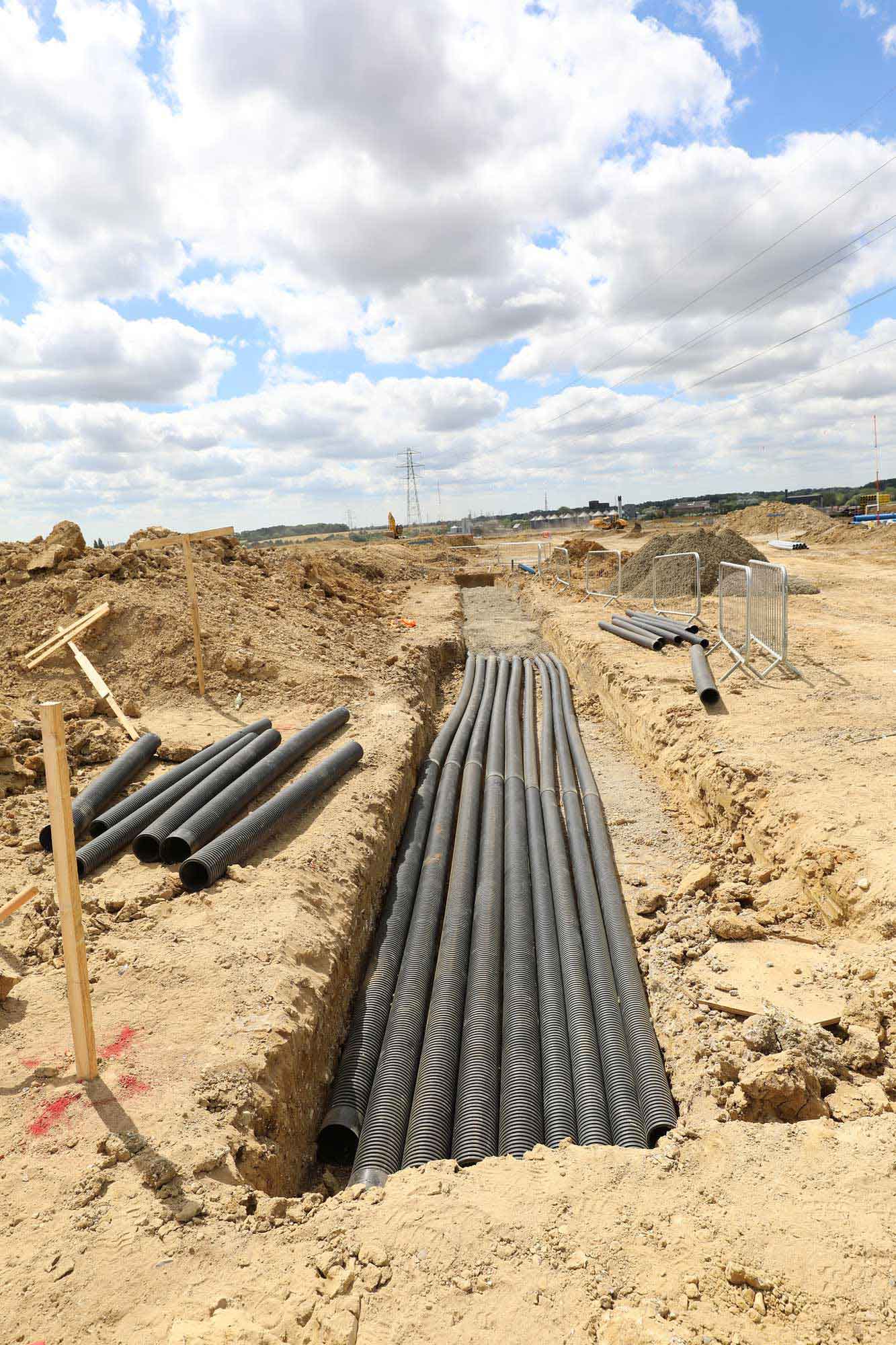
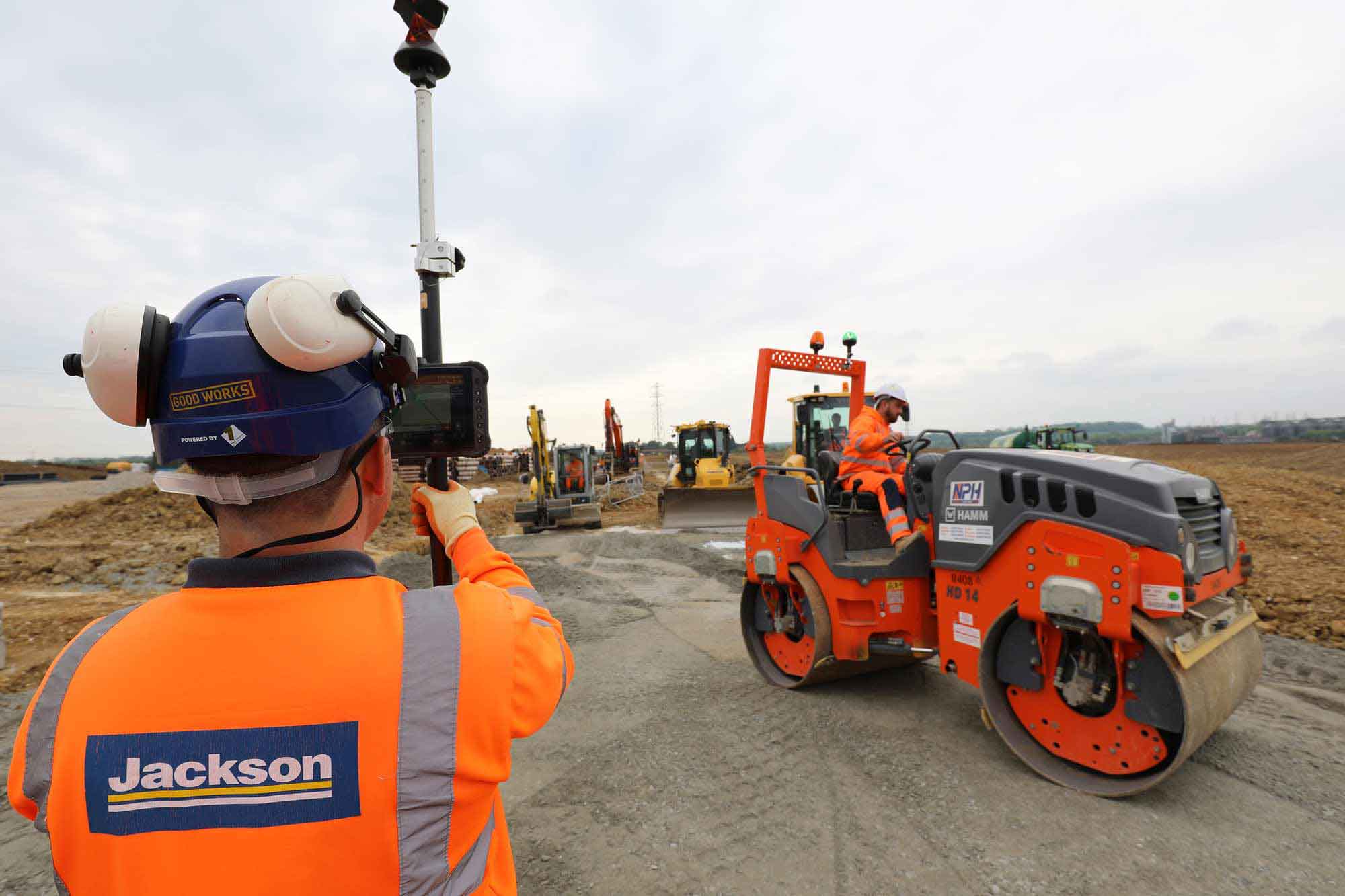
As the principal contractor for this project, the Jackson team undertook numerous works including site clearance, topsoil stripping, installation of estate road with accompanying drainage, signage and services for each plot, as well as the S278 realigning and roadworks to the adjacent A14 junction and roundabout.
In addition, our team landscaped verges and bunds, installed cycleways and wetland works, designed and constructed the foul drainage and co-ordinated the installation of new services to the site.
Balancing act: Vehicle movements are restricted to protect wildlife including over-wintering as well as nesting birds.
Value engineering reduced cost, disruption and risk.
Value engineering
As part of our regular value engineering process, our teams are always searching for ways to reduce cost and time on projects without compromising on quality or safety. At Gateway 14, we greatly reduced cost, disruption and risk by using thrust boring to install major drainage sections.
The original programme called for open cut methods, which would have required a full road closure, whereas our proposal of thrust boring meant only a single lane closure to facilitate open cut methods in necessary areas. This reduced the overall cost circa £100,000.
Prior to commencement, we performed a full GPR survey, as well as carrying out trial holes to identify services to ensure there were no clashes with the proposed thrust boring.
The programme was further reduced by 20 days through the use of a large auger to dig more than 160 gullies around the site.
Stabilising the ground
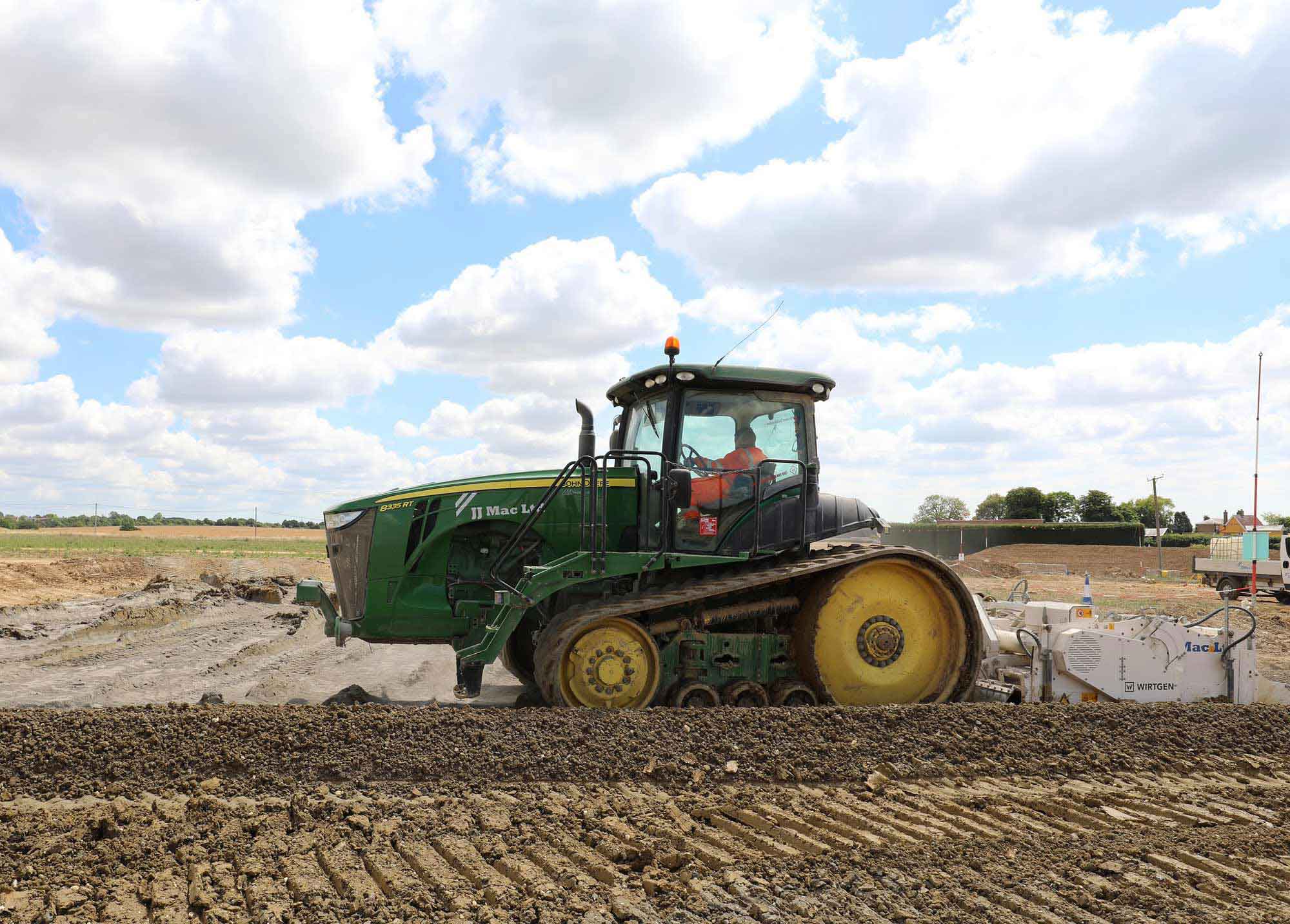
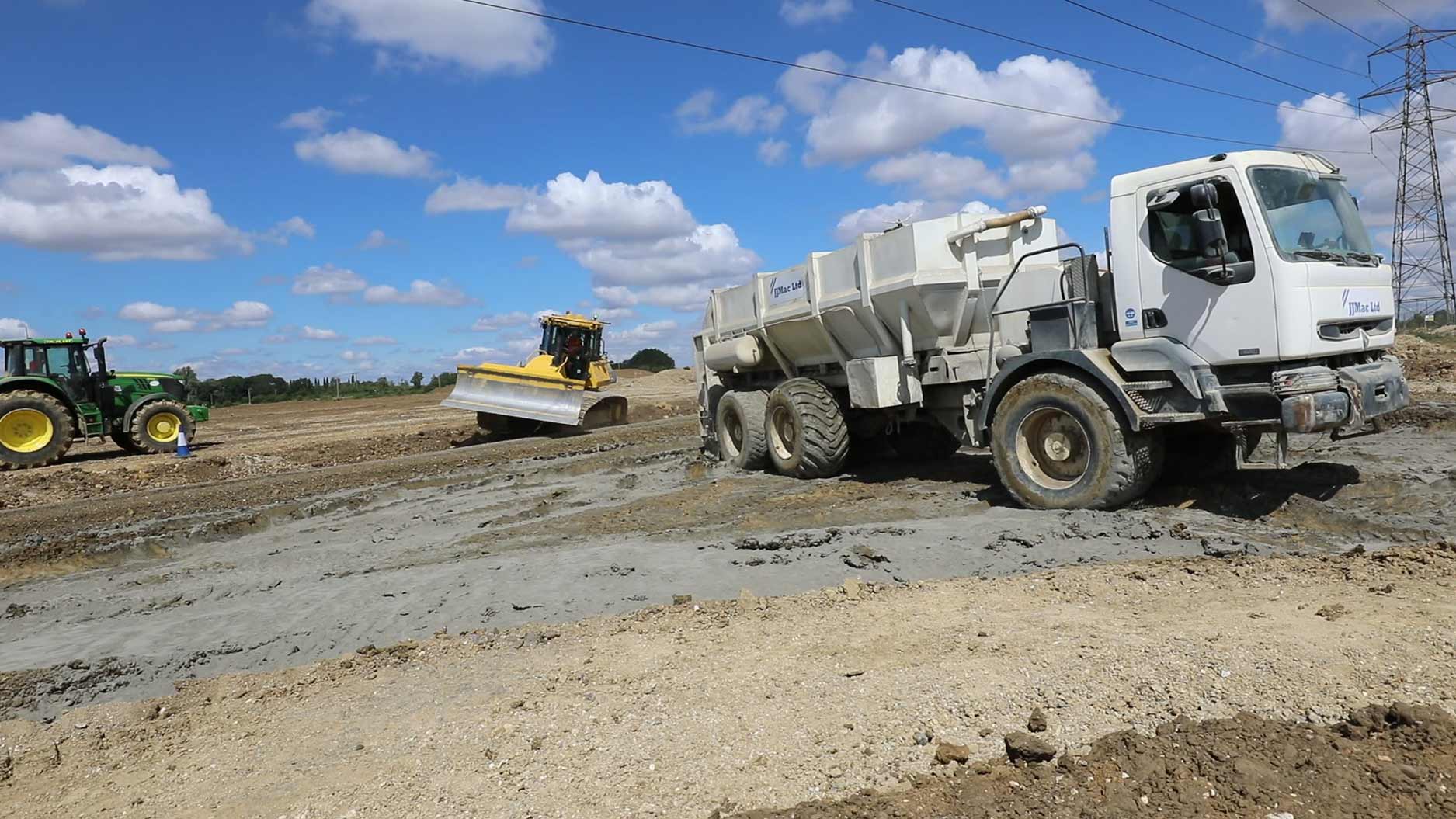
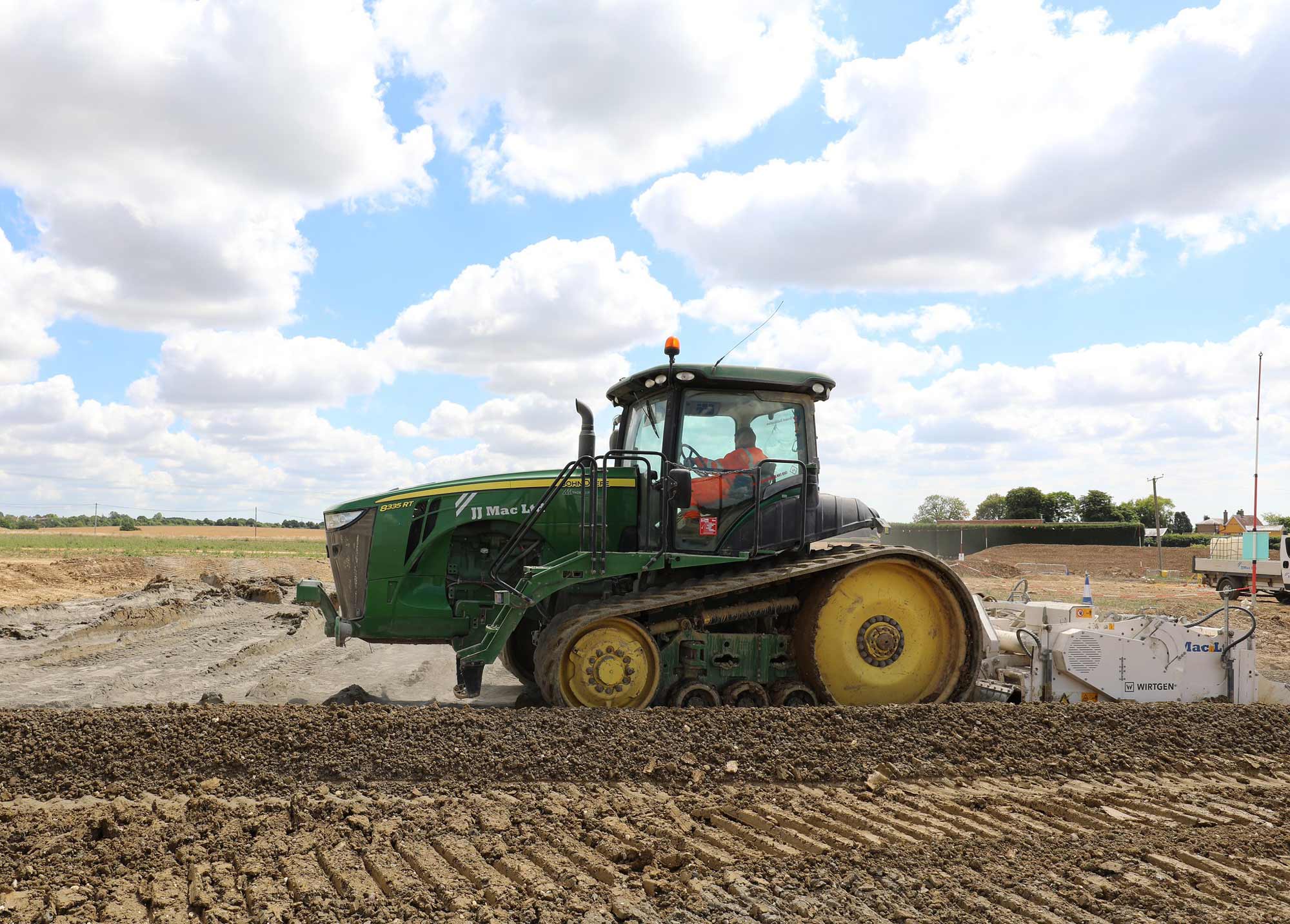
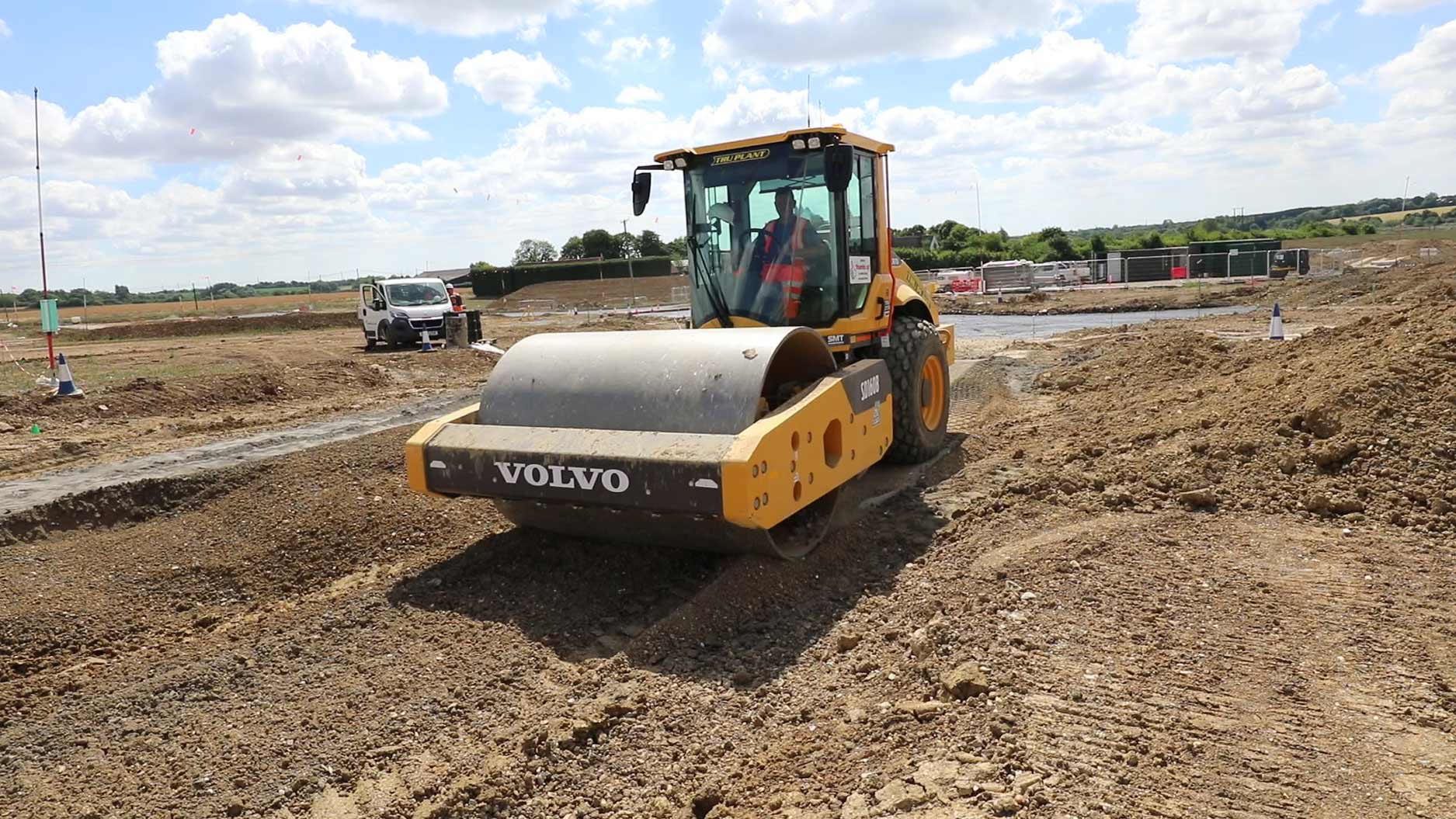
Our approach was to use ground stabilisation during the construction of the main carriageway on the park.
The process sees the topsoil removed and the subbase level improved by rotovating cement together with the soil. This approach negated the need for approximately 16,000m2 of type 1 aggregate, further reducing our carbon output by minimising deliveries and lorry movements, while saving the client circa £275,000.
And what’s more, we ensured all excavated material remained onsite. Of the 50,000m3 excavation volume, 20,000m3 was repurposed as a stabilised sub-base and the remaining 30,000m3 was incorporated into landscaping and noise. This avoided in excess of 6250 ‘muckaway’ lorry movements, further reducing our carbon output, and saving the client approximately £300,000.