Repairs on corroded steel and delaminated concrete.
Our impact
101
Number of piers on this section of the structure
40MPa
Compressive strength of sprayed concrete
20%
Steel replaced if 20% loss is found
Saltwater has seeped into the structure over the years.
Delamination and corrosion
The Chiswick flyover is an elevated section of the M4 motorway, located at the western approaches to London.
It was opened in 1959 to some fanfare with movie star Jayne Mansfield cutting the ribbon.
Back then, the flyover was built with a heating system installed under the deck but due to technical issues and the high cost of heating, the decision was made to turn the system off not long after the road was opened.
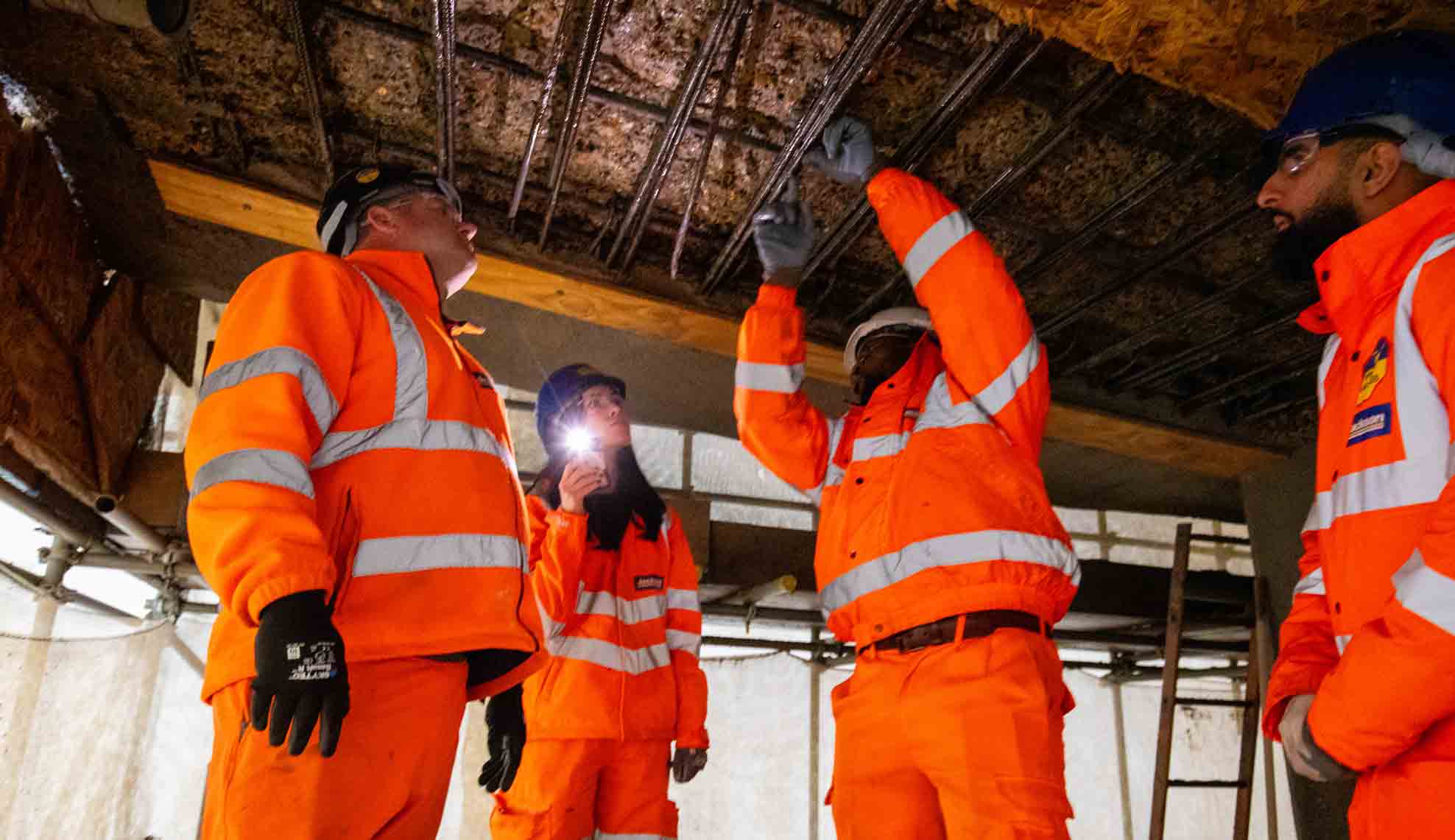
Since then, standard grit has been used to clear the snow and ice with the run-off being channelled down drainage pipes built into the piers. It is thought that over the years, as the pipes got blocked, saltwater has seeped into the structure, leading to some corrosion of the steel reinforcement and causing delamination of the exposed concrete.
Balancing act: Vehicle movements are restricted to protect wildlife including over-wintering as well as nesting birds.
The delaminated concrete is removed using hydro-demolition.
Hydro-demolition
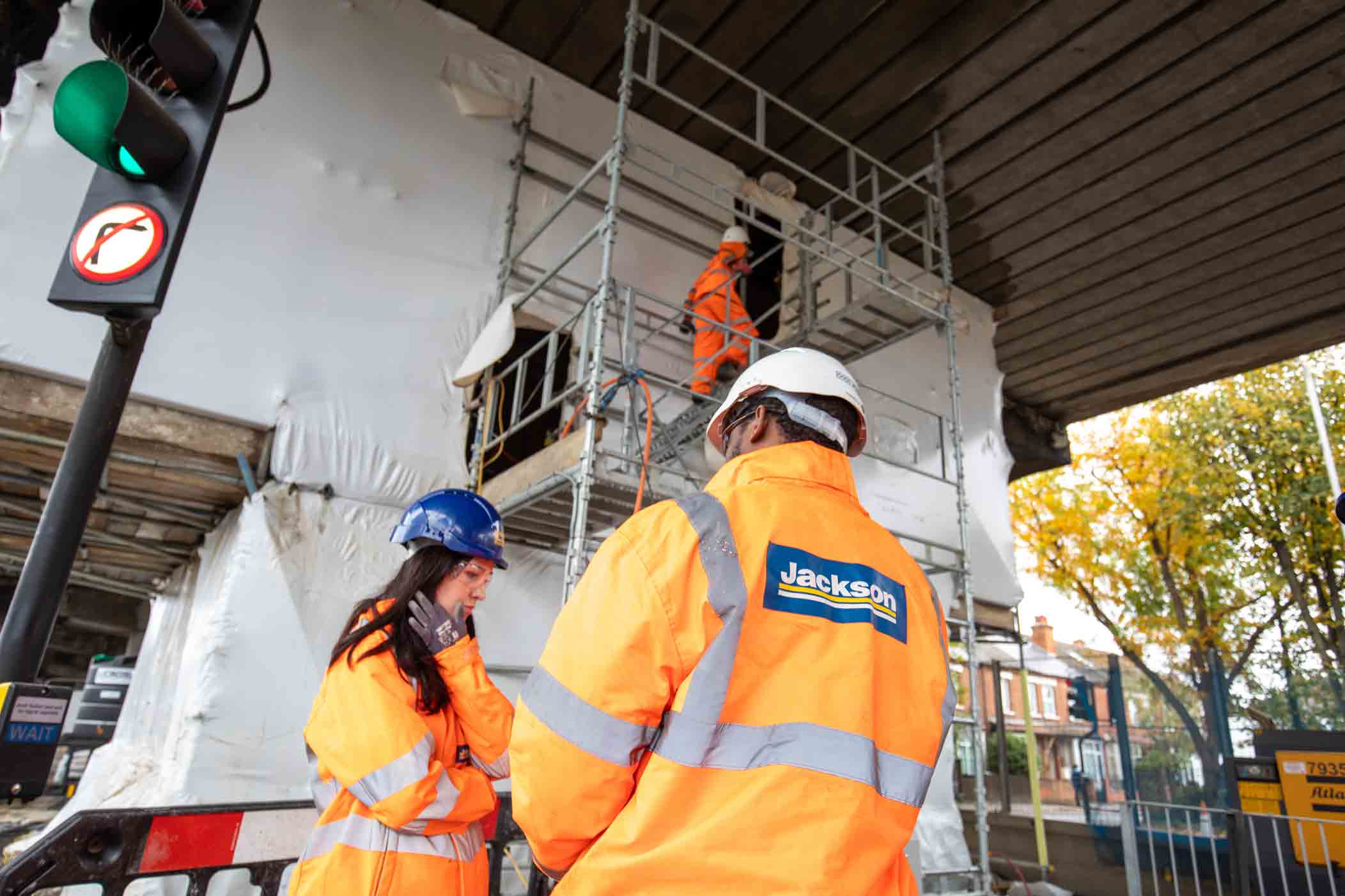
Working with a specialist supply chain, a Jackson Highways team is overseeing the ongoing remediation project of the structure – replacing steel reinforcement where it is badly corroded and reapplying concrete where it has delaminated.
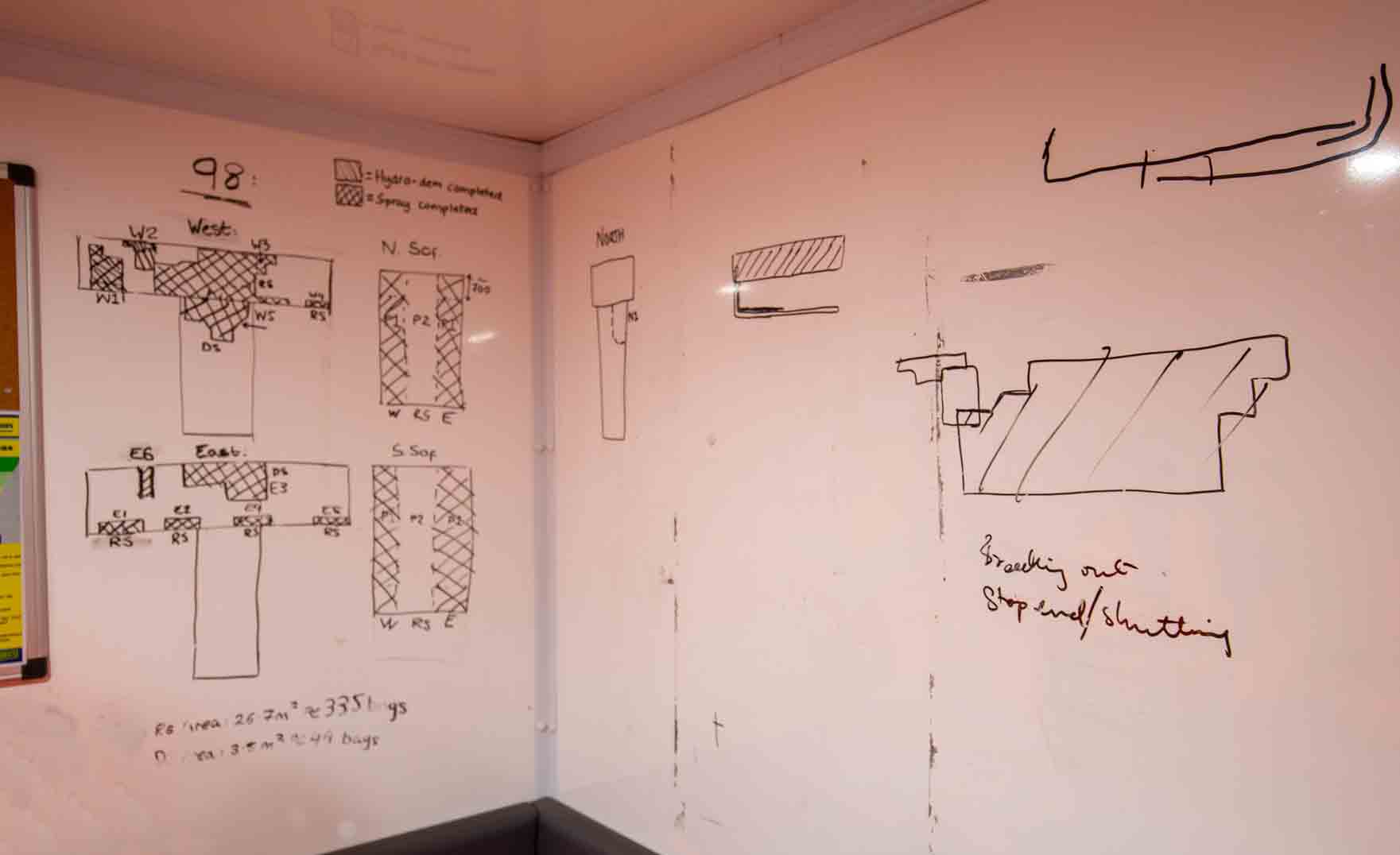
A great deal of planning and testing went into the work, which involves removing delaminated concrete through hydro-demolition before the concrete is applied by dry spray.
The process is being carried out in phases on small areas of the columns, so as not to expose too much of the steel at once because the M4 deck overhead remains operational during these works.
Logistics
Logistics is a key challenge for the team, working in limited space in a busy part of the capital.
There is little room for plant equipment and deliveries, and the removal of concrete waste and wastewater from hydro-demolition must be co-ordinated carefully to minimise disruption to drivers.
Traffic management must also be carefully planned and the team is trialling the use of AI to analyse pedestrian and motorist behaviours around the site, which will enable better decision-making when more pedestrian crossings have to be moved in the future.
Working in limited space, logistics is a key challenge for the team.