Recycled road surface saves money and carbon.
Our impact
6
The project was split into six phases
70K
Money saved by recycling road planings
6Kkg
Carbon saved by using recycled road planings
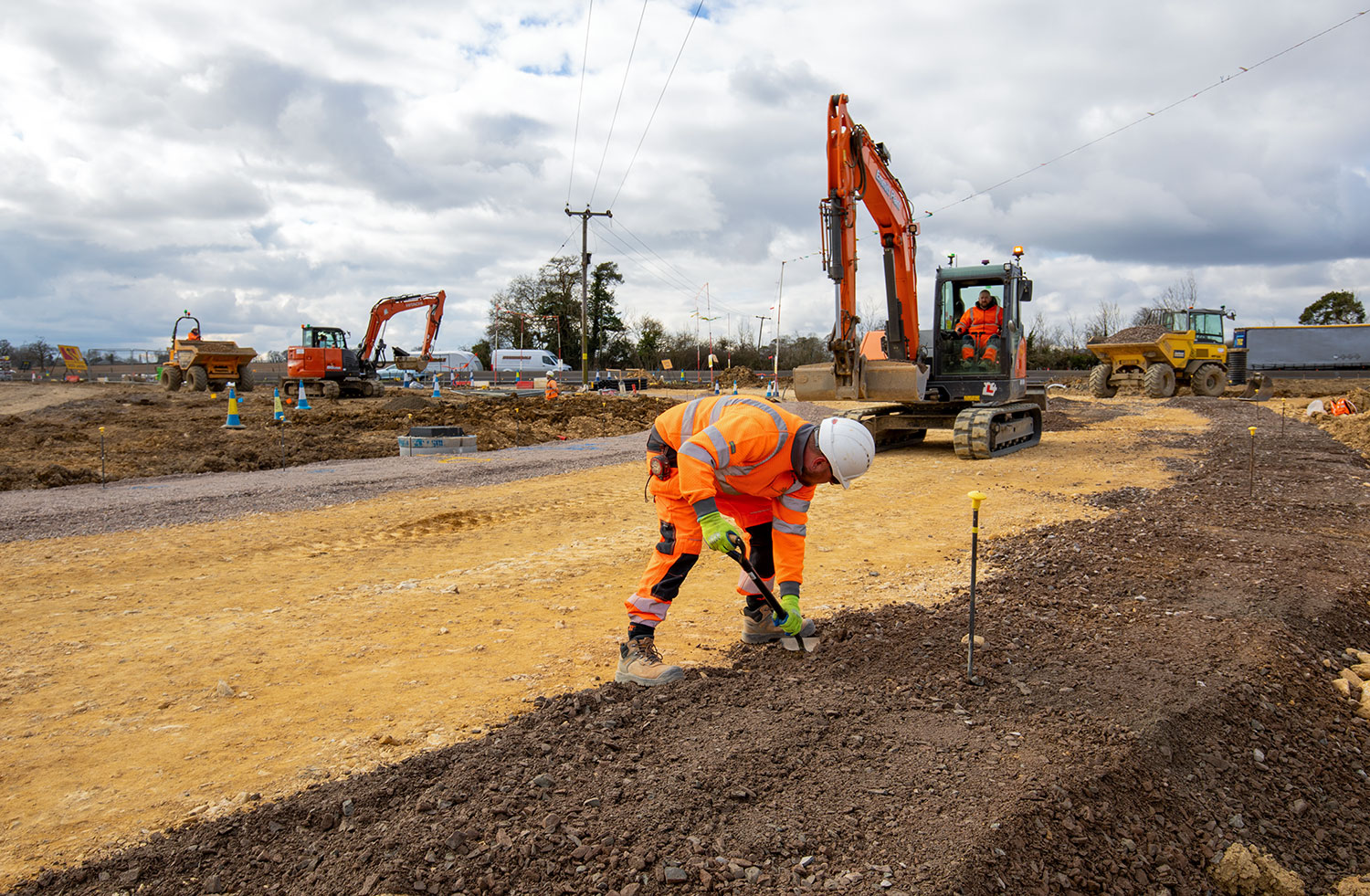
A number of underground utility services were diverted during construction.
Alleviating traffic pressure
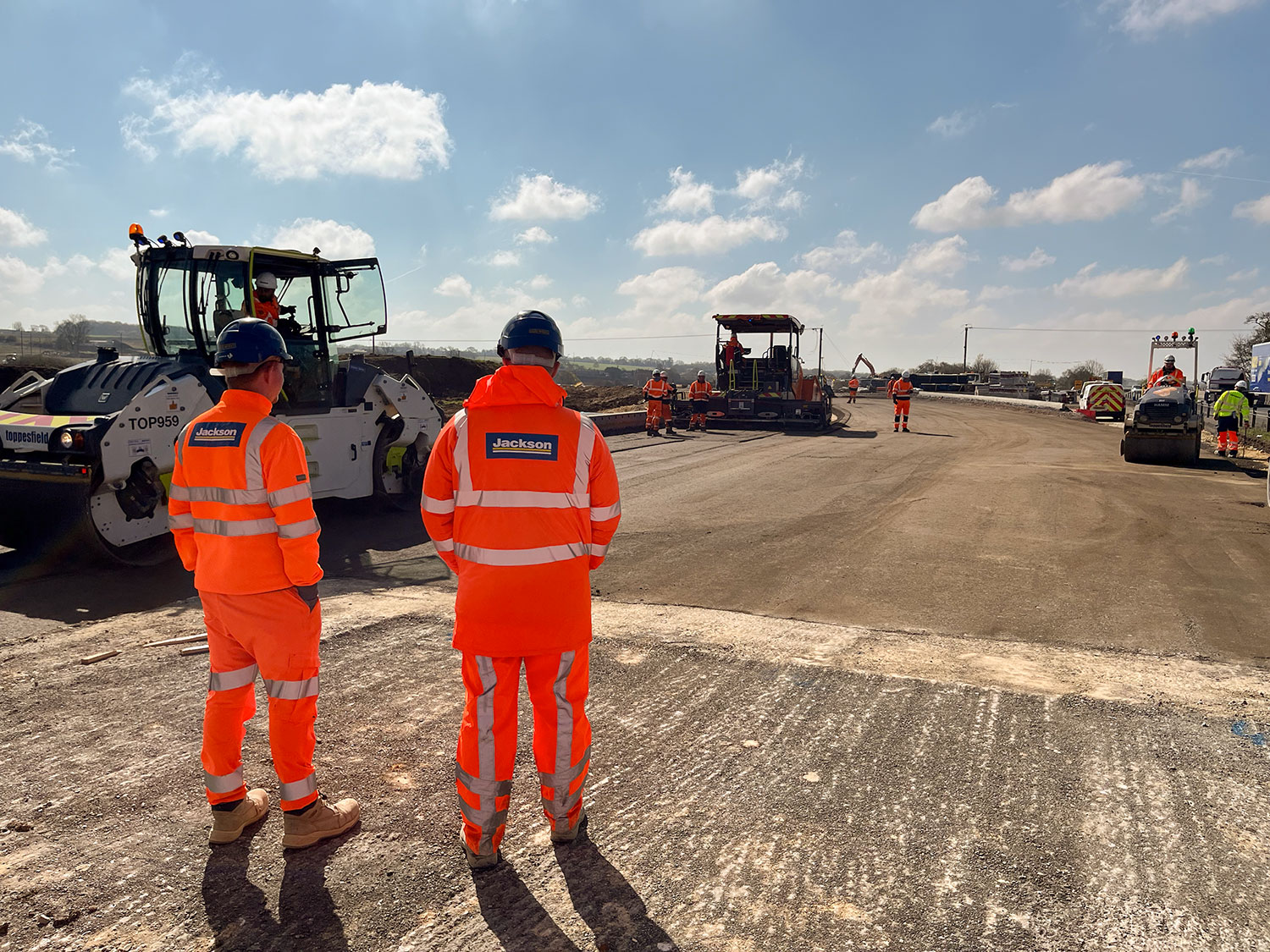
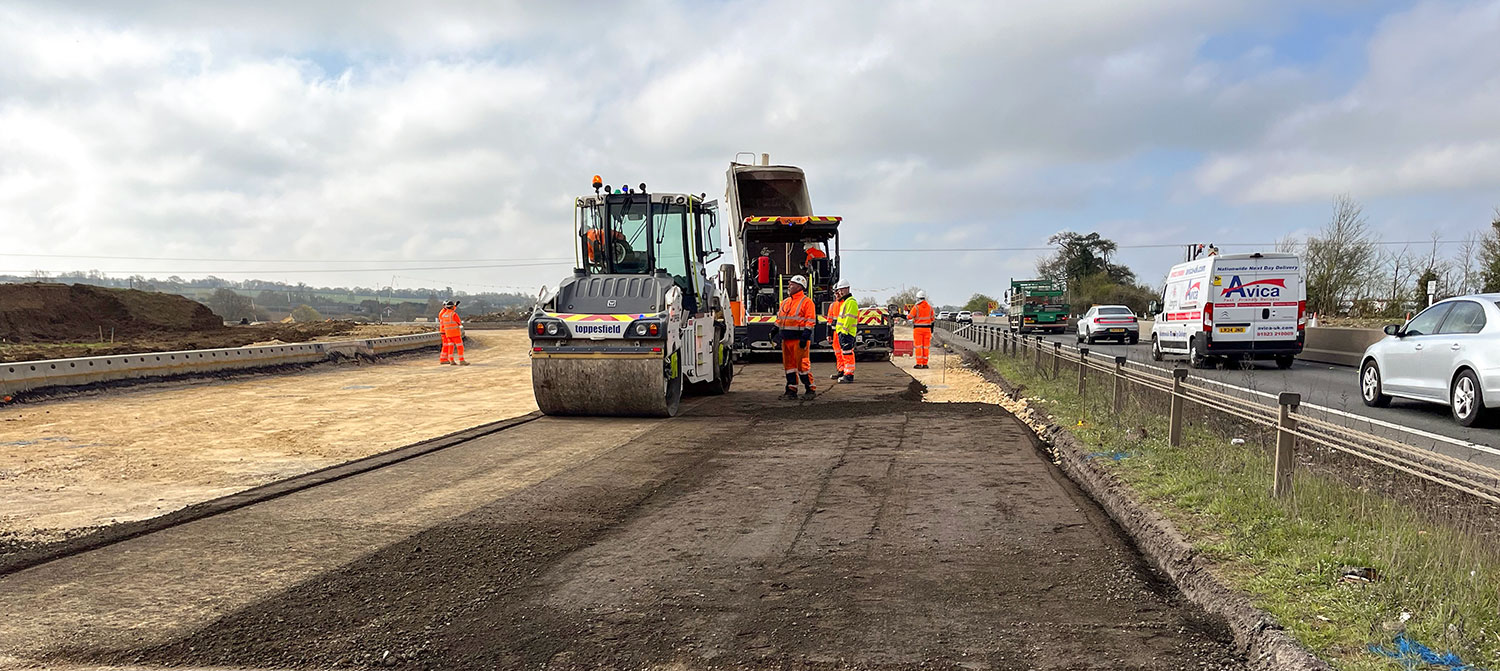
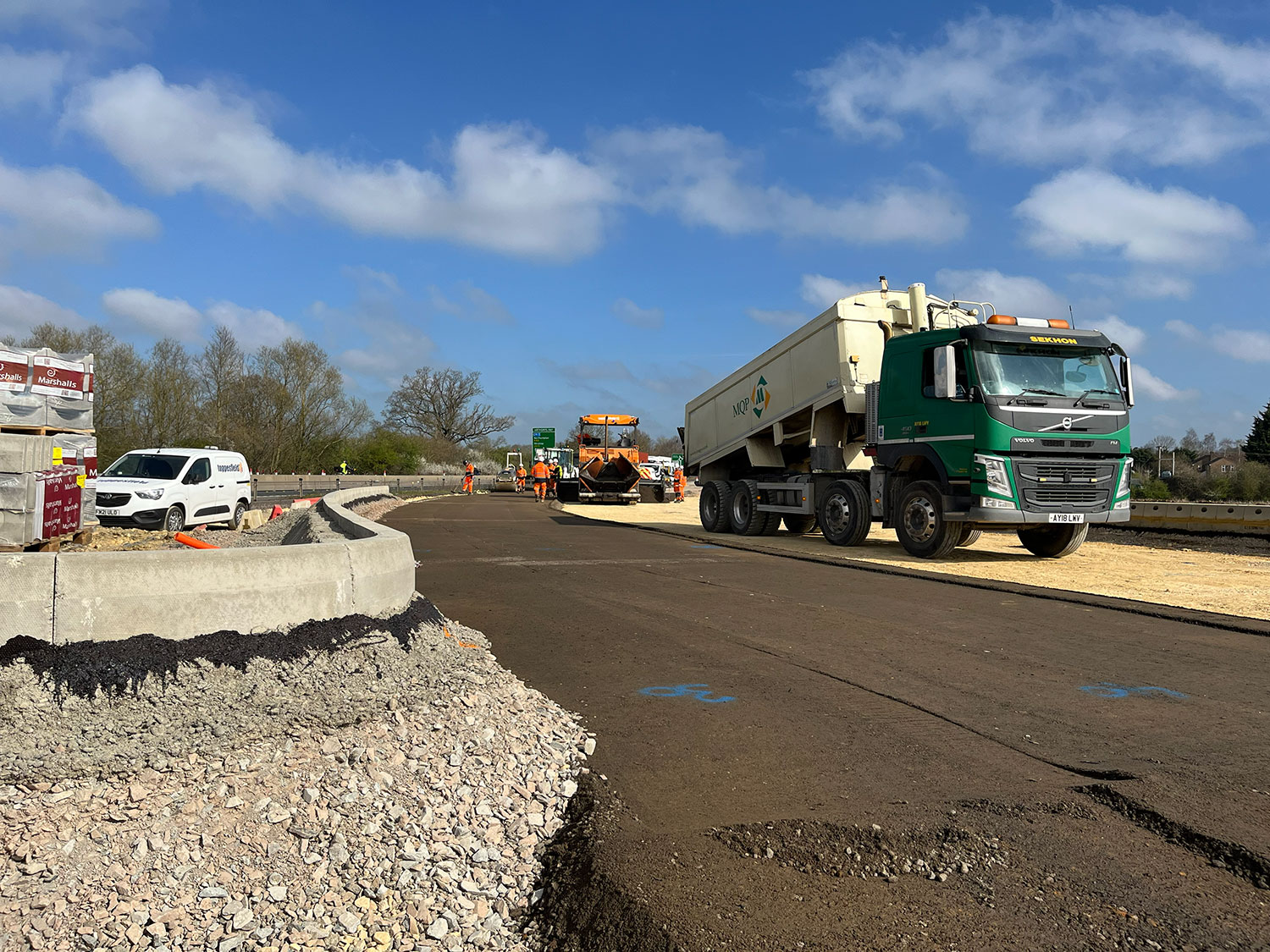
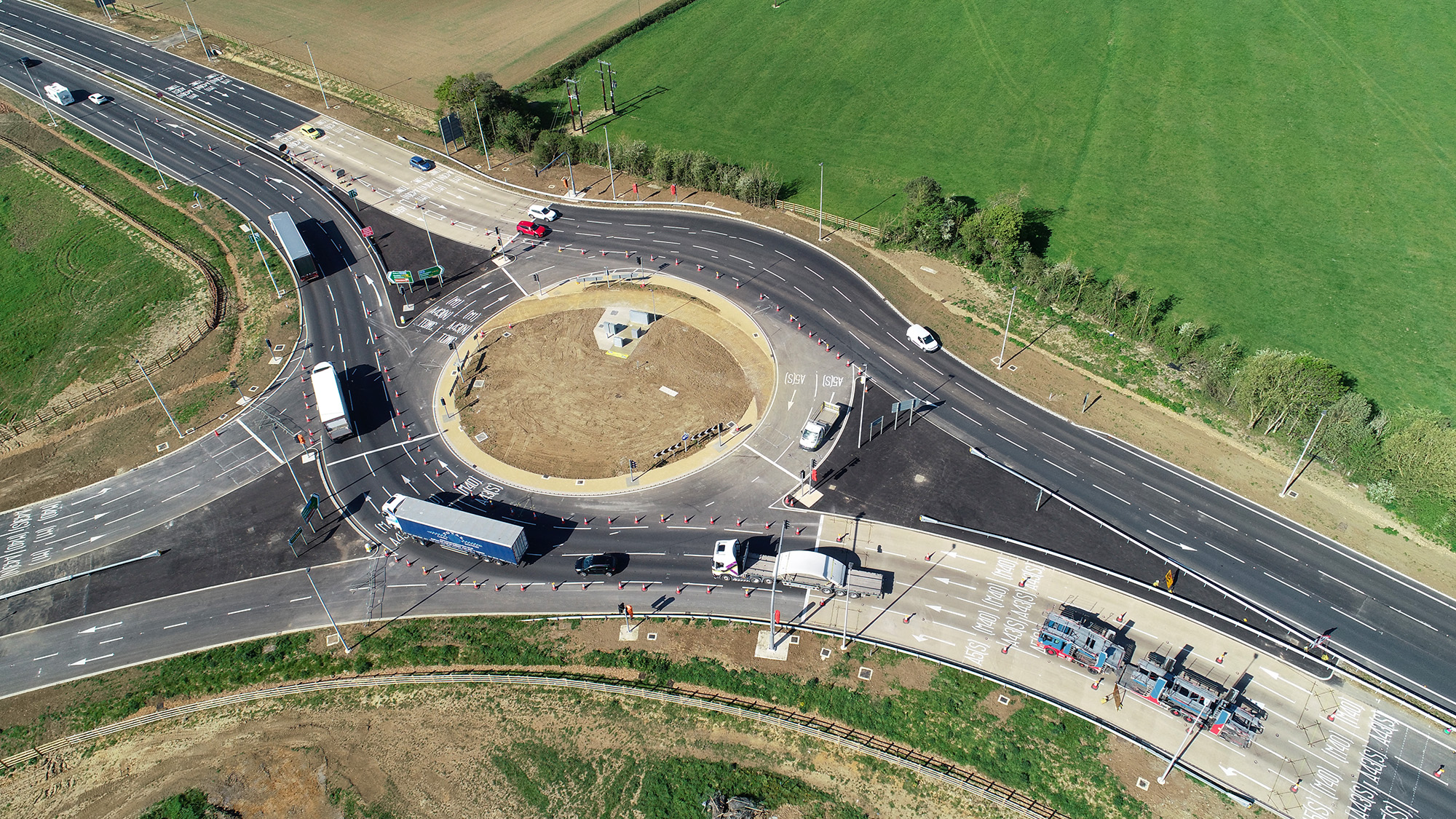
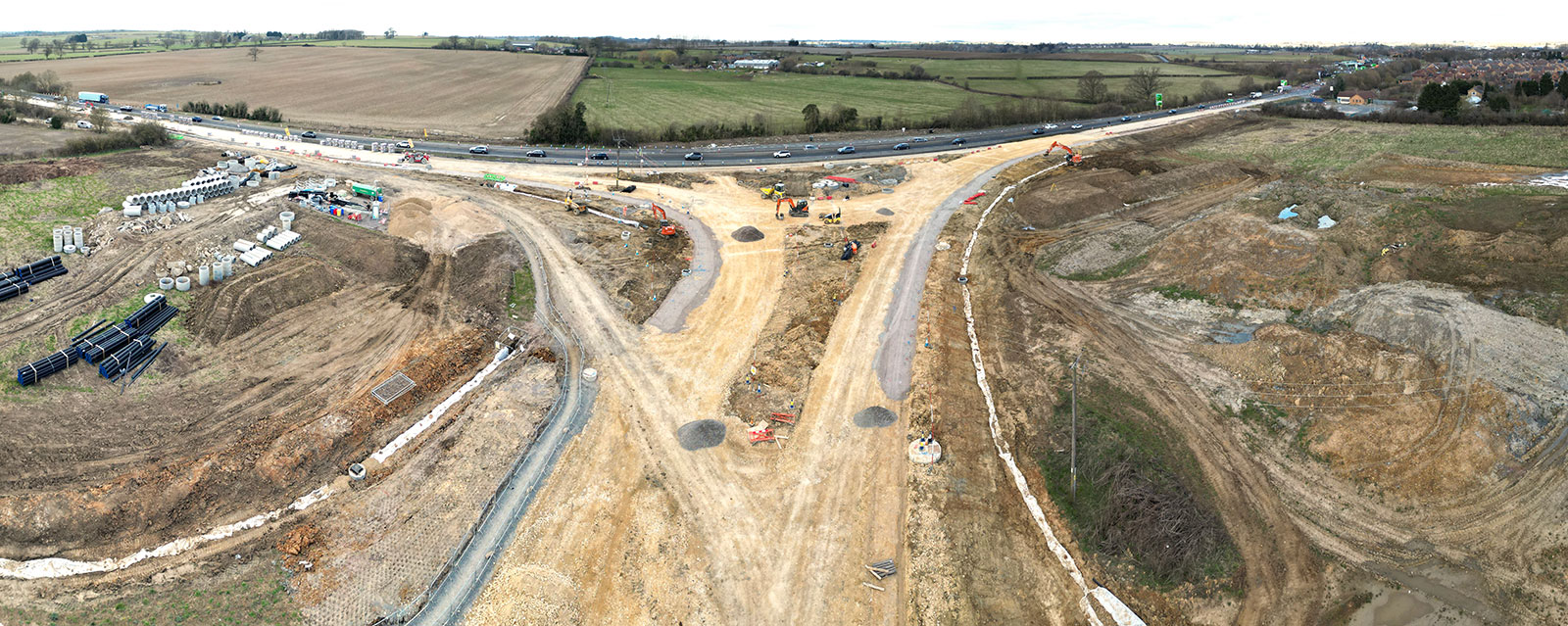
A Jackson team constructed the northern section of a relief road and the roundabout on behalf of Persimmon Homes with approval from National Highways.
The new road, which connects the A5 to the A43, was designed to divert traffic from the Northamptonshire town of Towcester, alleviating traffic pressures on the town centre.
A key achievement during construction was ensuring the new road and roundabout were constructed in phases to minimise disruption to the public travelling to major racing events at the nearby Silverstone Circuit.
The effective diversion of utility services and the recycling of materials from the previous road were other important successes.
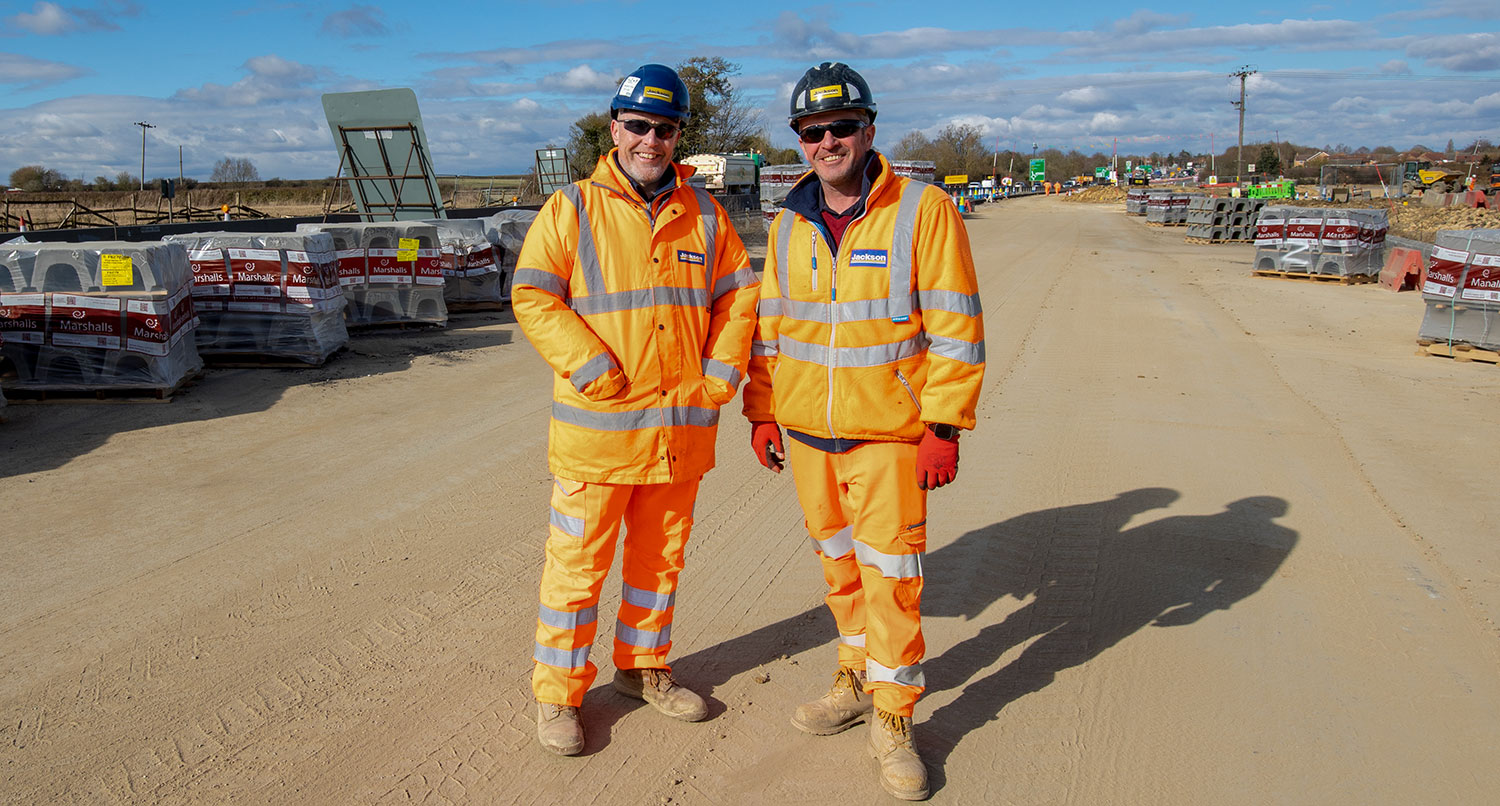
Balancing act: Vehicle movements are restricted to protect wildlife including over-wintering as well as nesting birds.
The team phased the works to ensure traffic could flow in and out of nearby Silverstone race circuit.
Phasing works
A key challenge for the project team was the phasing of the works to ensure traffic continued to flow in and out of nearby Silverstone race circuit – roughly five miles away to the south.
The scheme was split into six phases with two interim phases to ensure that Silverstone’s flagship events, Moto GP in May and the British Formula 1 Grand Prix in July, did not suffer any disruption due to traffic flows.
In the run up to each event, the team ensured the road network was returned to a dual carriageway and traffic management removed, so the large number of people attending these flagship sporting events were not inconvenienced.
Recycled road
The specialist surfacing contractor on this scheme, Toppesfield, used Cement Bound Granular Materials (CBGM) as the subbase for the blacktop. This is an extremely durable, sustainable and economical construction material, which involved recycling the planings from the original carriageway and reincorporating them into the new structure.
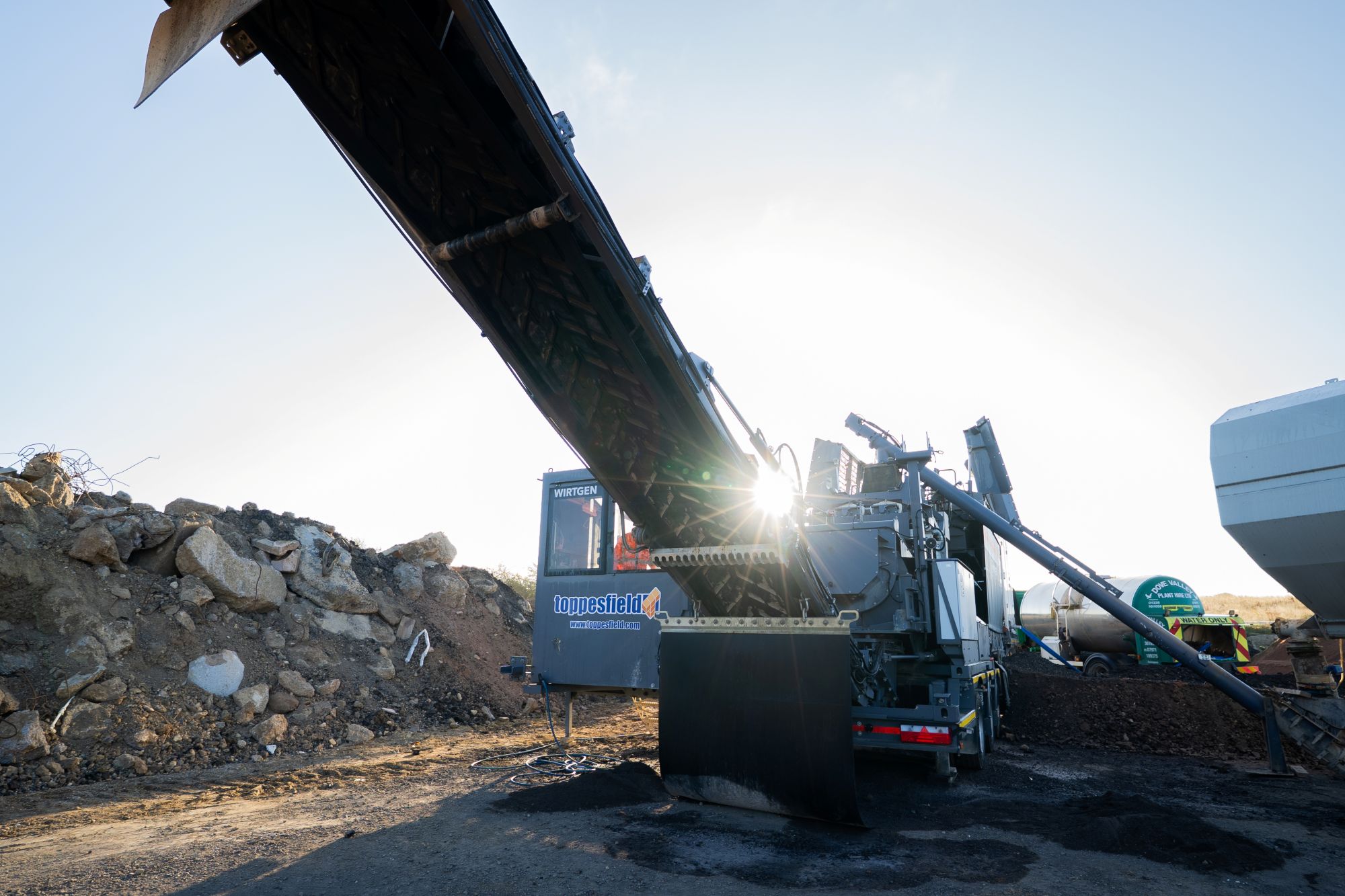
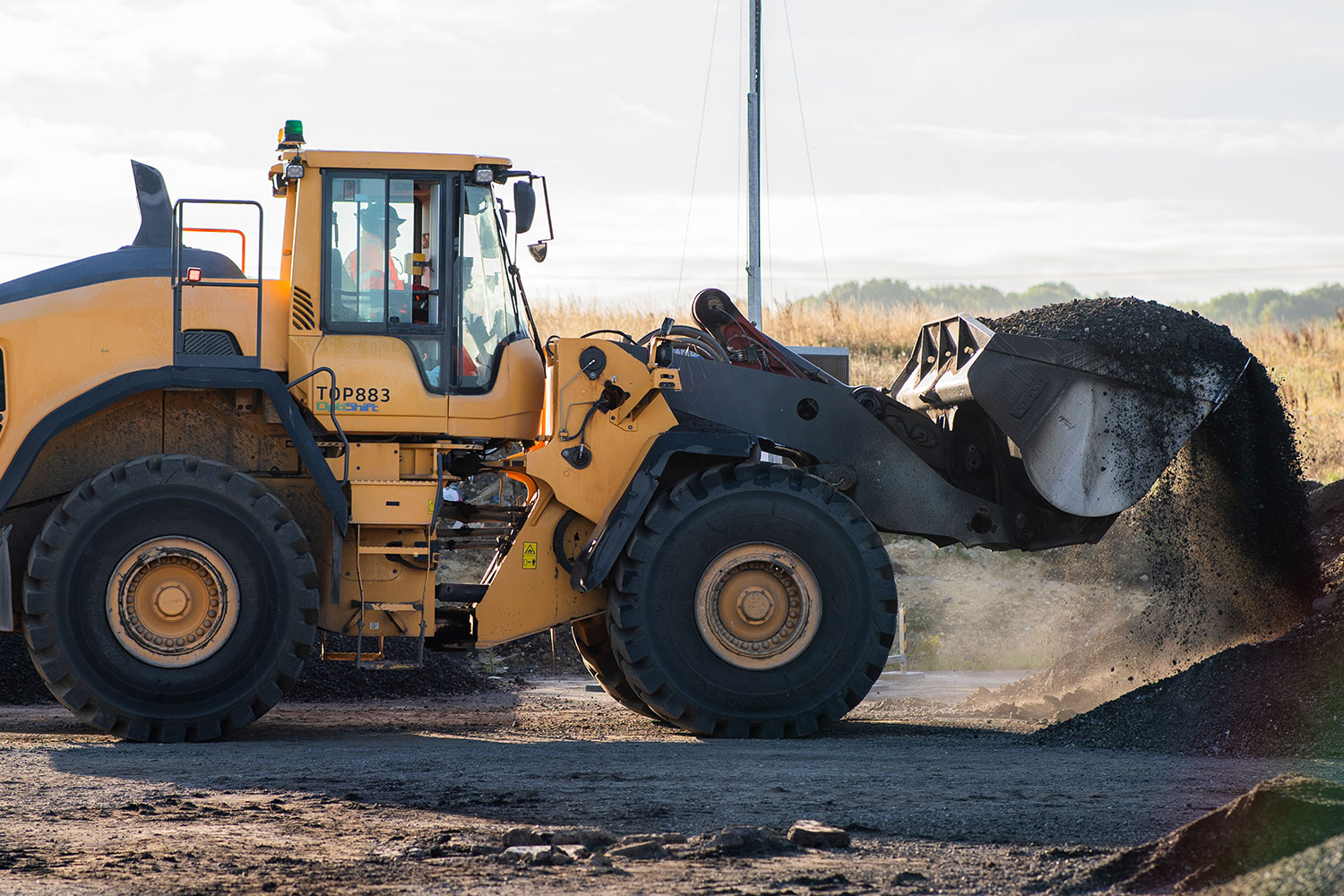
Toppesfield made this possible by establishing a mobile batching plant, where all plannings were crushed, graded, then mixed with type 1 and cement.
Carrying out this process directly on site not only reduced the number of vehicle movements on already busy roads, but it also saved circa £70,000 and 6,014kg of carbon.
Toppesfield established a mobile batching plant on-site.