Rotherham rises above the functional to turn flood prevention into a celebration of the people and the town.
Our impact
125m
Length of main flood wall
152
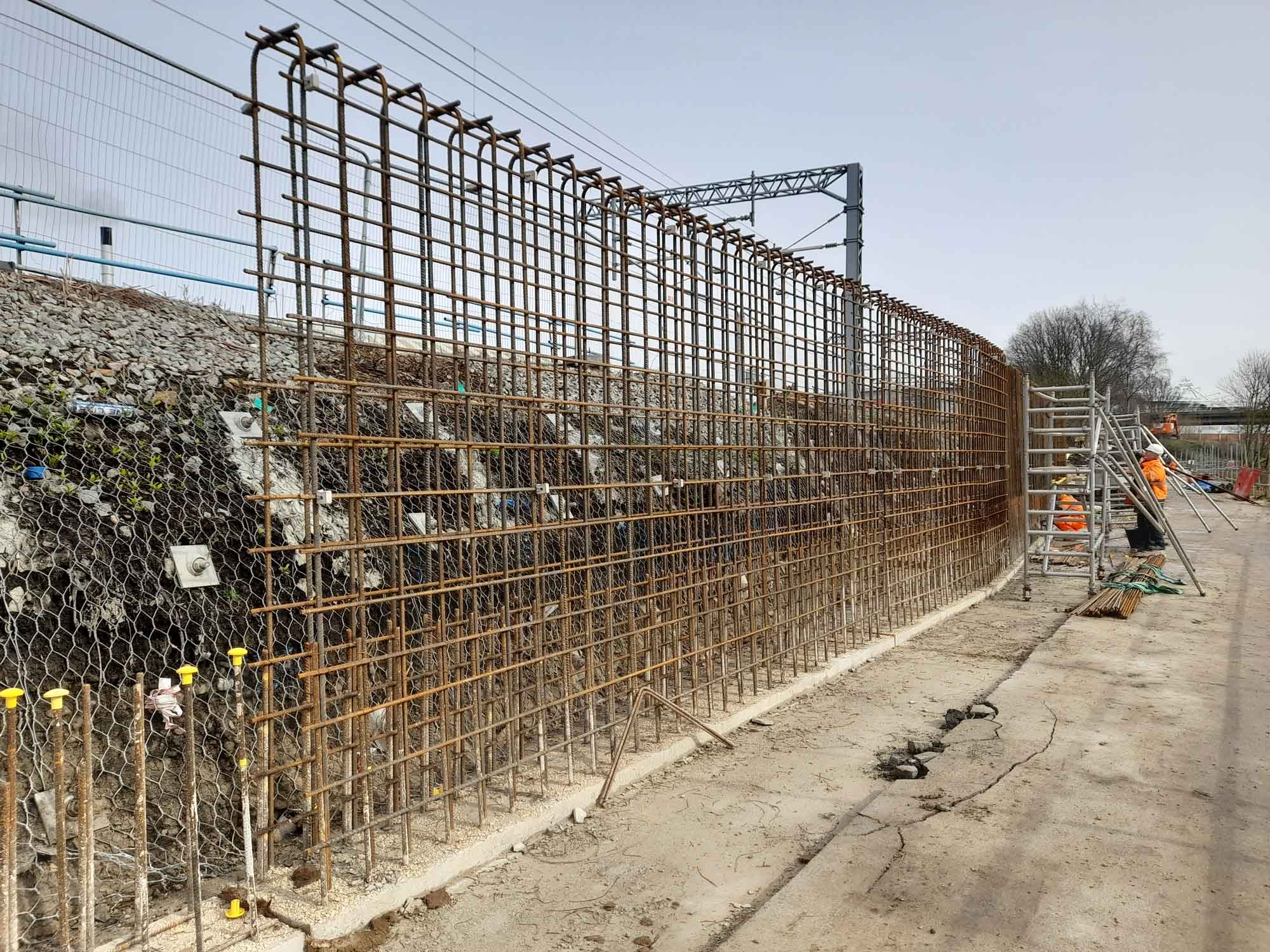
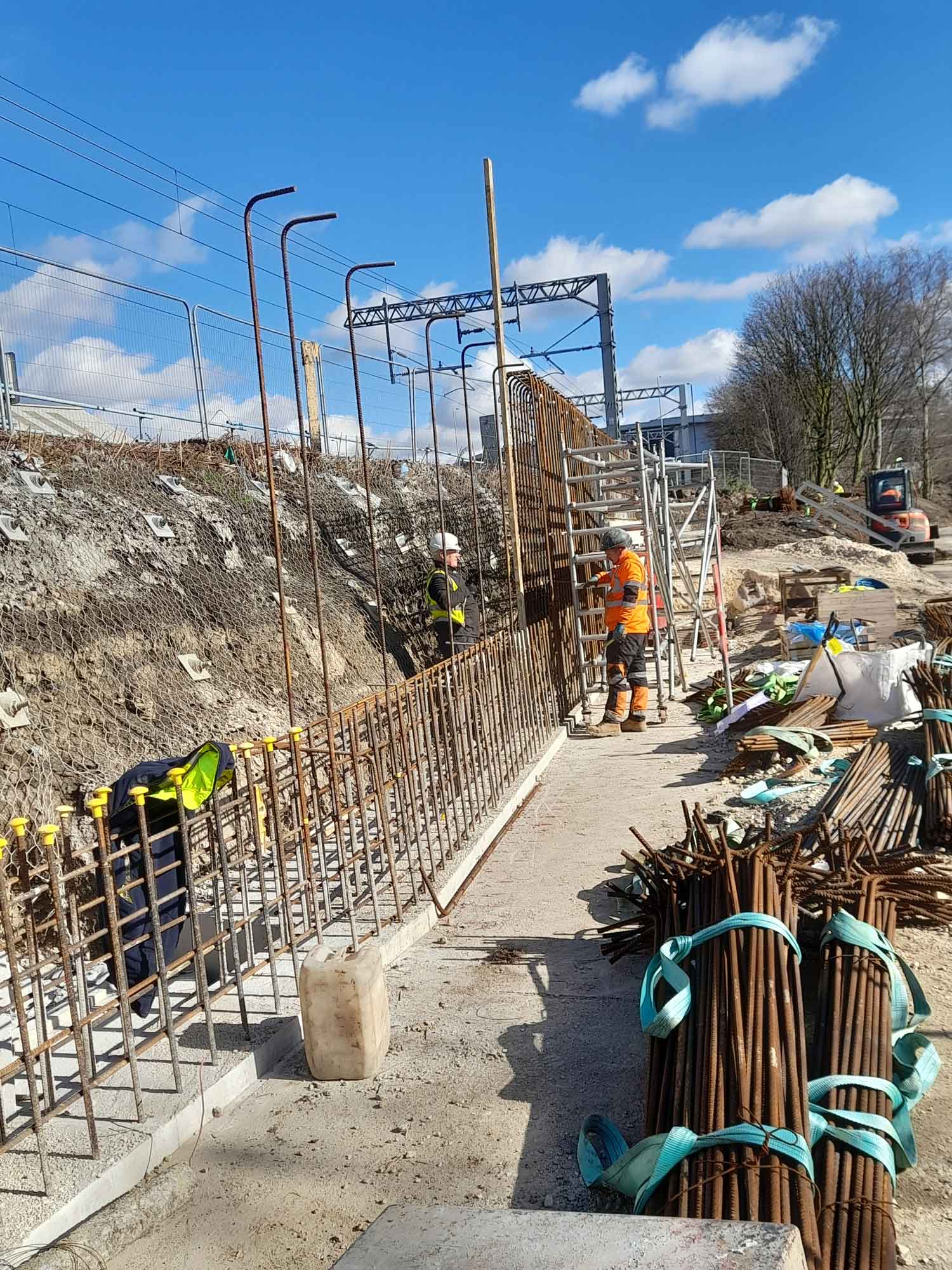
Number of 7m soil nails in the embankment
200m3
Concrete poured on main flood wall
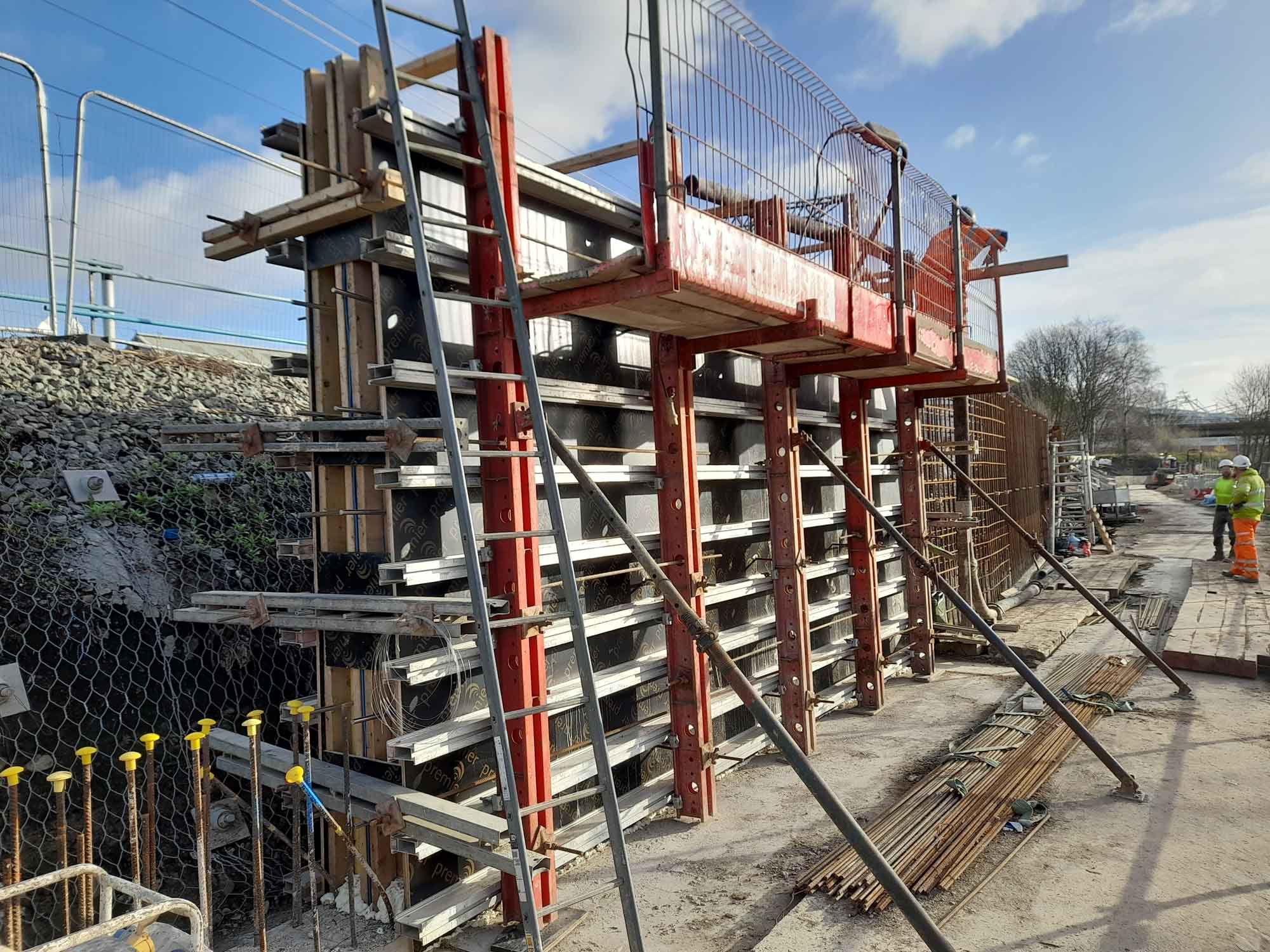
The main working area was between a main railway line and a canal.
Connected by water
By taking action , we can reduce the effects of flooding. That’s the central idea at the heart of South Yorkshire’s ‘Connected by Water’ alliance, a cooperative effort to improve flood resilience among communities and businesses surrounding Sheffield, Barnsley, Rotherham and Doncaster.
Flood risk is acute in the area, with its mix of upland and lowland landscapes. Rivers are the main threat, but surface water flooding, flash floods, canals and even tidal flooding can all have a devastating effect.
Connected by Water helps by raising awareness about flood risk, but it’s also having a direct impact on resilience through a series of projects to balance the greatest risks amplified by the effects of climate change.
Balancing act: Vehicle movements are restricted to protect wildlife including over-wintering as well as nesting birds.
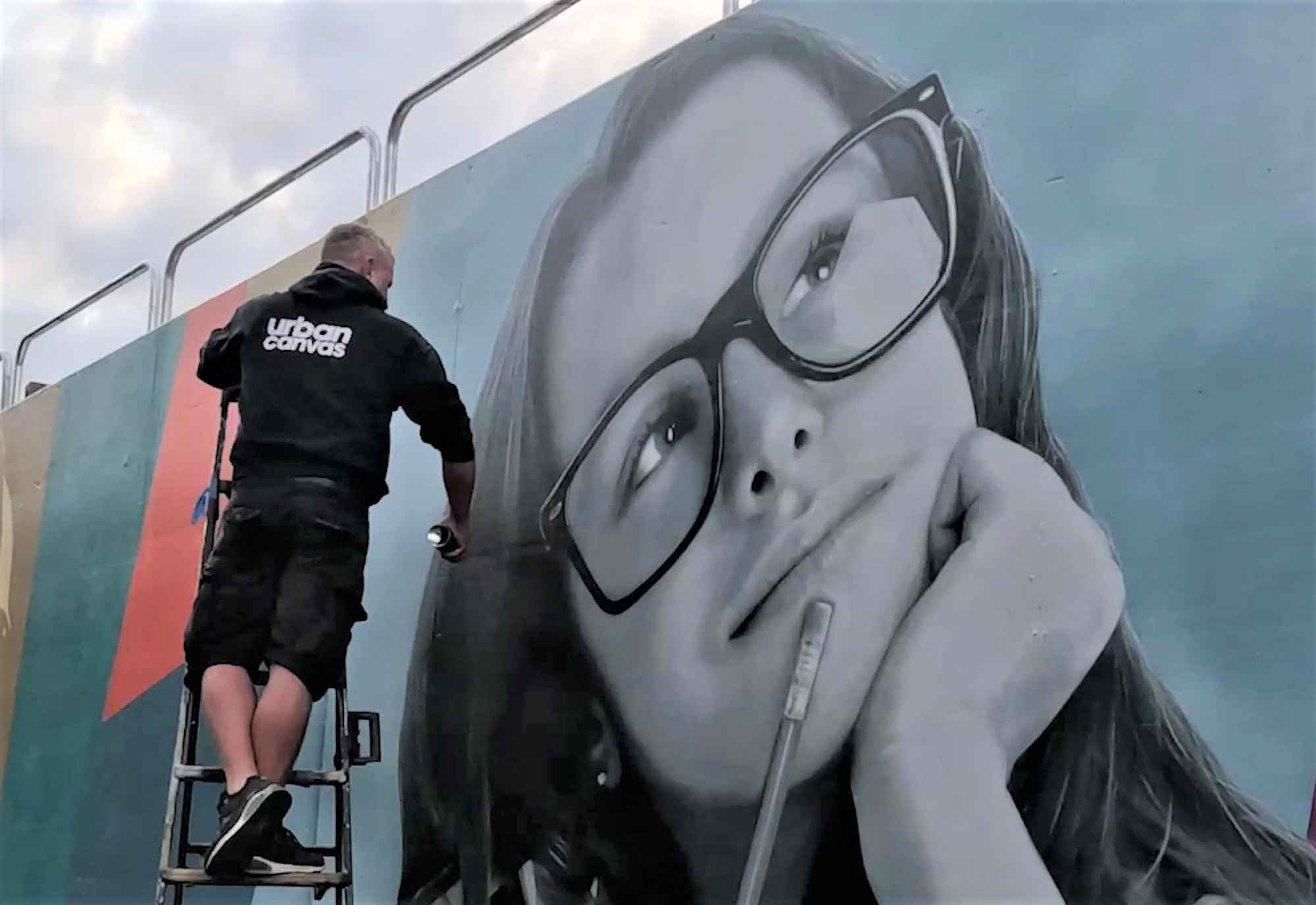
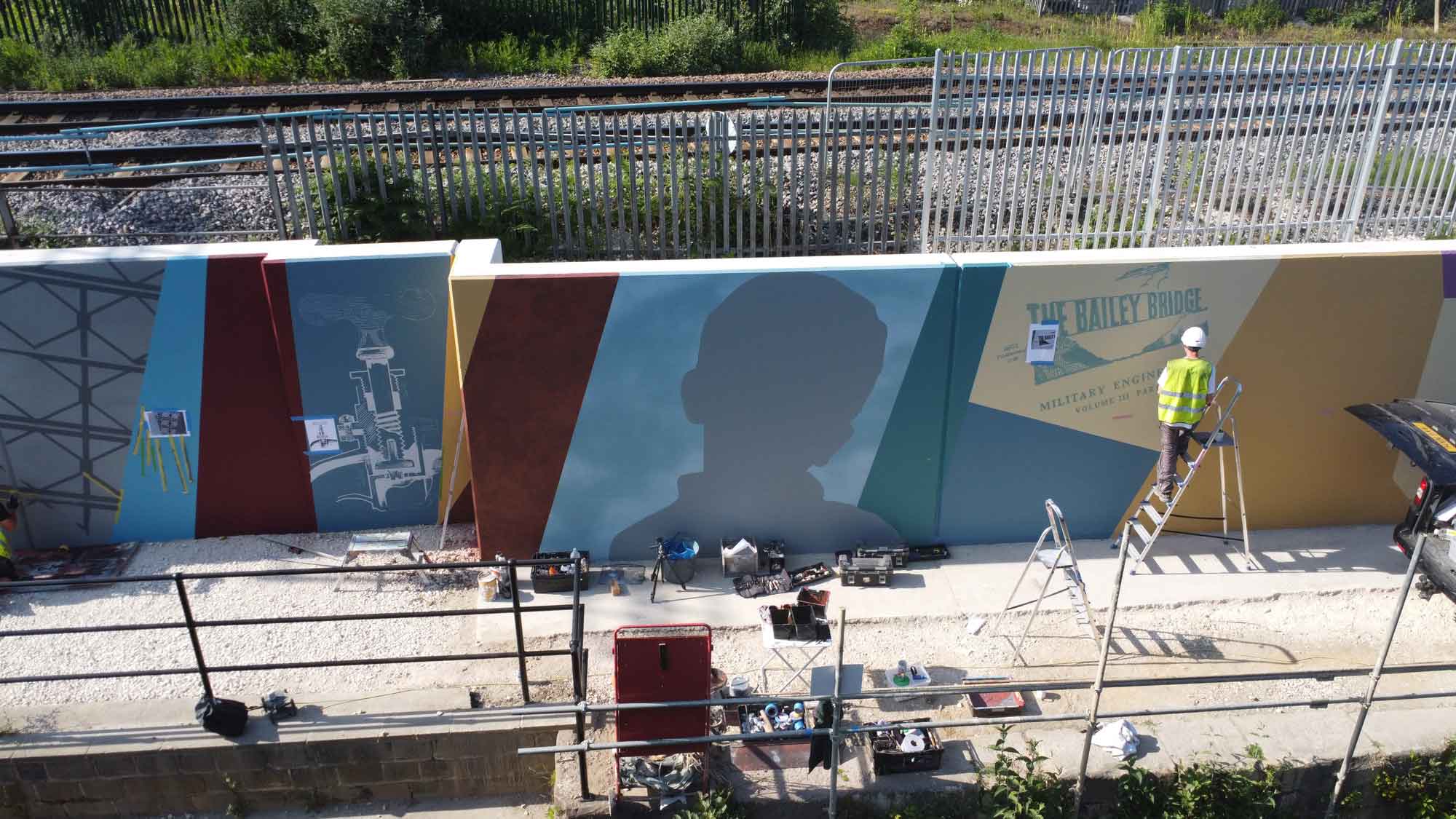
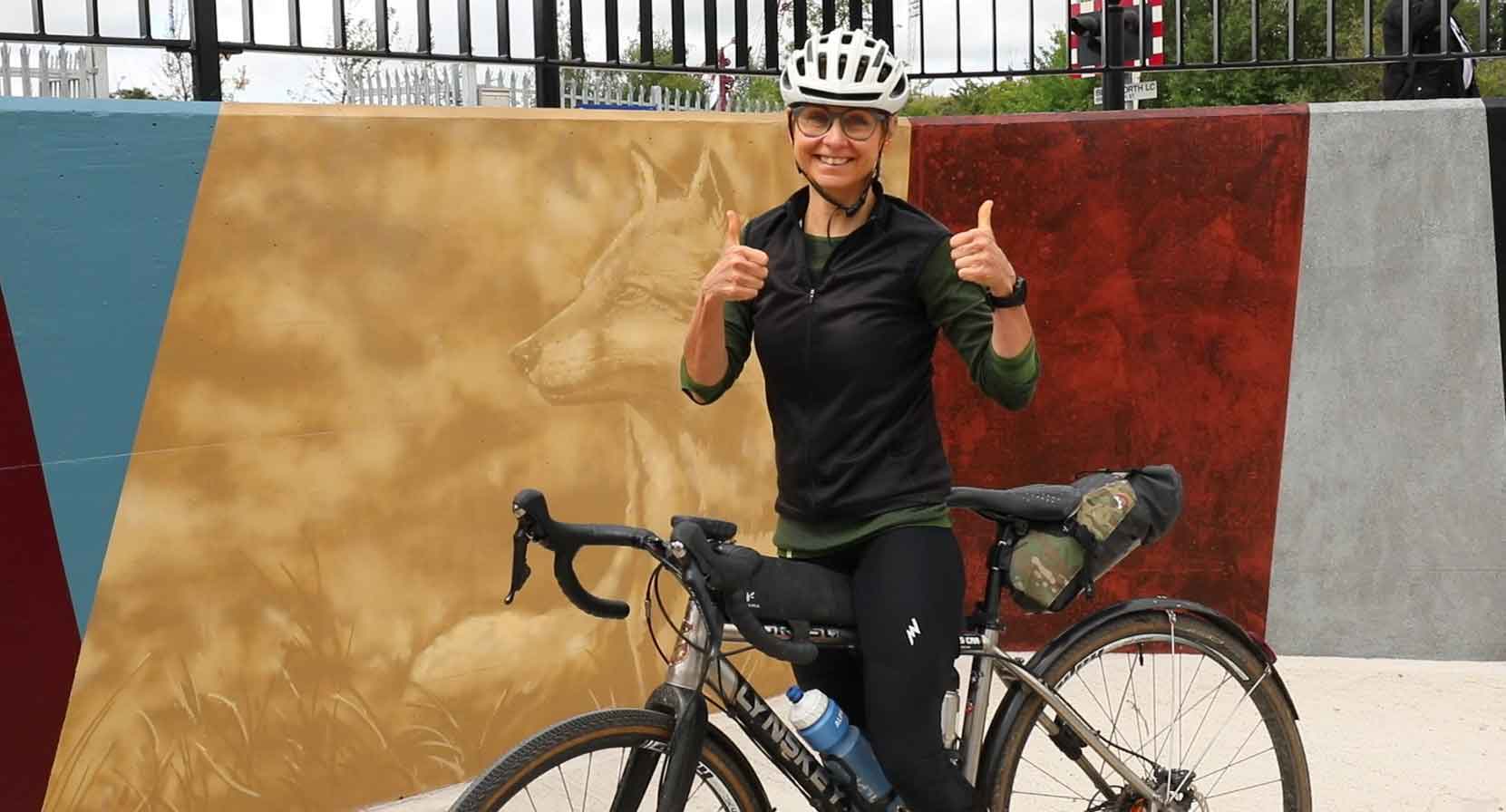
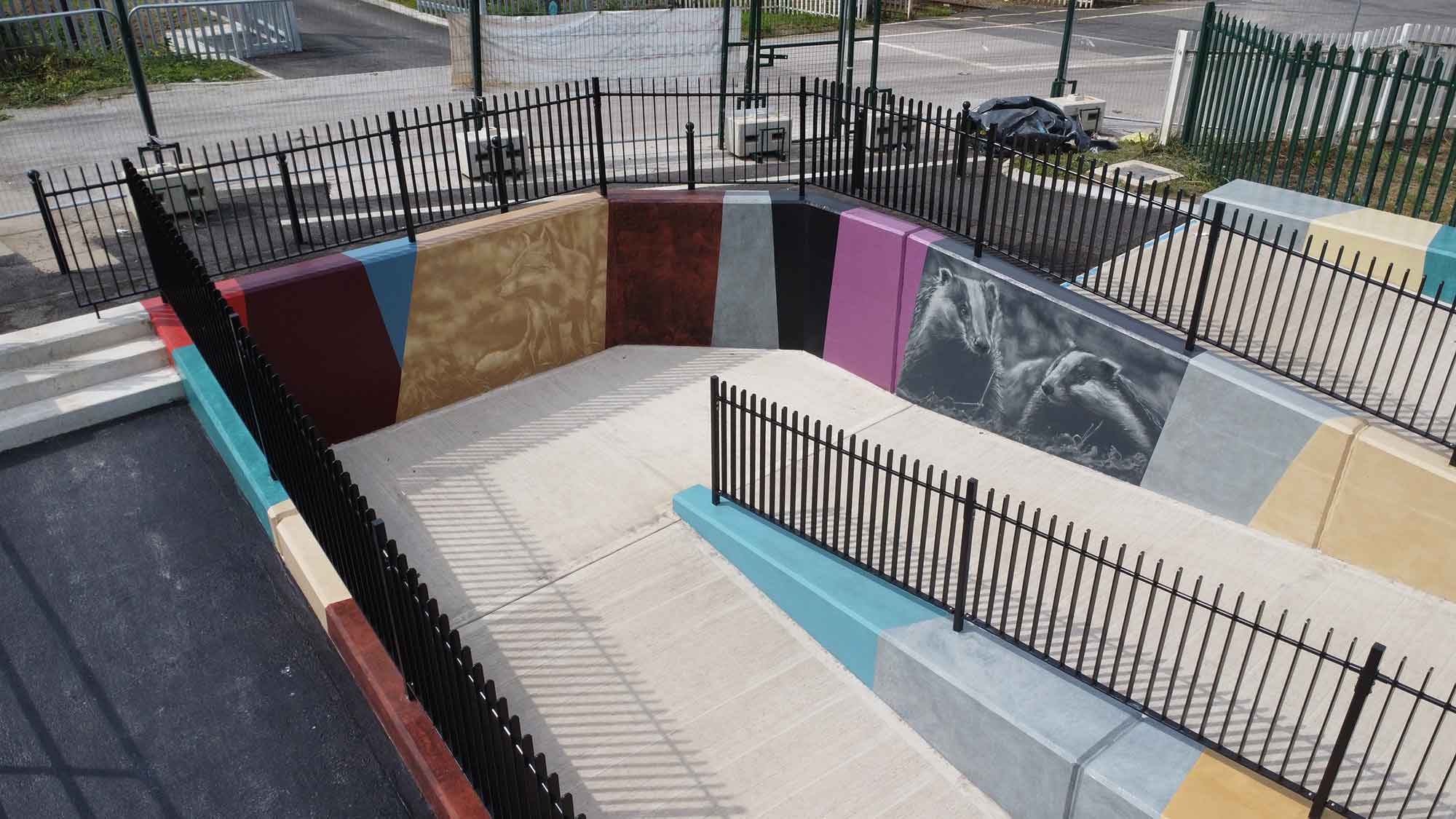
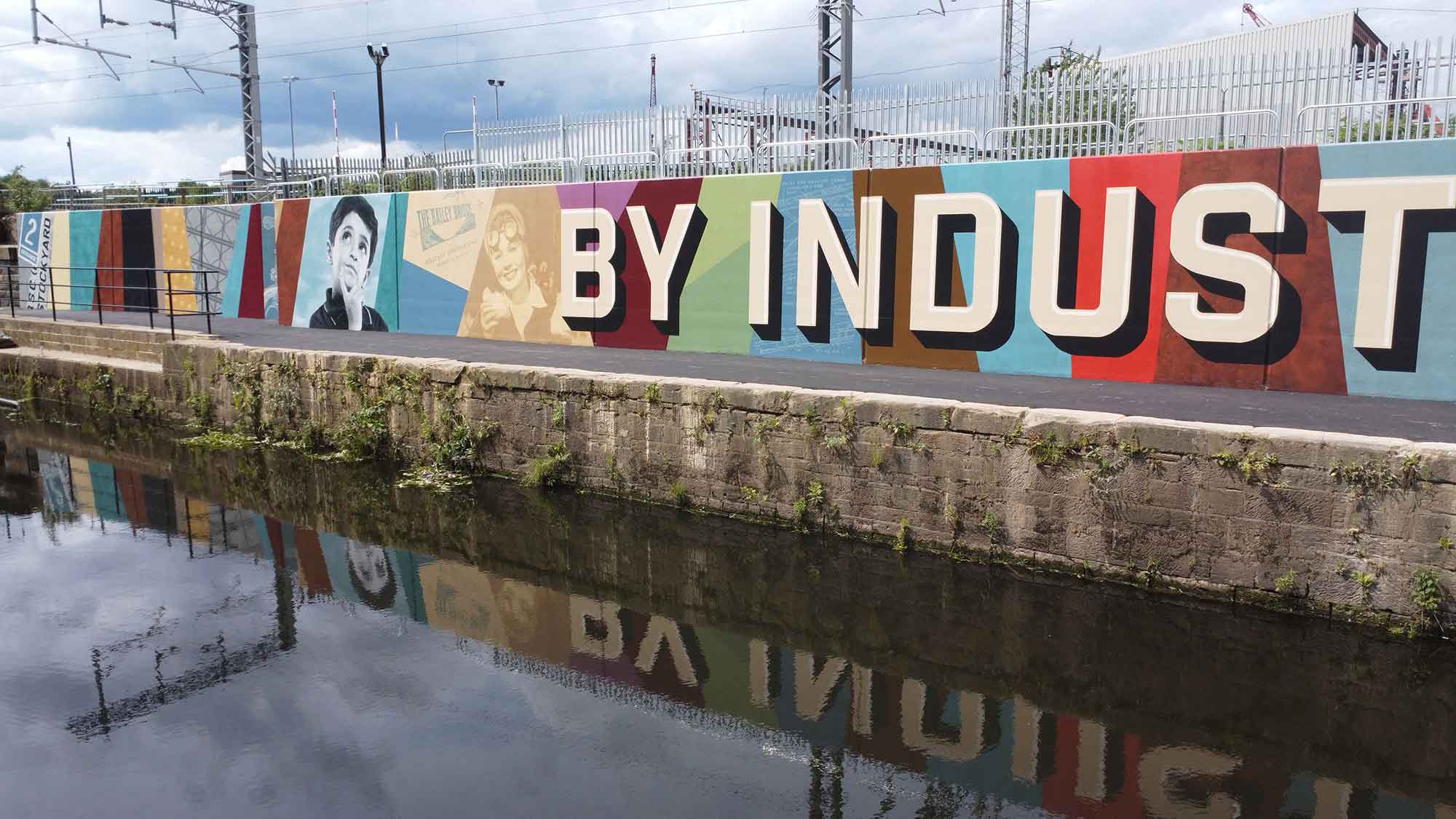
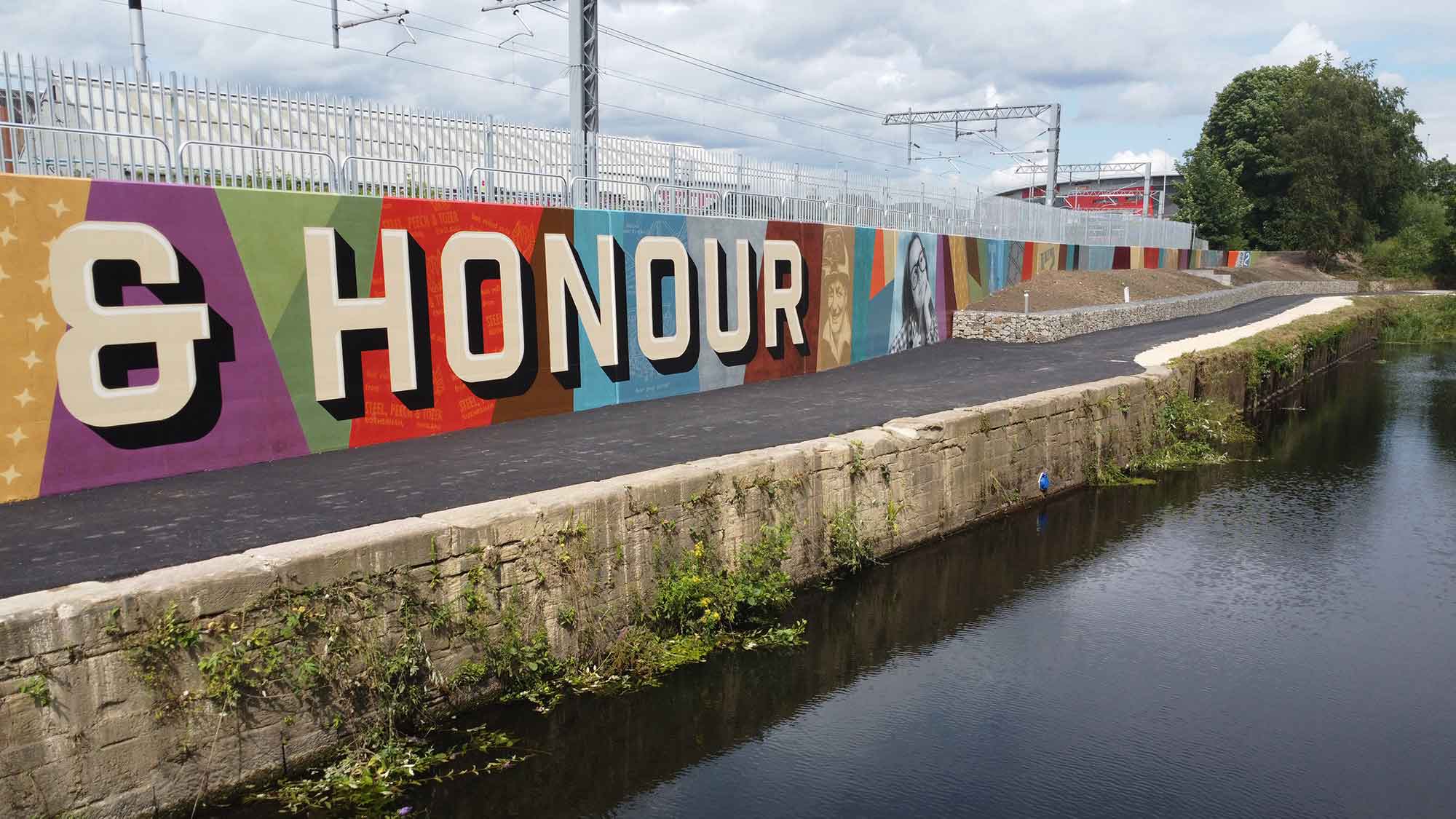
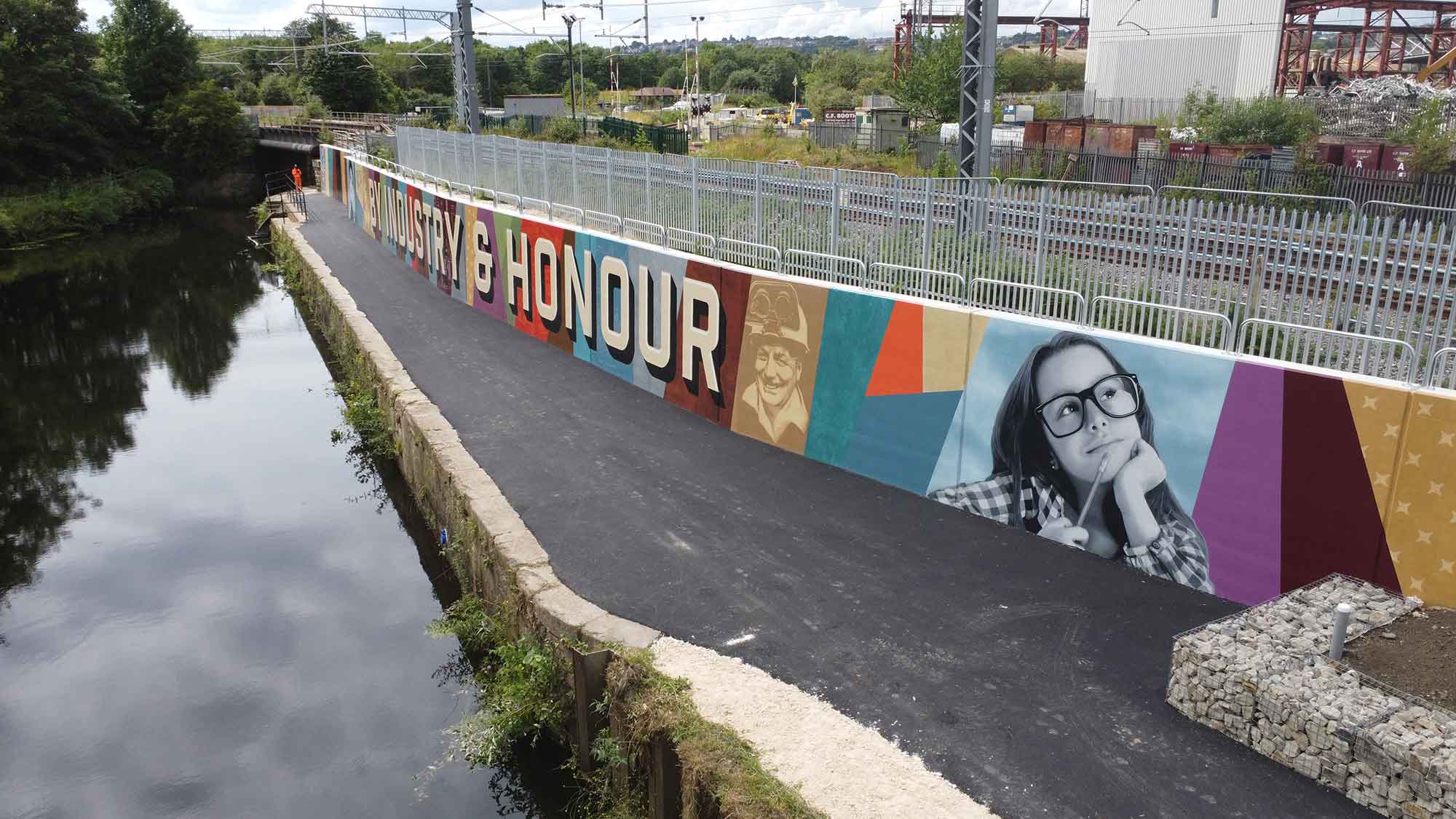
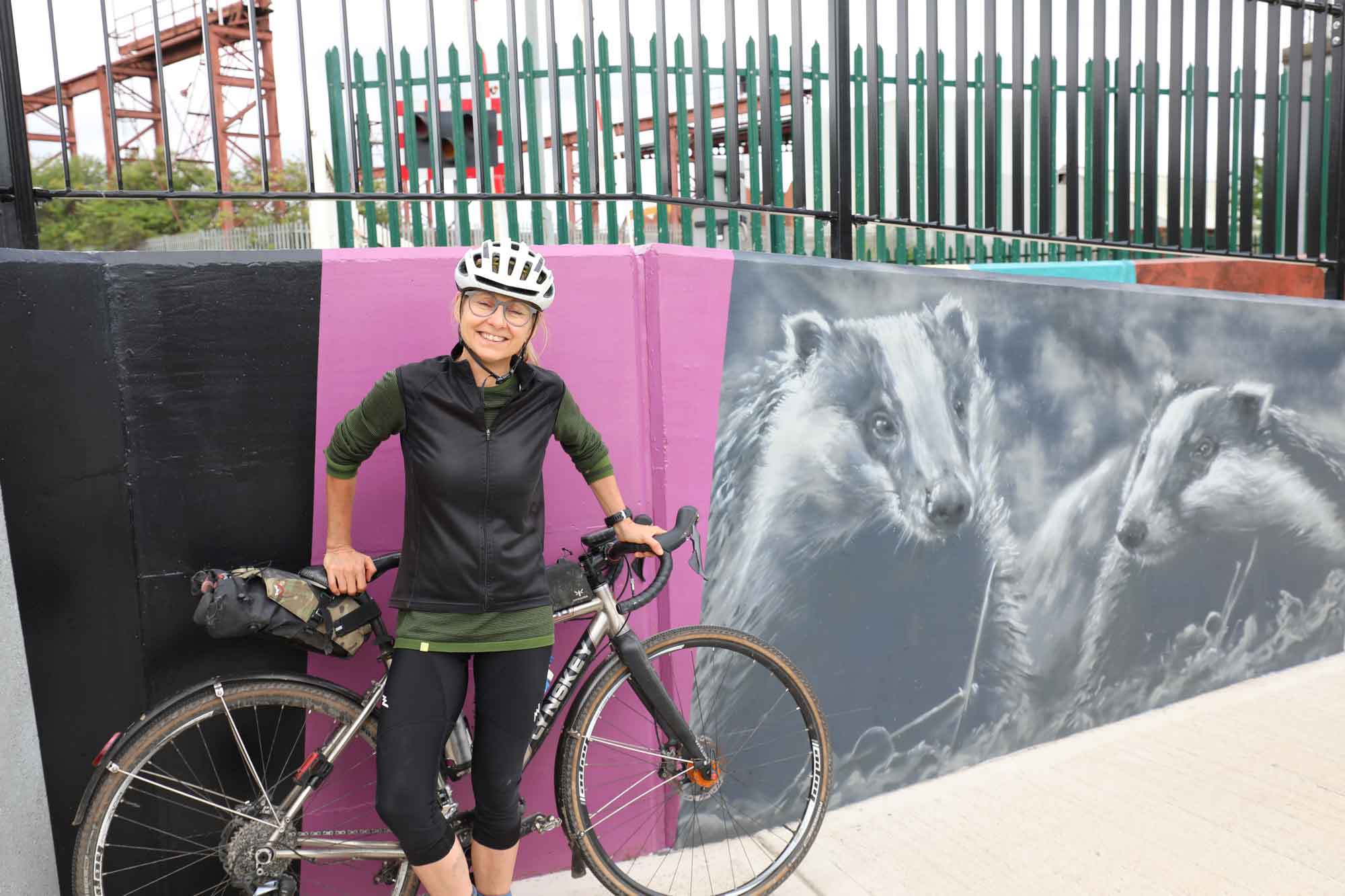
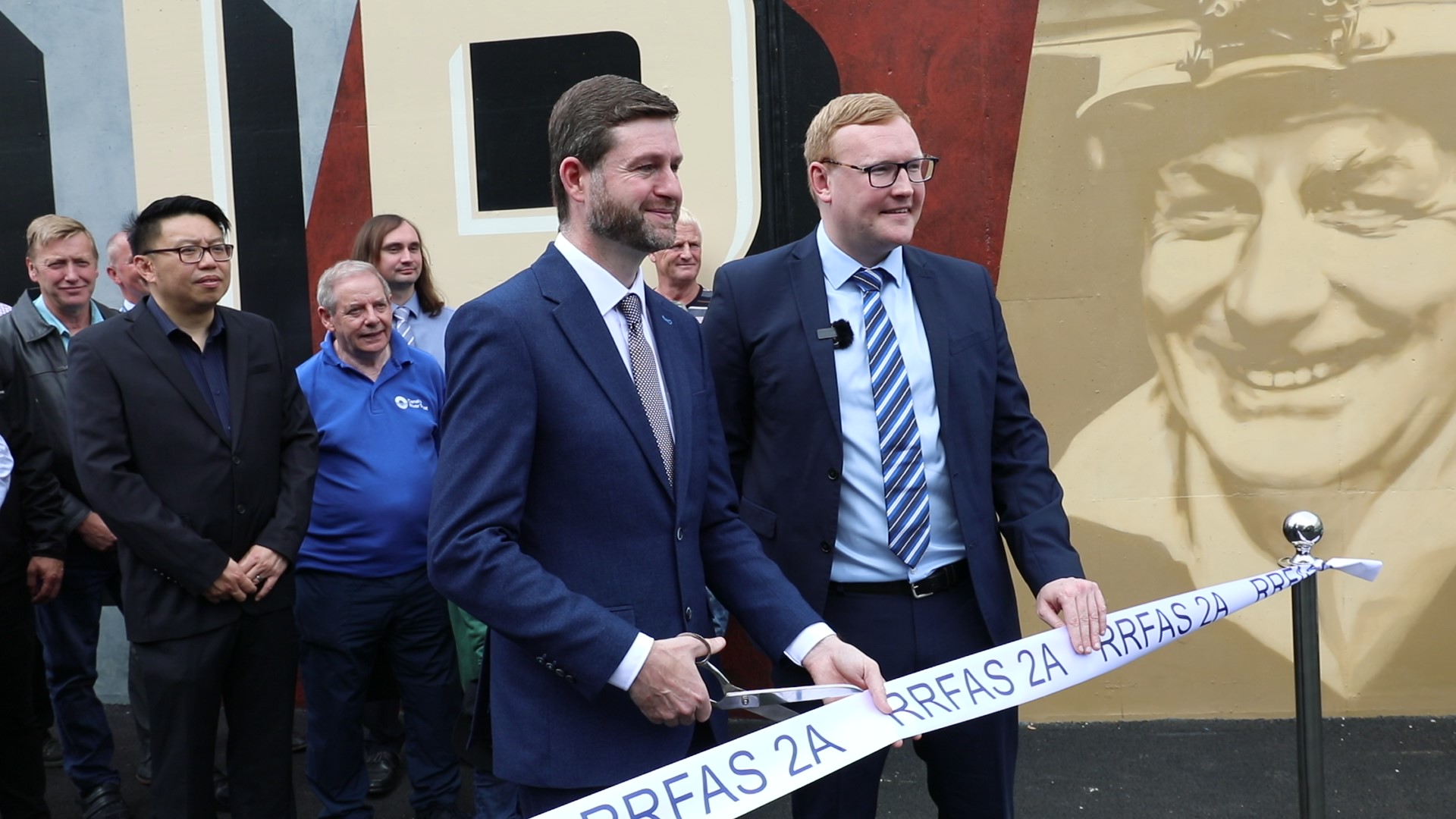
A graffiti team called Urban Canvas were commissioned to paint a storyboard of Rotherham’s history along the wall.
A plan, a canal
In Rotherham, homes, businesses, and the railway will all be better protected from floods by a striking, 125-metre-long, concrete wall from Ickles Lock to Centenary Way, Rotherham.
The flood wall is designed to reduce the risk of the nearby River Don overtopping into the canal and flooding the town centre and the central railway station.
The canal defence is part of a larger coordinated flood prevention scheme that includes a new flood barrier project, also led by Jackson. Together, the flood resilience schemes will mitigate costs and disruption to the community and also support the redevelopment of former industrial land in the heart of Rotherham.
Narrow margin
Like all projects, there were unique difficulties to overcome – in this case, environmental impact and gaining access to the site. Running between the main railway line and the canal, with a high-pressure mains pipe buried in the middle, the construction of the wall proved a complex engineering challenge.
The work included extensive soil nailing to the rail embankment and augered piling for the wall foundations. The team also faced the challenge of how to place nearly 200m3 of concrete with only towpath access less than 3m wide.
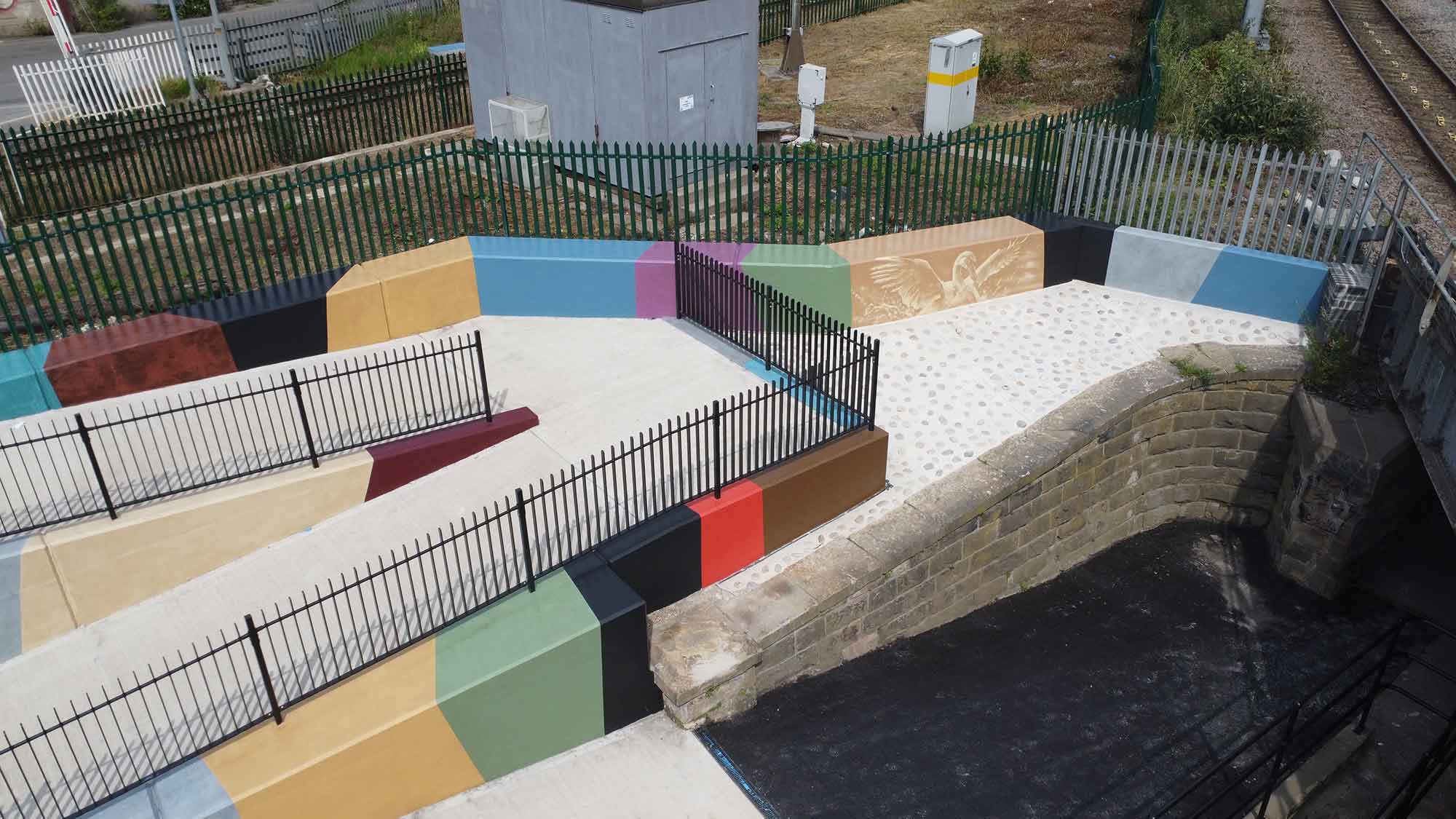
Jackson worked with the Canal & River Trust to restrict loss of aquatic life and included a landscaping scheme to create habitats. Jackson also sought low carbon materials choices with 400 tonnes of cement-free concrete. The scheme also included improvements to the adjacent towpath, construction of a three-legged cycle ramp and high-quality landscaping to areas overlooking the lock.
A total of 125 soil nails were driven into the embankment