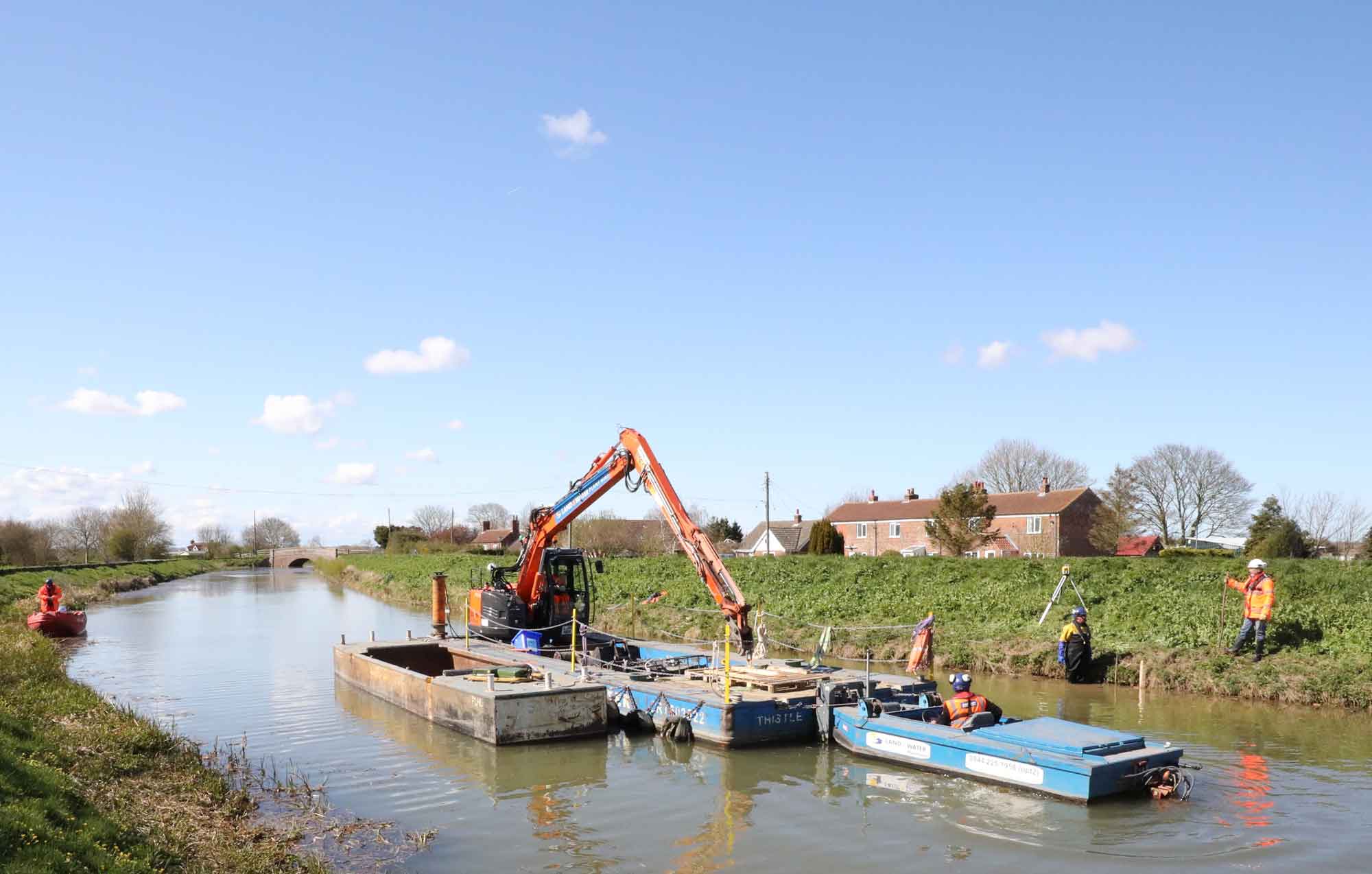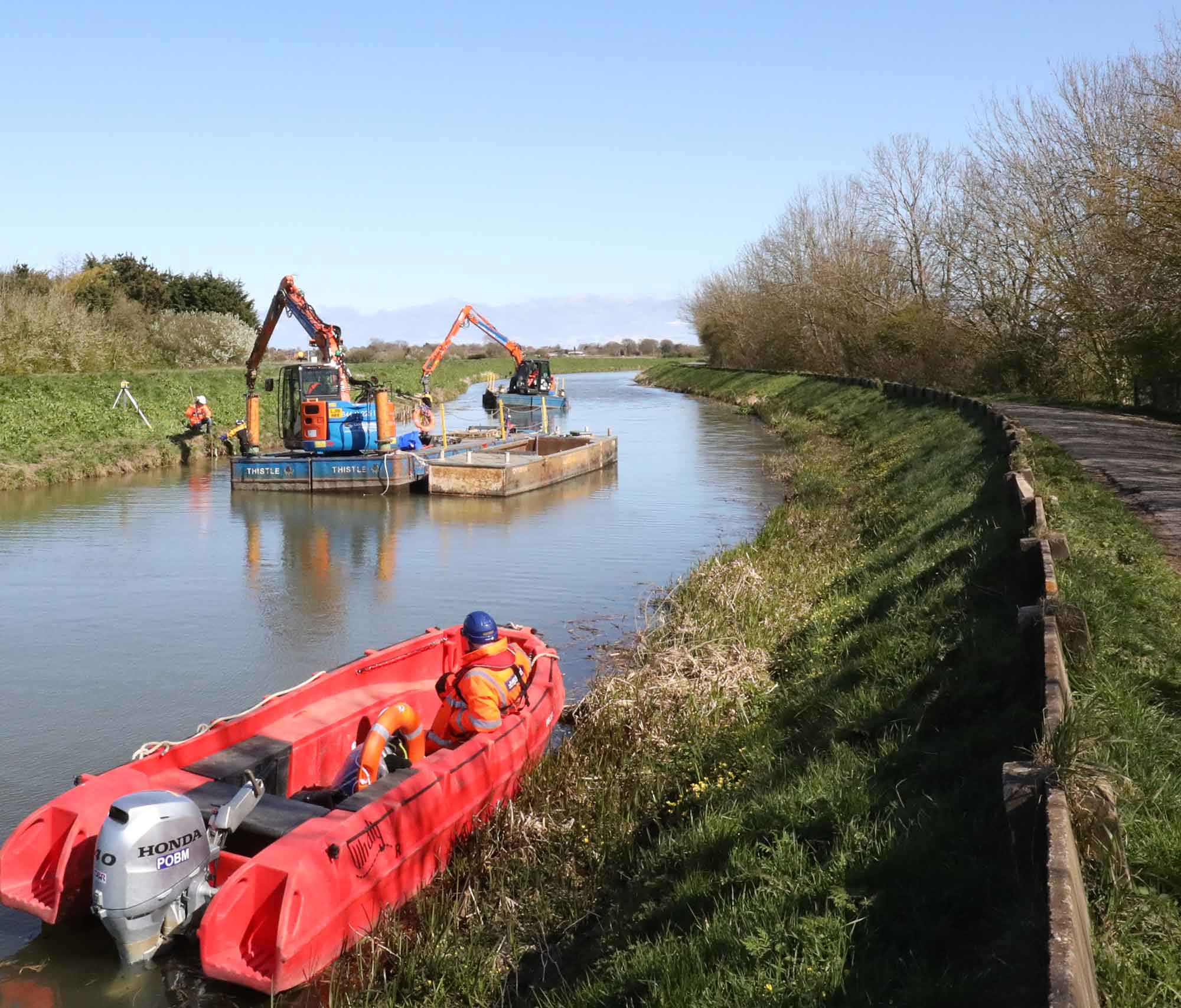
Bio-engineering provides the right balance of structural intervention with ecological benefit to restore embankments along the River Steeping at Wainfleet.
Our impact
4km
Length of embankments where erosion work took place
580+
Number of homes protected by embankment
550ha
Hectares of farmland protected
Embankment erosion work on the River Steeping relief channel.
After the flood
In June 2019, the area around the Lincolnshire village of Wainfleet All Saints had nearly six inches of rain in three days. By the third day, sections of the relief channel began to flood prior to a breach.
Water from the River Steeping flooded 100 properties and at least 550 hectares of farmland, and 580 homes had to be evacuated. The railway line between Boston and Skegness effectively became a river.
The emergency services declared it a major incident and news of the flooding became a national story. In the months after, an inquiry found that the embankments along the River Steeping and the relief channel had eroded.
Balancing act: Vehicle movements are restricted to protect wildlife including over-wintering as well as nesting birds.
In some locations the erosion was so bad the bank had to be built up again.
Bio-engineering solution
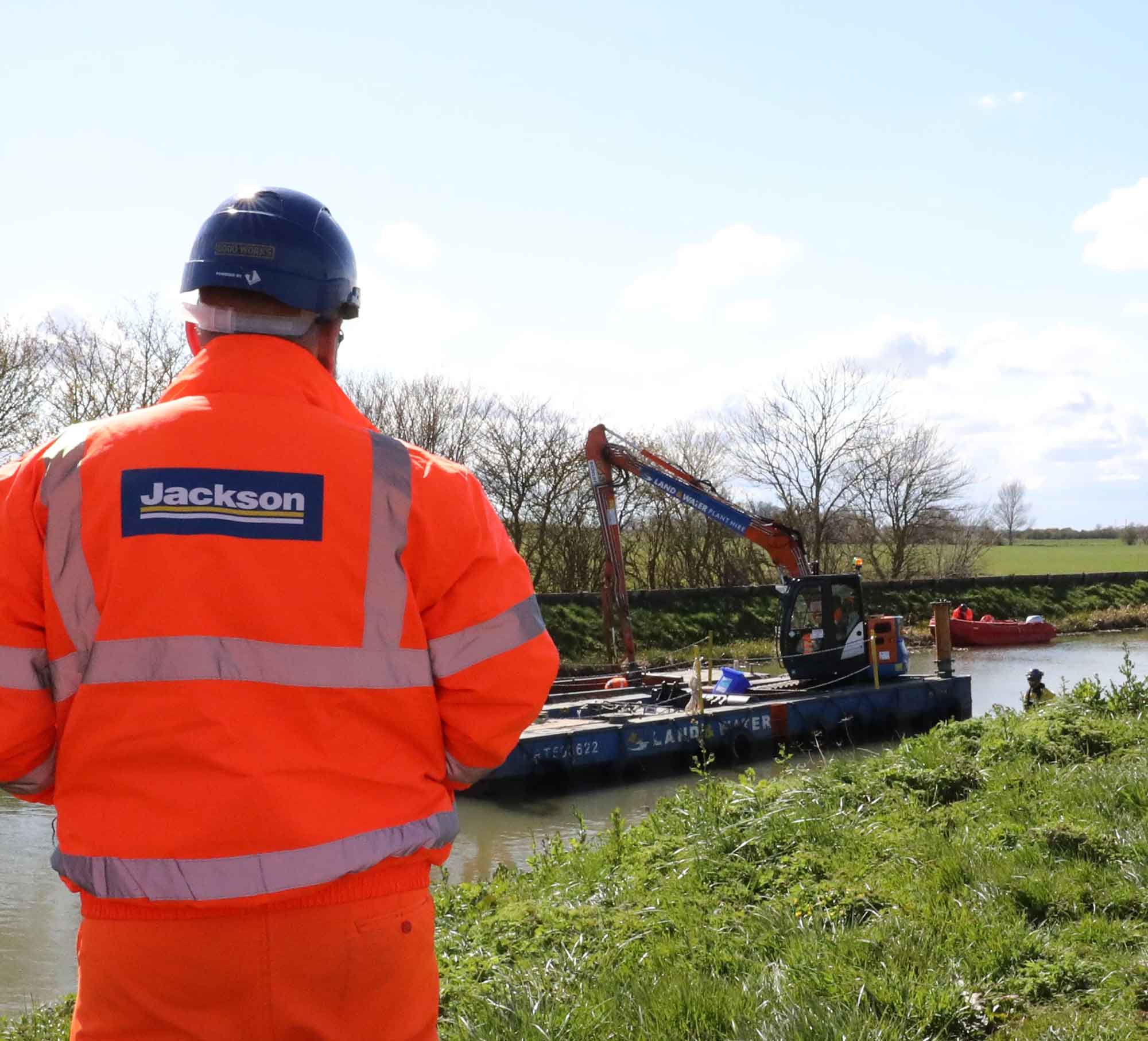
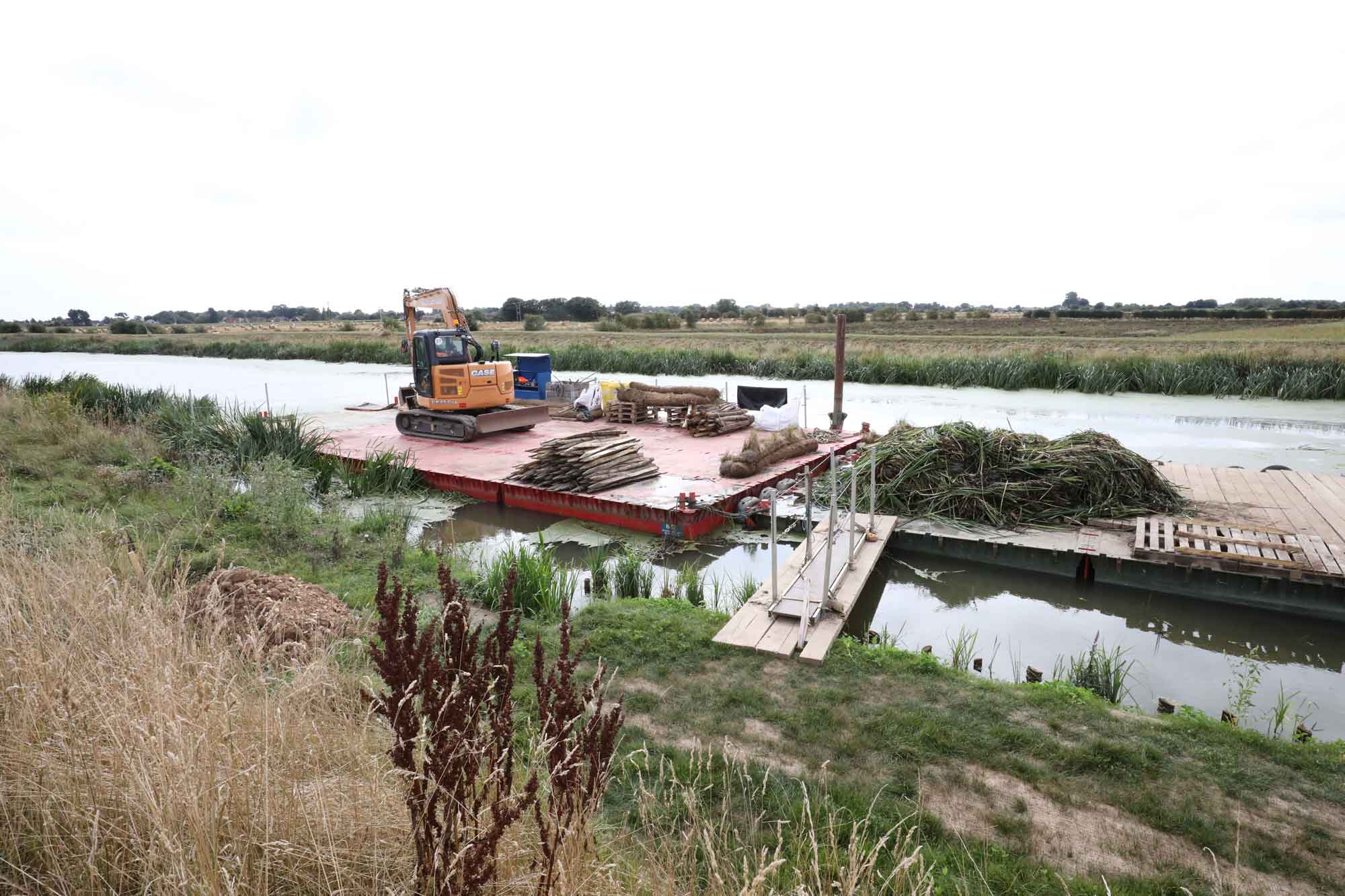
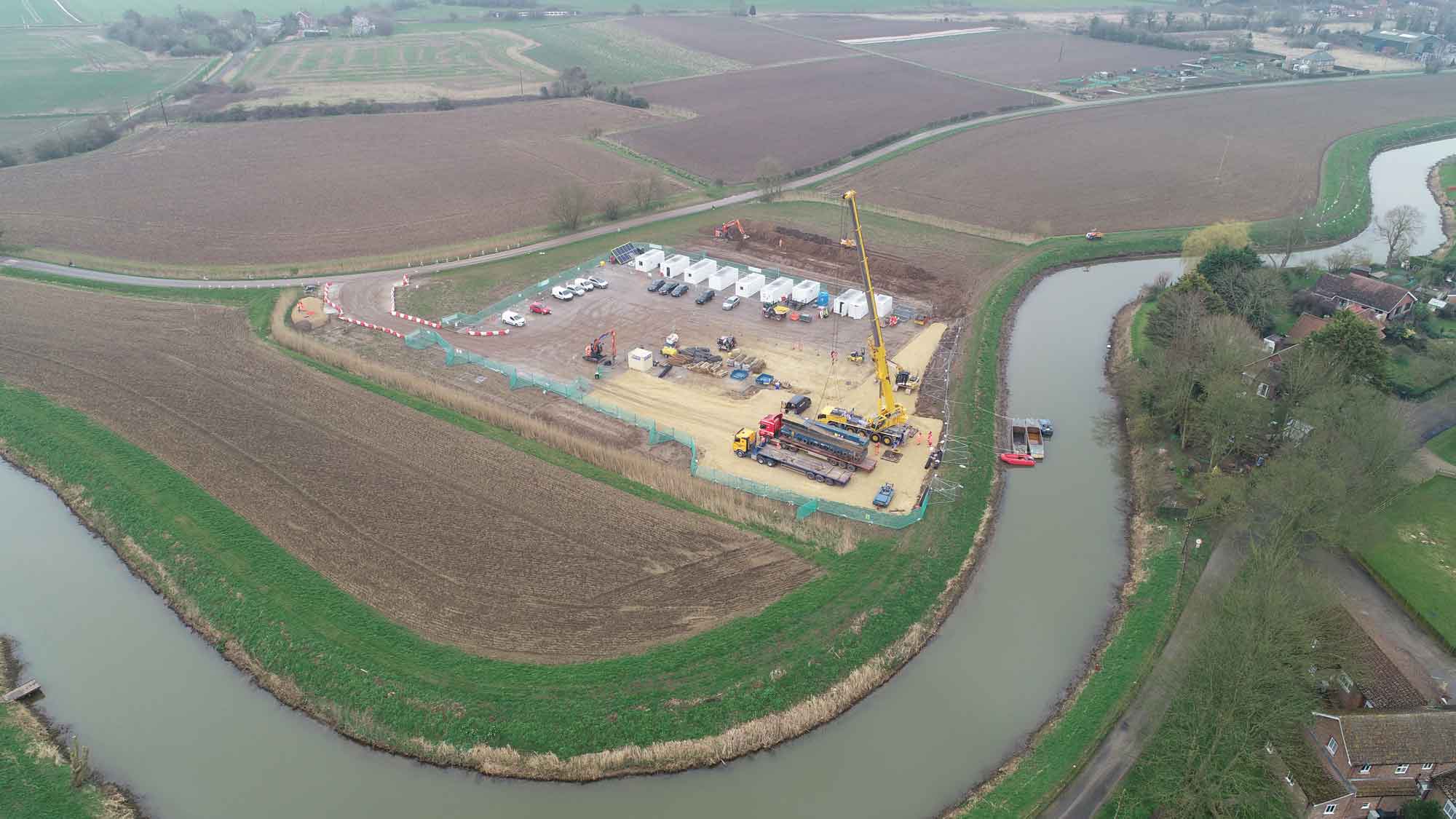
From its Wainfleet compound, Jackson Civil Engineering oversaw erosion protection works on behalf of the Environment Agency, working on two embankment sections of the River Steeping – one 2.4km in length and the other 1.6km.
Rather than a hard engineering solution, the Jackson team installed an environmentally sensitive alternative using bio-engineering and vegetation re-establishment.
Consideration for the local population
Much of the early preparation required liaising with landowners with whom good relations were required throughout the project. Jackson’s team kept local roads swept regularly and filled pot holes to leave the land in as good or better condition than before.
Sensitivity was also shown to other occupants of the neighbourhood. An on-site ecologist team at Wainfleet was primarily concerned with mitigating any risk that the work may cause the protected water vole population on the River Steeping.
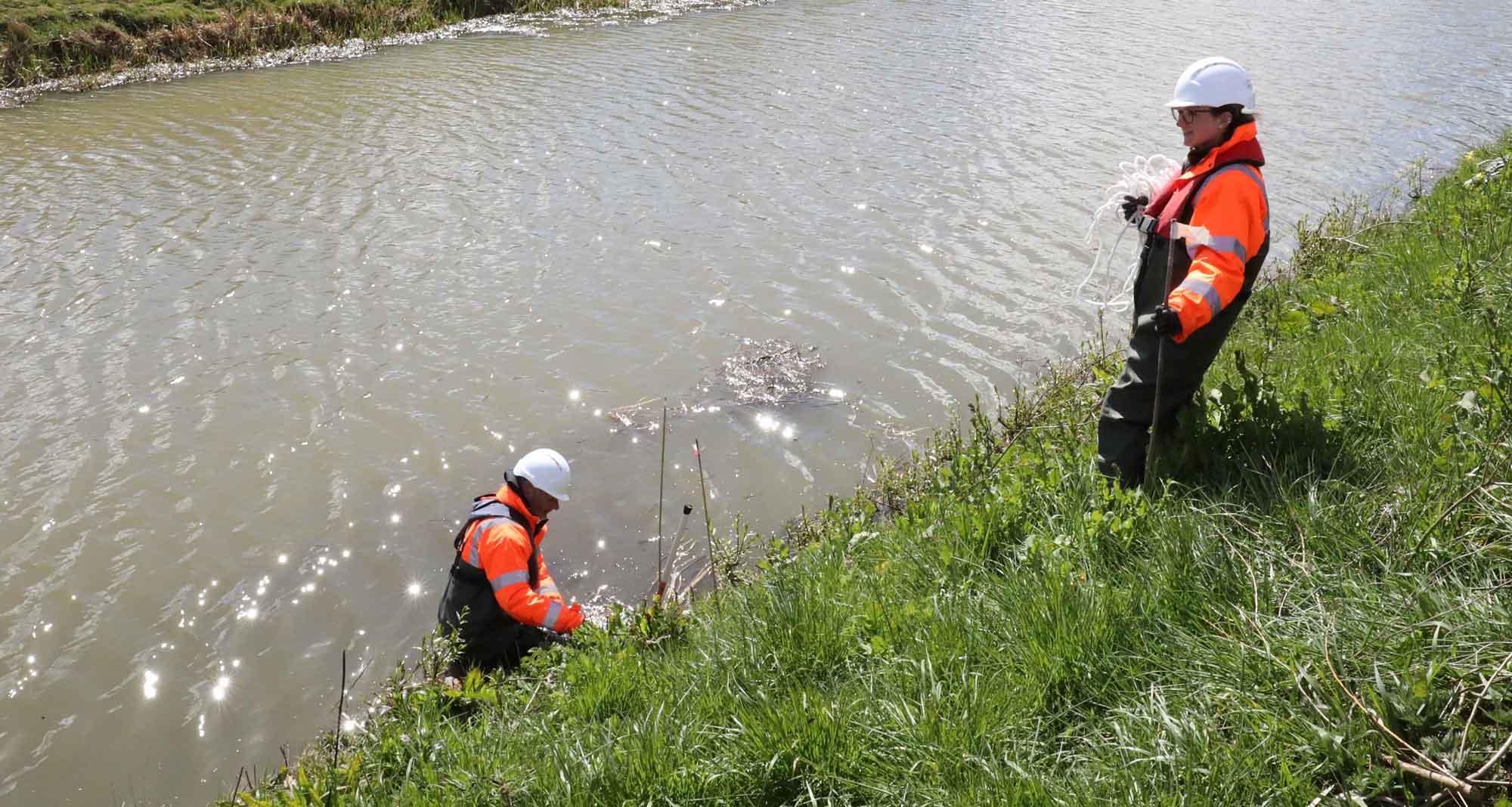
Ecologists surveyed the river banks on a daily basis, searching for signs of water vole activity and any burrows. Markers with a red flag were placed at these locations to inform the teams not to obstruct them. In some cases displacement was used to encourage voles to move for the duration of the works.
Ecologists constantly surveyed the river banks for signs of water vole activity.
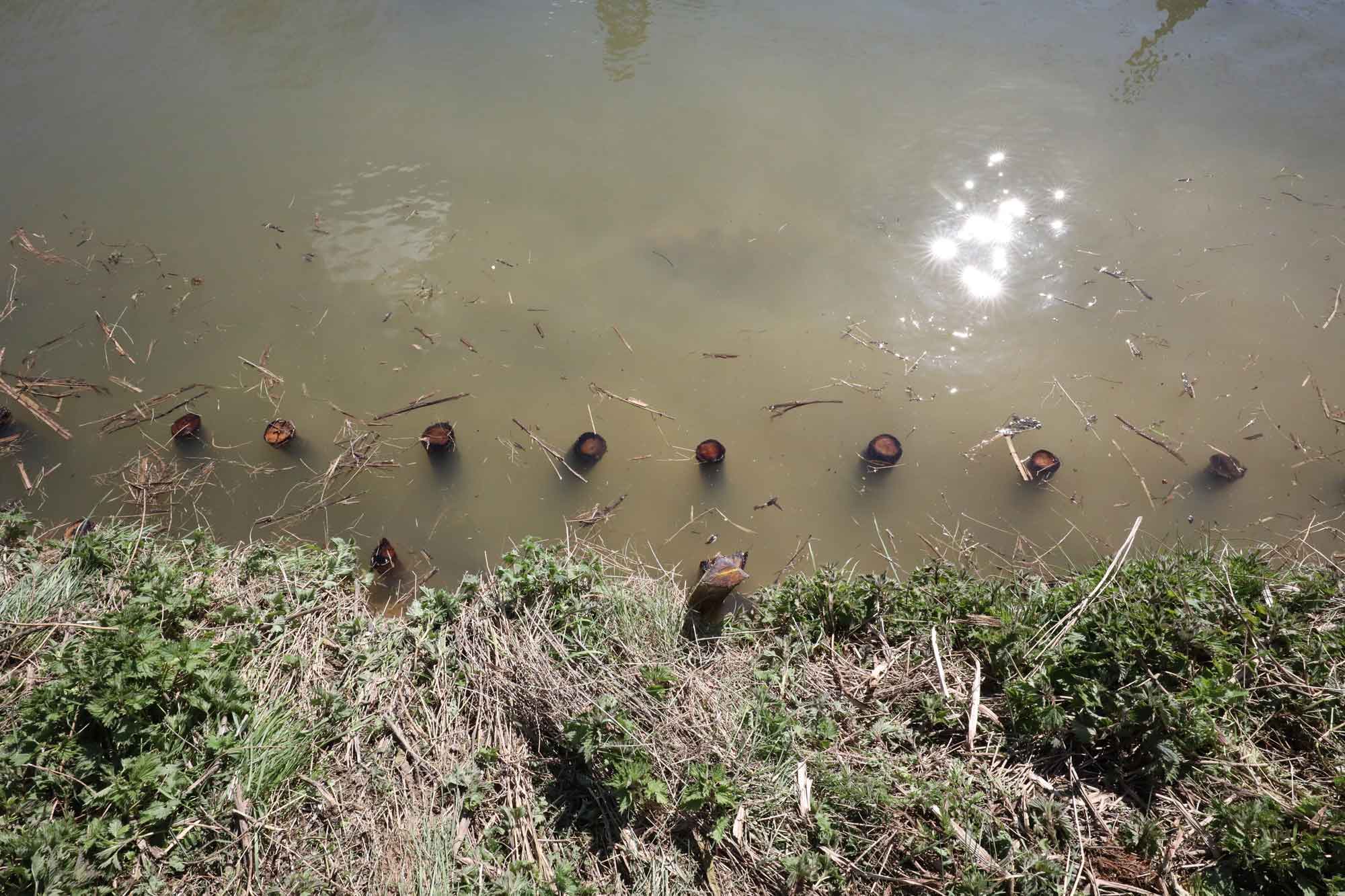
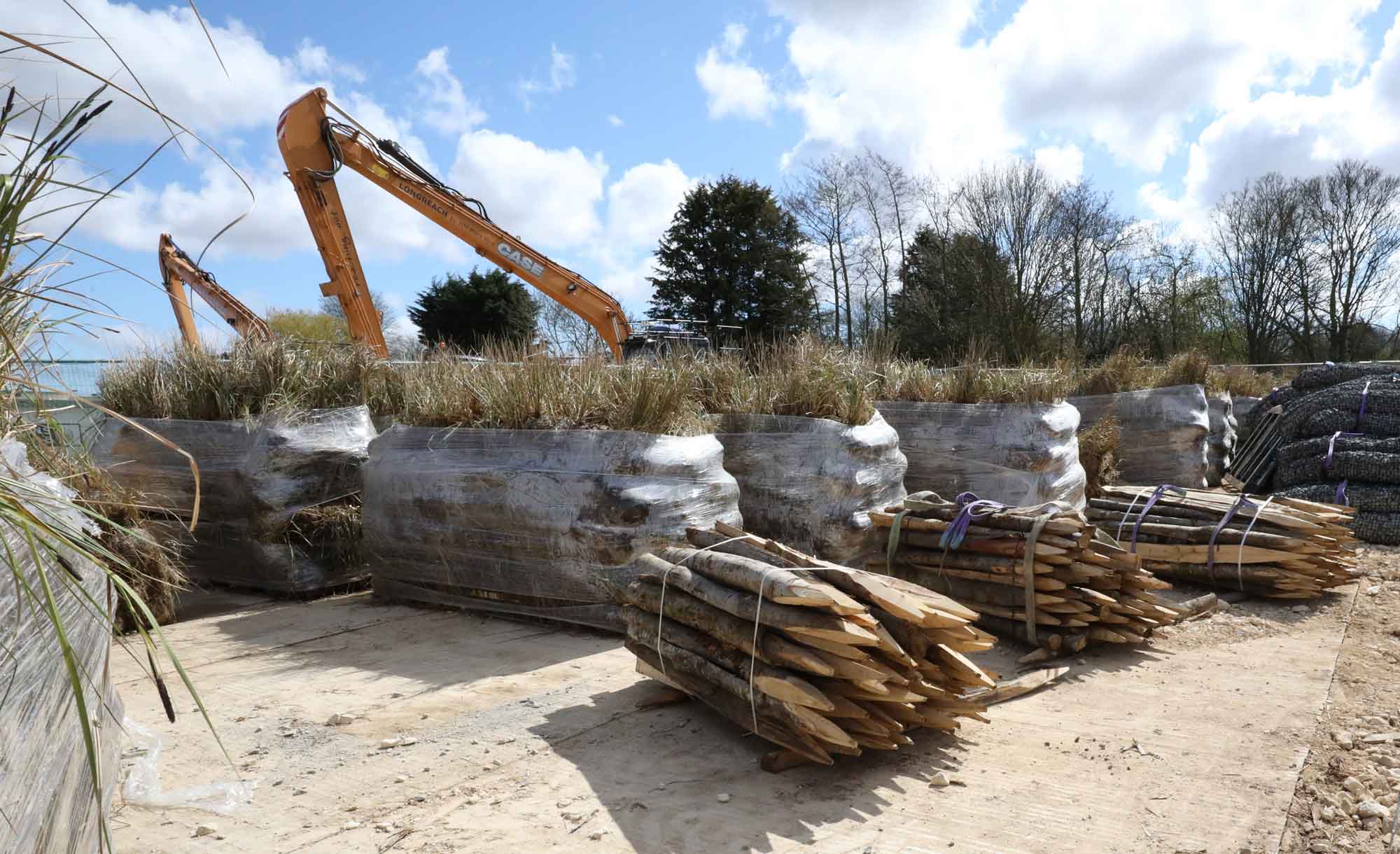
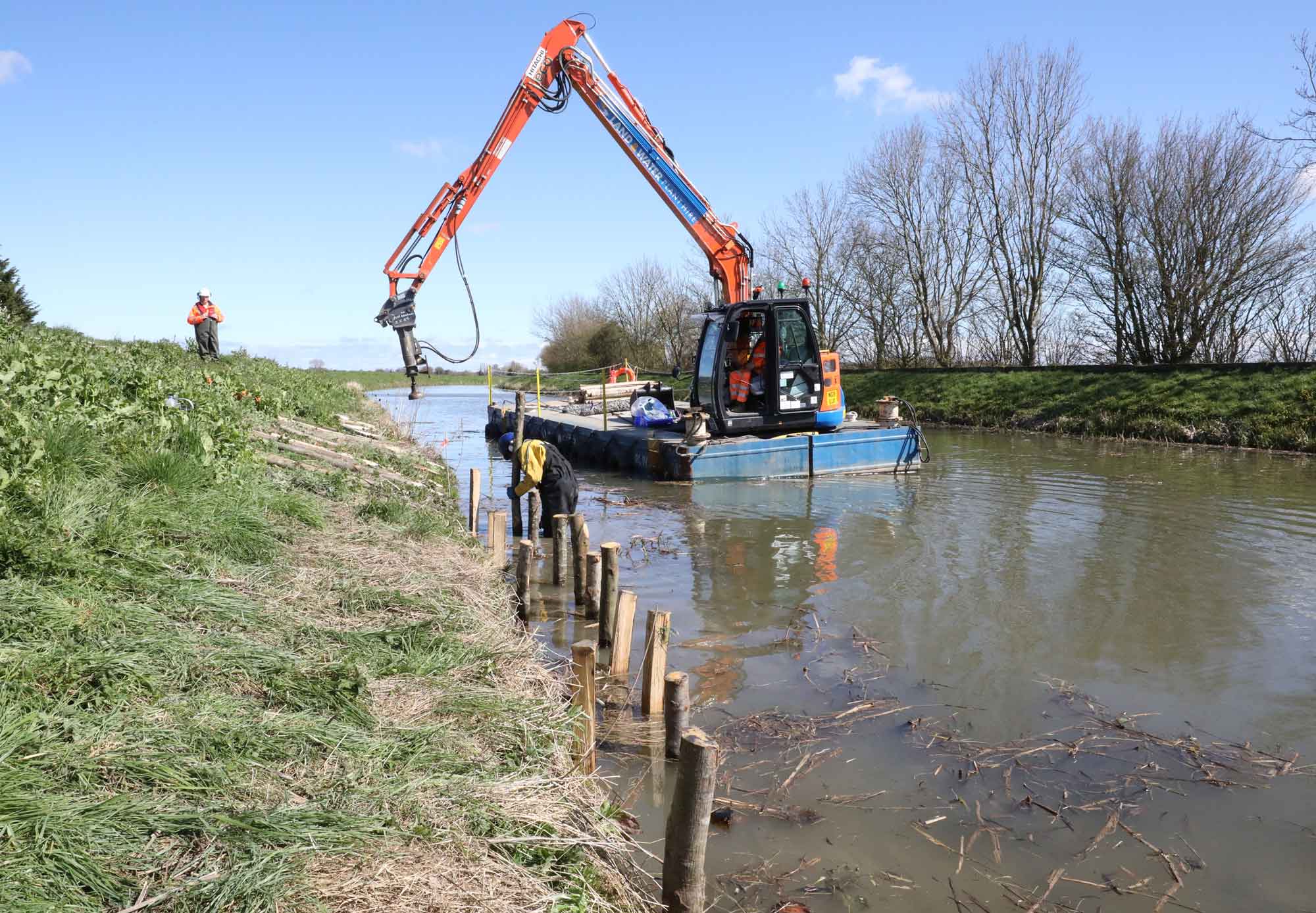
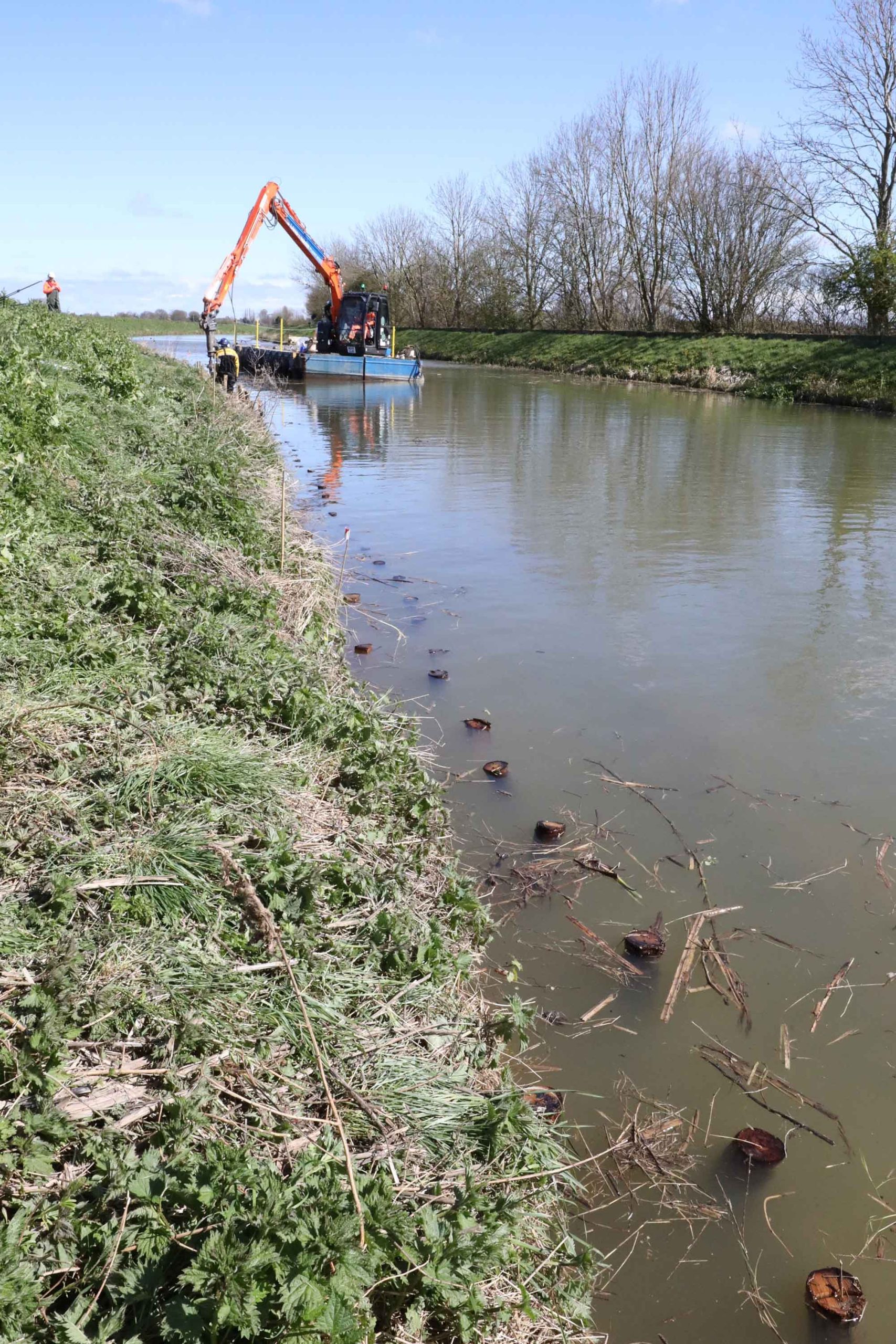
Chestnut stakes hold the coir matting and rock rolls in place.
Rock and roll
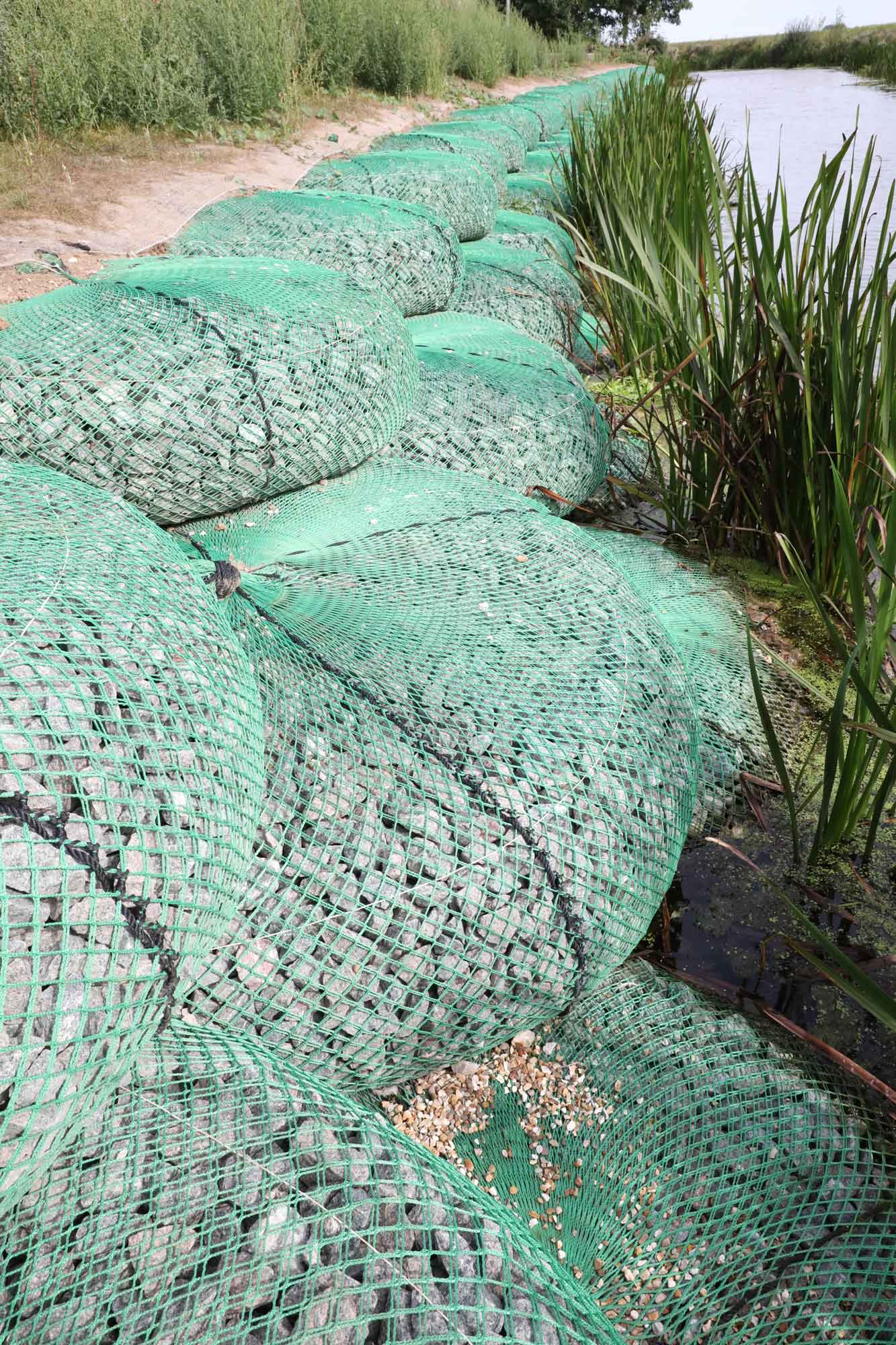
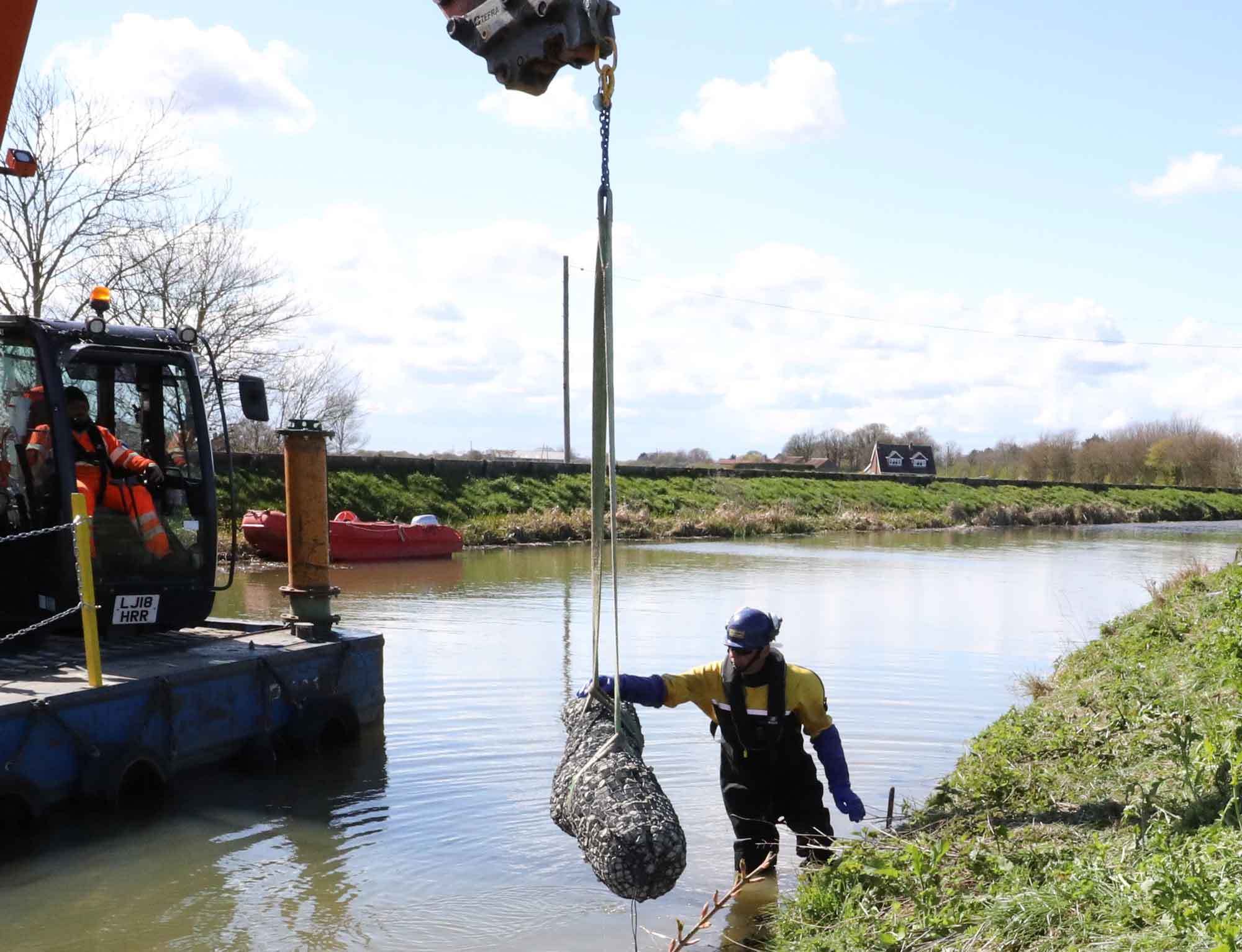
A combination of rock rolls (mesh bags containing coarse gravel) and coir rolls was used to create a protective, energy-absorbing fringe along the riverbank. The coir is placed over the rock rolls and arrives already planted with native riparian plants, such as reed and glyceria.
Coir is a sustainable waste product from the husk of the coconut shell. Coir rolls are an organic, living revetment that provide erosion control and encourage rapid vegetation establishment.
The rock and coir rolls are held in place using chestnut stakes. Chestnut was chosen because it will last up to 25 years in the water.
Where required – on the top of embankments biodegradable coir matting is put down to keep the topsoil in place and prevent erosion. It is held in place by small, biodegradable stakes.