Re-wriggling rivers
Soft engineering brings back meanders and riffles to the River Lark catchment
Anglian Water’s River Restoration Scheme designed to restore rivers to their natural shape.
Our impact
85%
Amount of world’s chalk streams found in England
31m
Miles of the River Lark
6
Stretches of river worked on
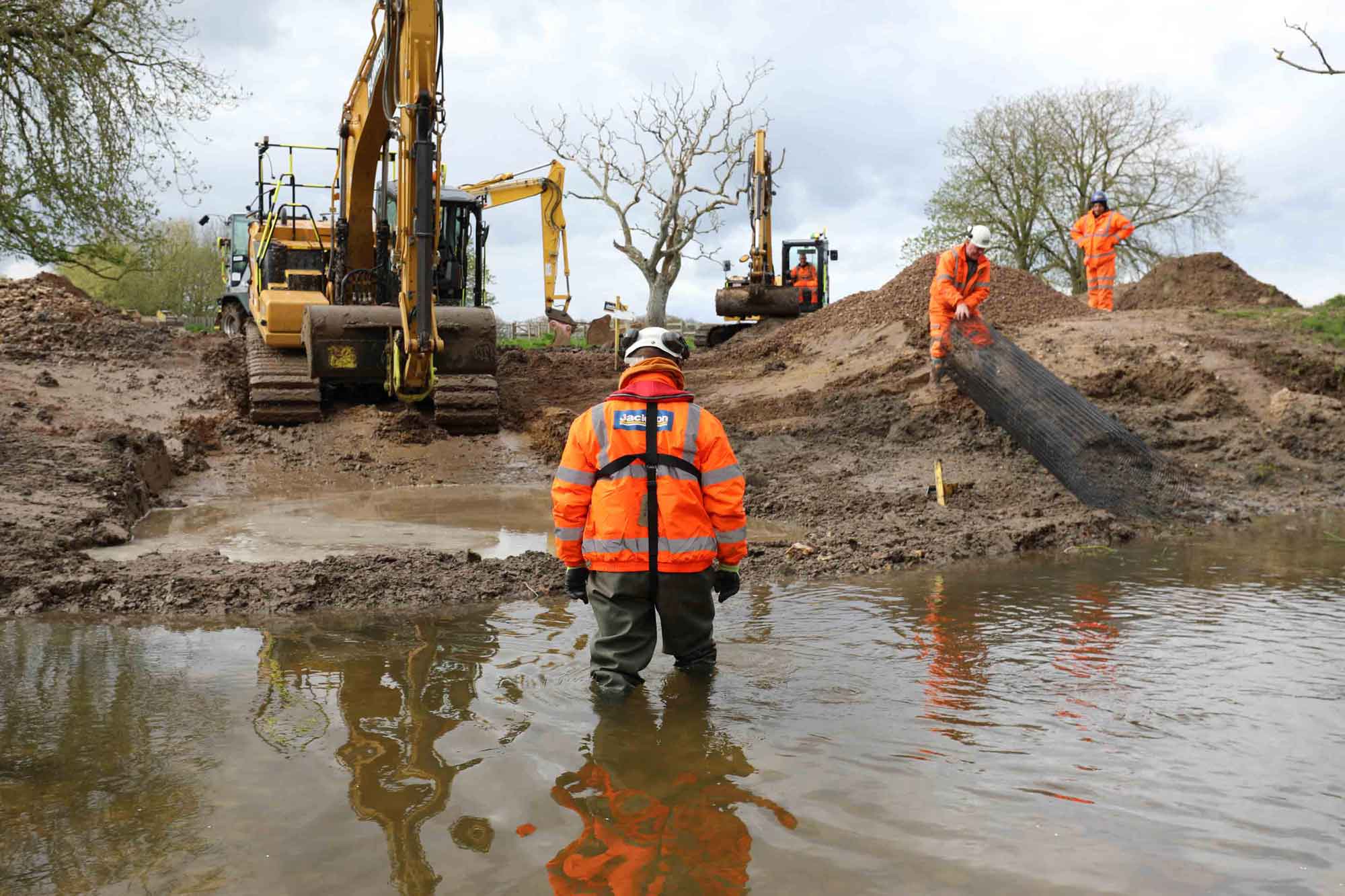
The project aimed to restore streams to their natural state.
Go with the flow
Chalk streams are some of the Earth’s rarest habitats and, incredibly, 85% of them are found in England.
Restoring some of these precious waterways was the aim of a project Jackson worked on for Anglian Water – part of the industry-wide Water Industry National Environment Programme, (WINEP) designed to improve the environment by returning sections of rivers to a more natural state.
Jackson won the contract to carry out work on six schemes across the River Lark catchment. Rising south of Bury St Edmunds in Suffolk, the Lark flows until it joins the Great Ouse in Cambridgeshire. This chalk stream is about 31 miles (50 km) long and fed by springs in the underlying chalk aquifers.
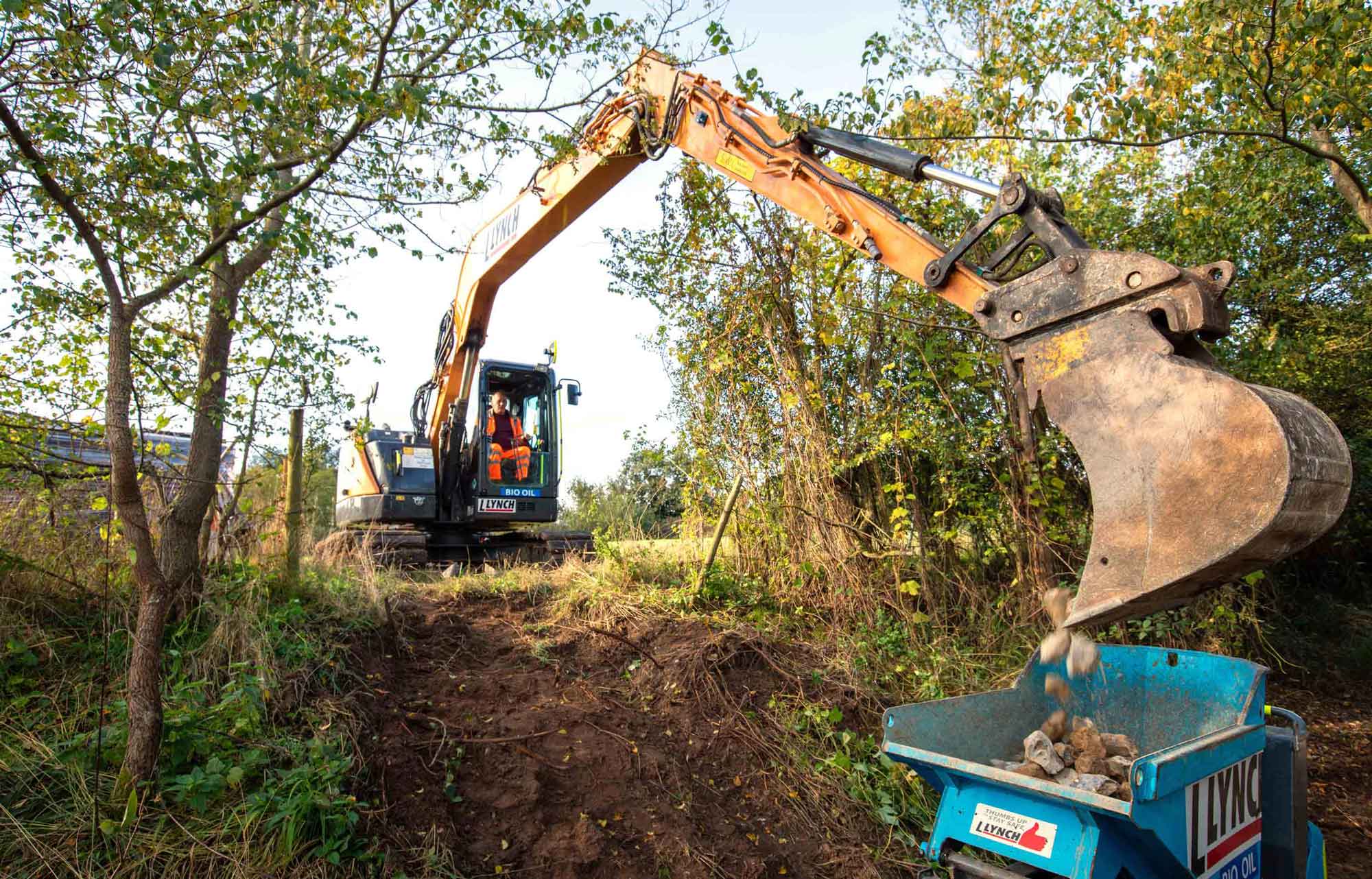
Balancing act: Vehicle movements are restricted to protect wildlife including over-wintering as well as nesting birds.
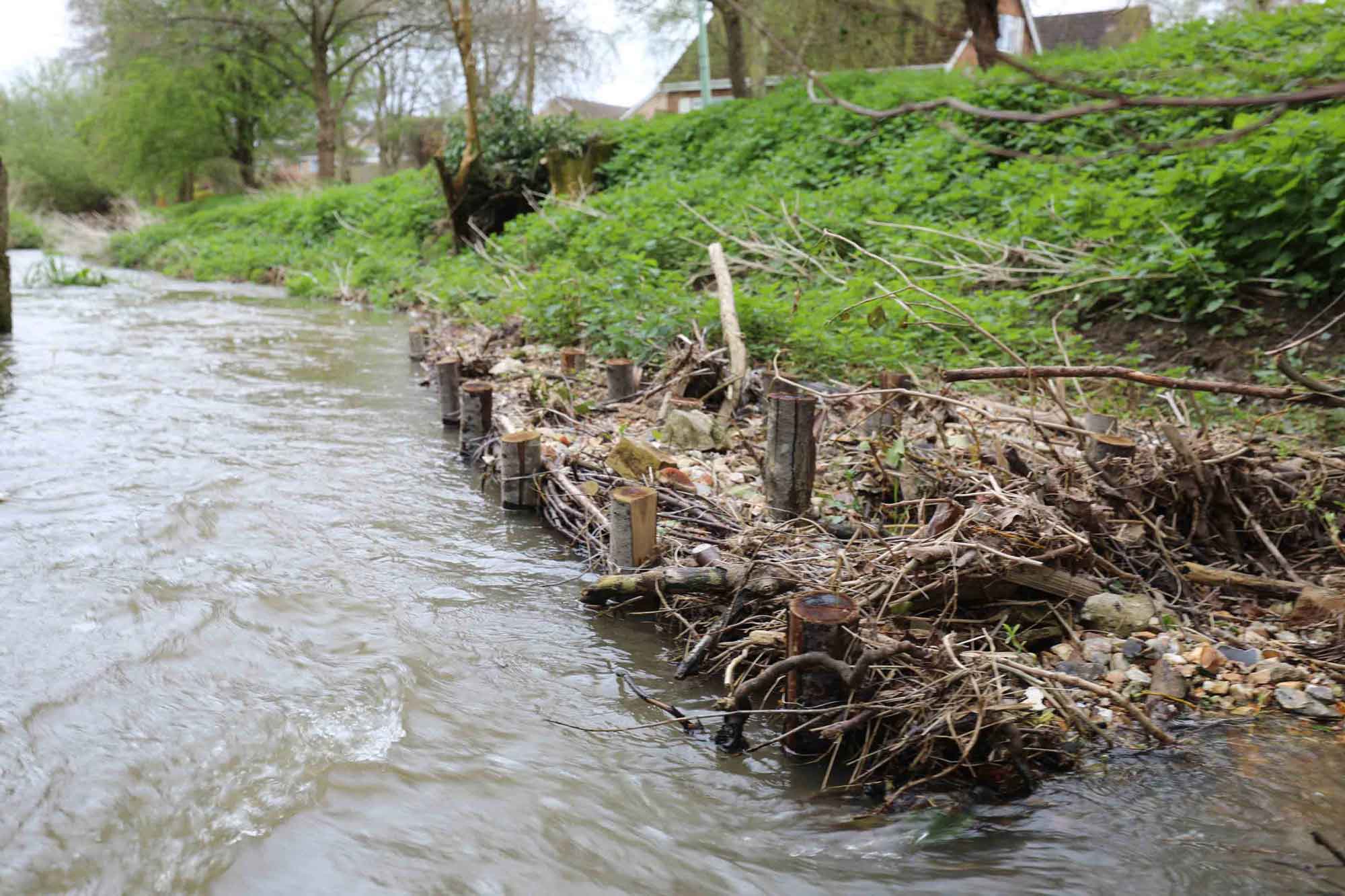
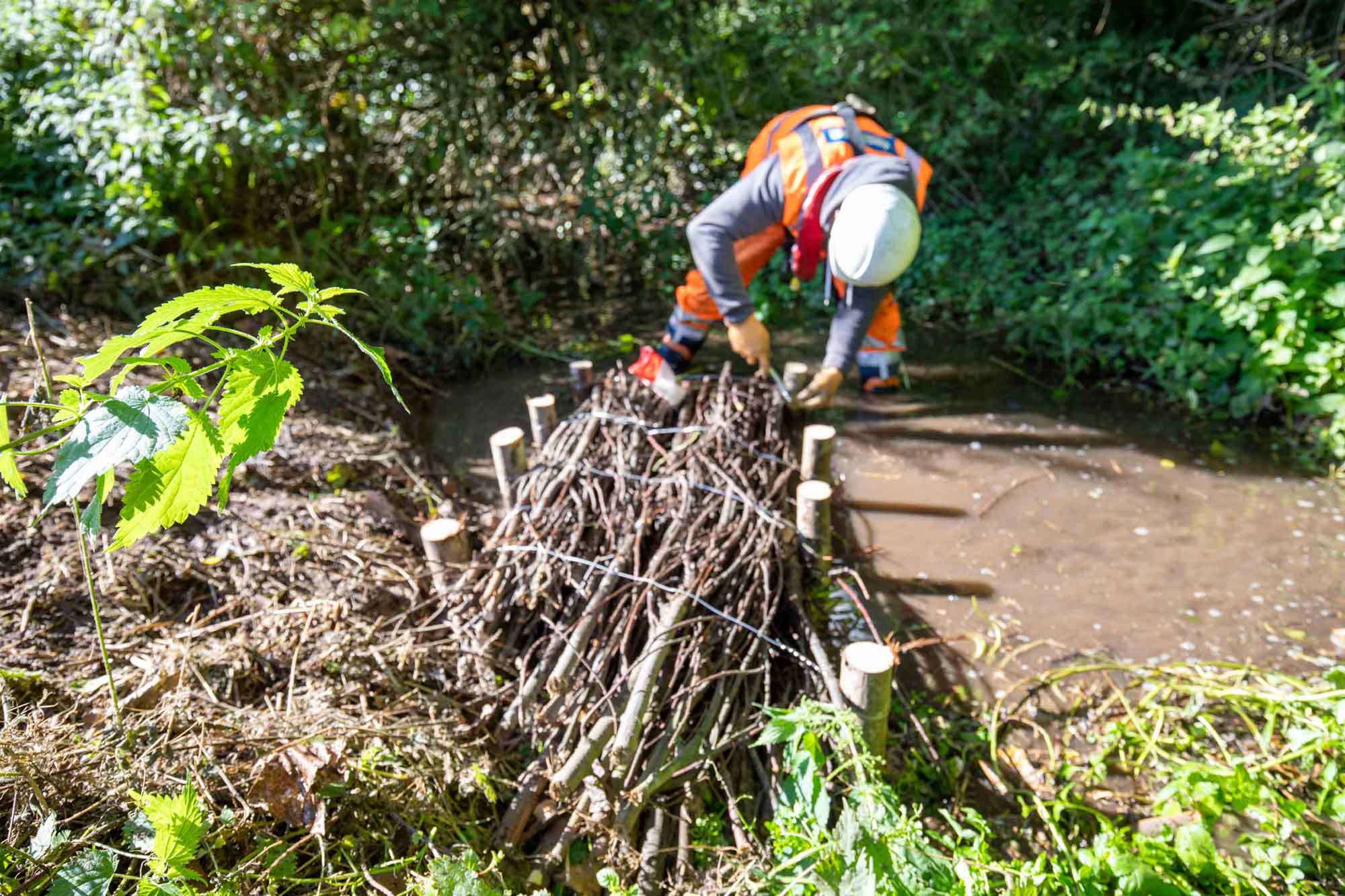
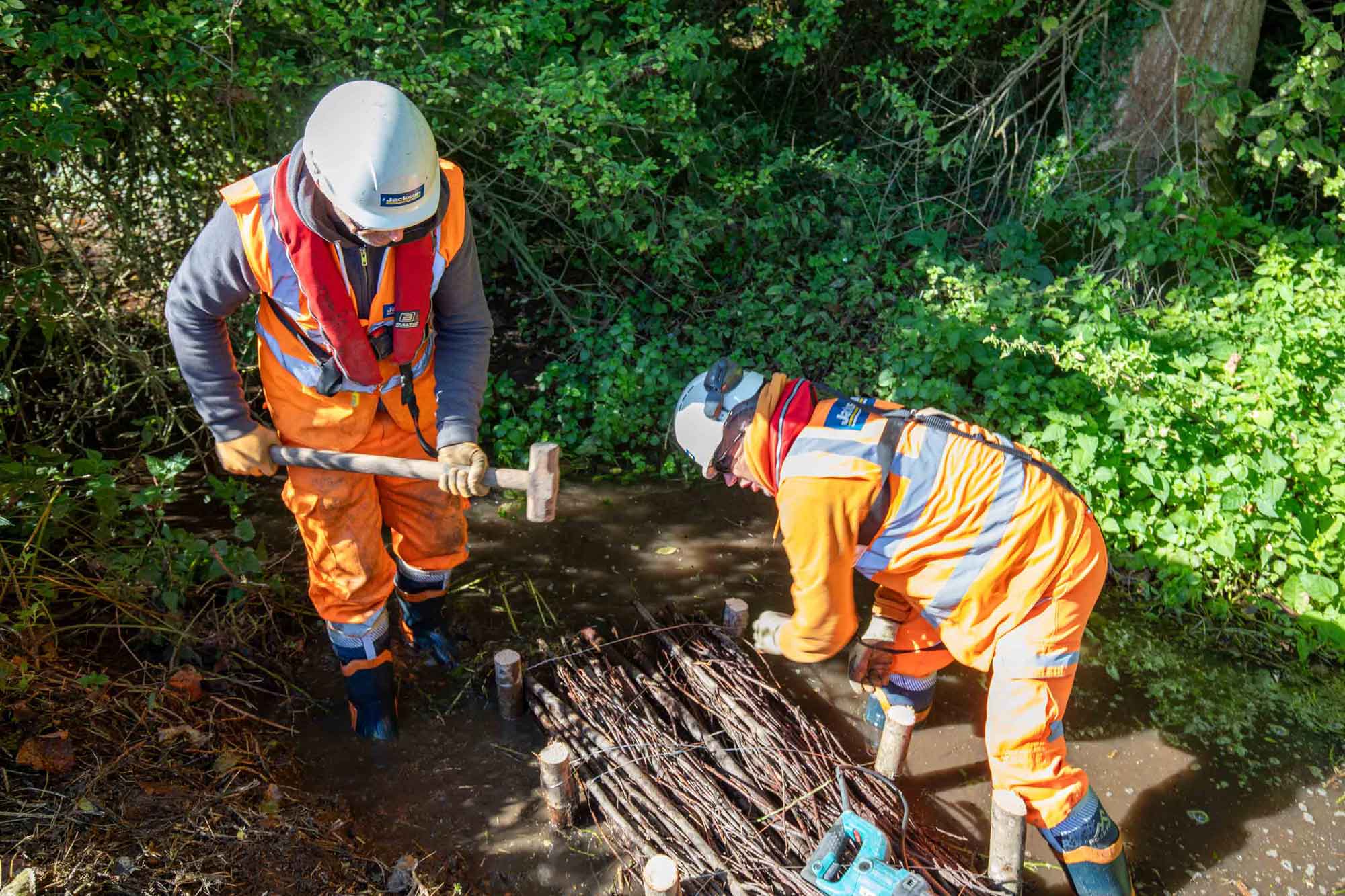
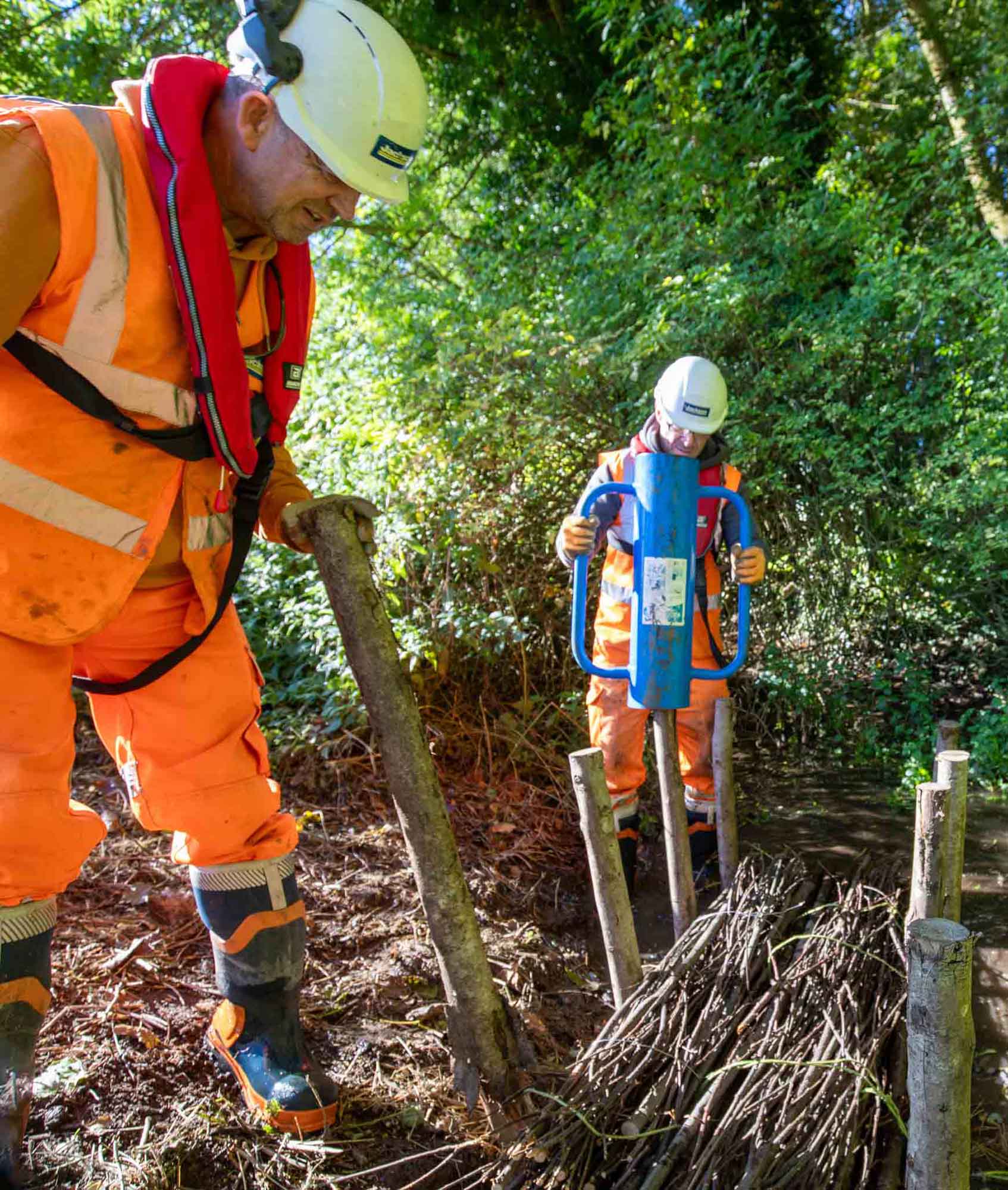
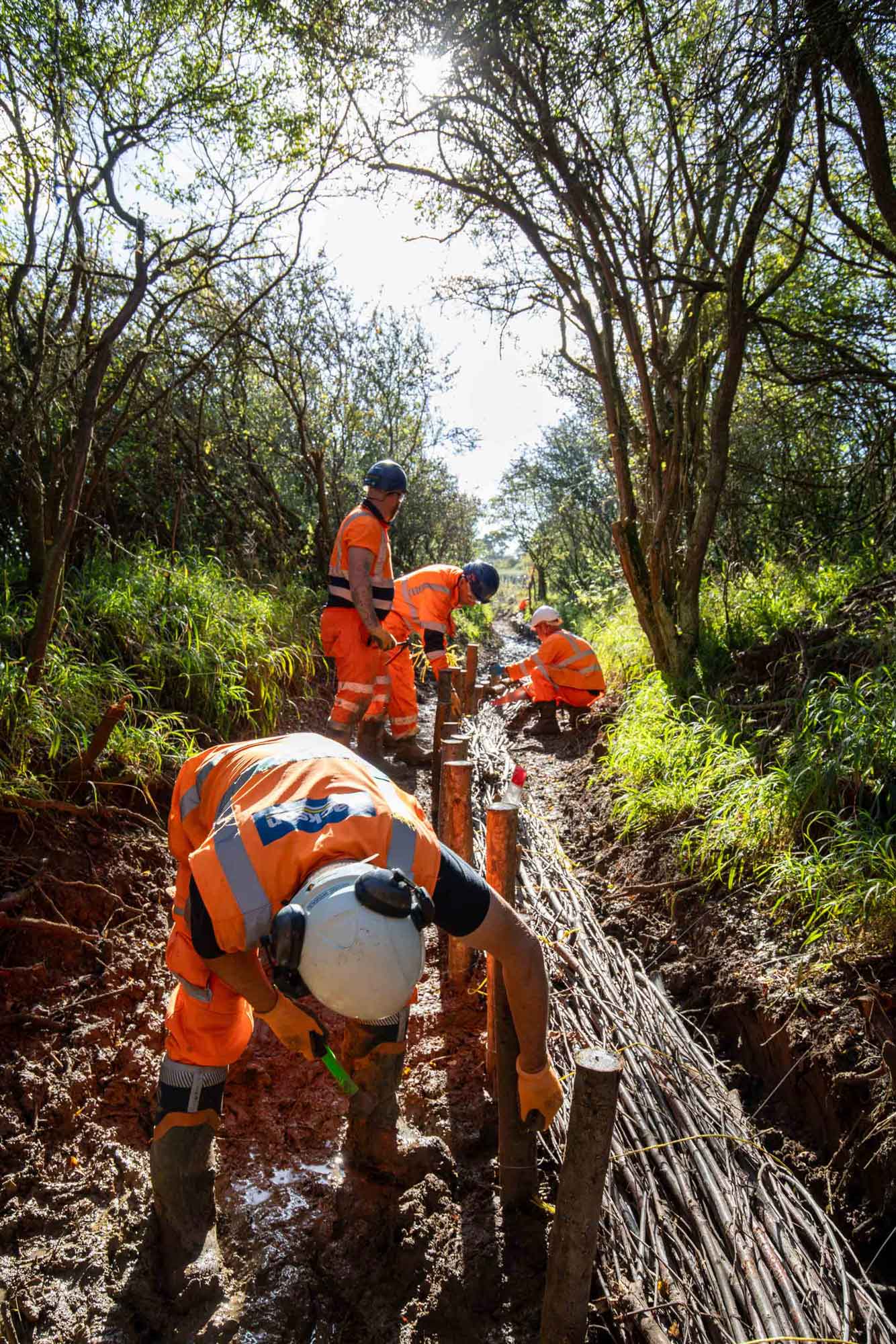
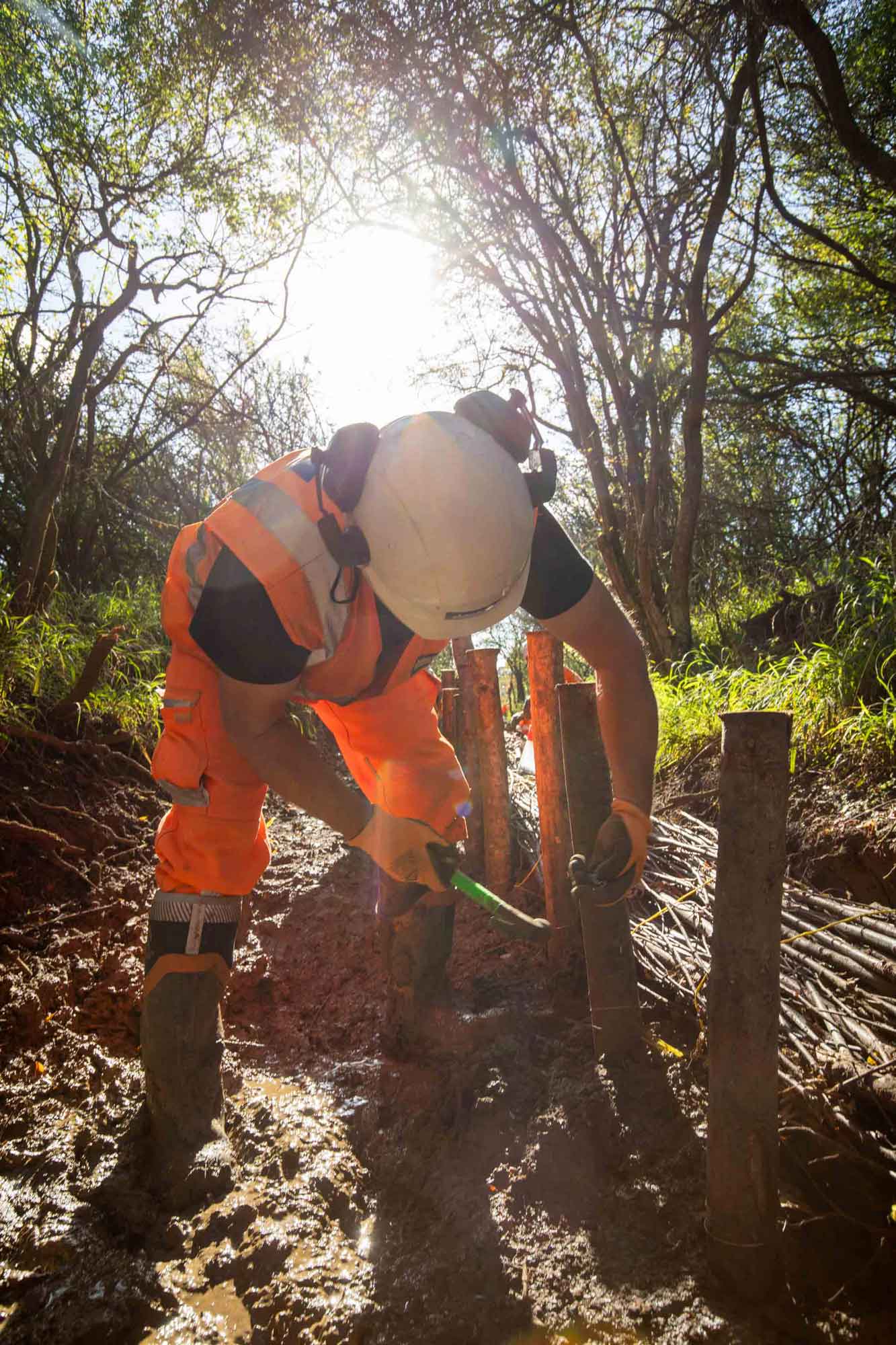
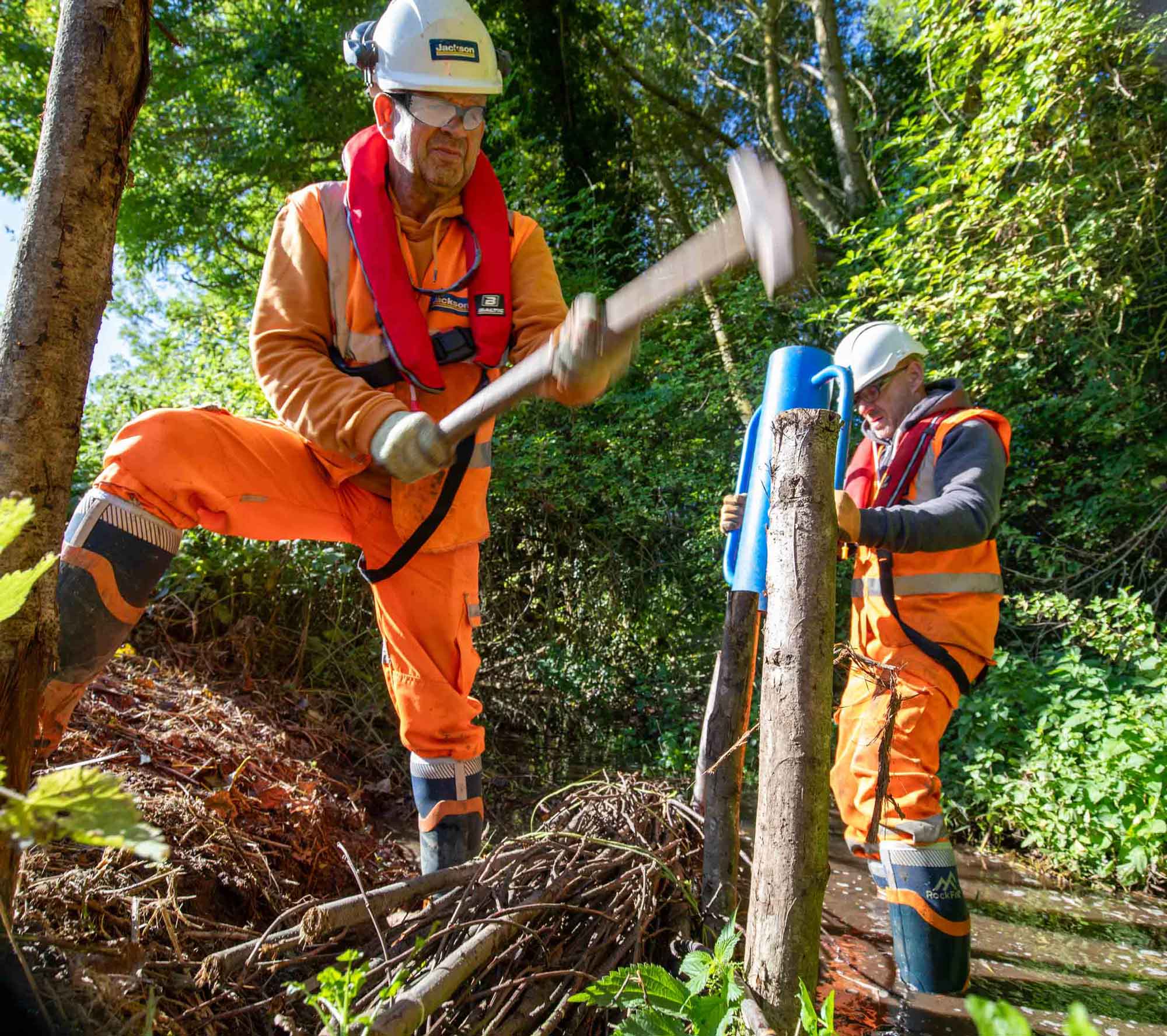
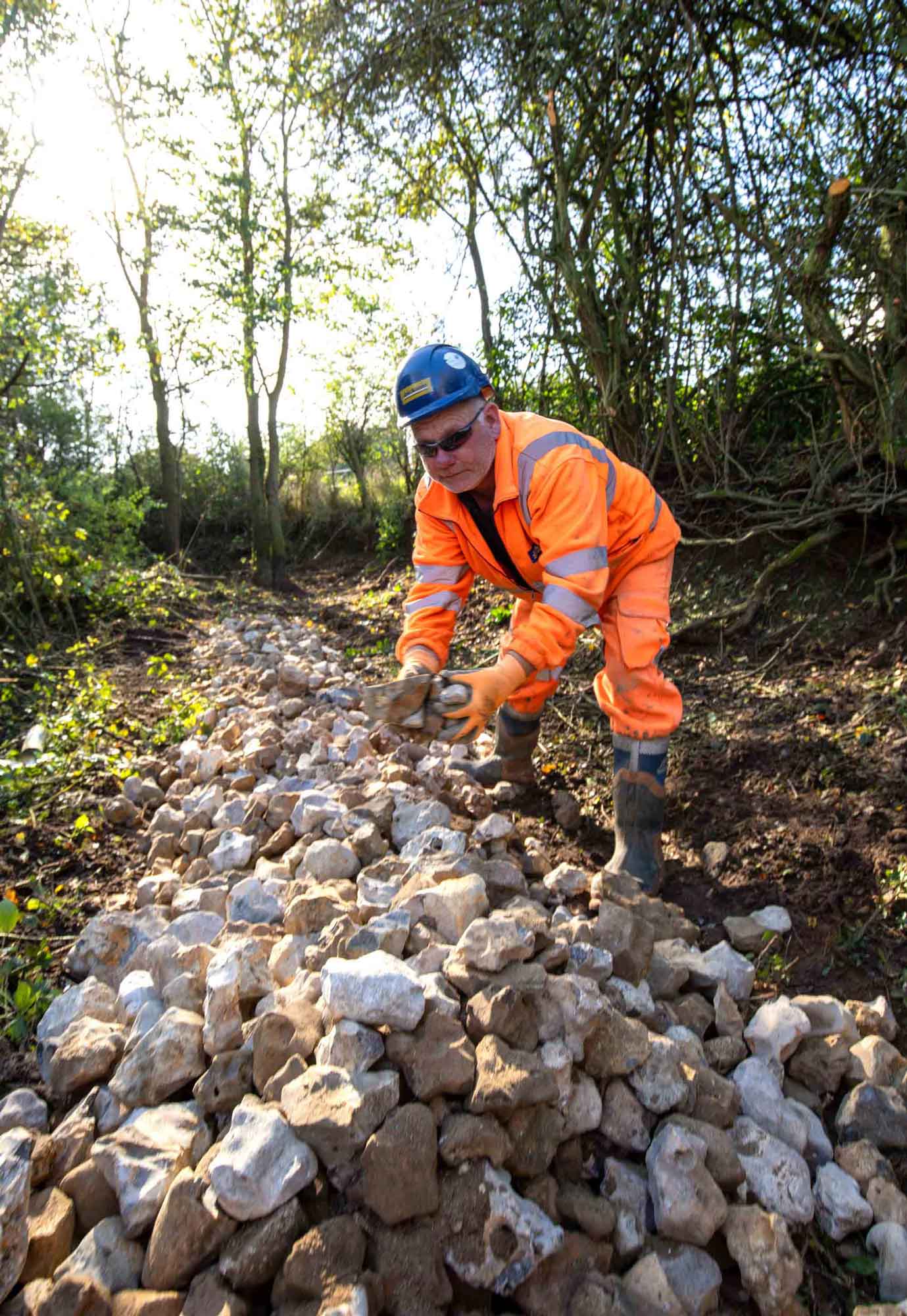
The Jackson team created gravel berms and installed woody bundles in the waterways.
Soft engineering
Soft Engineering was key to reinstating the rivers’ natural processes, which have been lost through historical modification and river management.
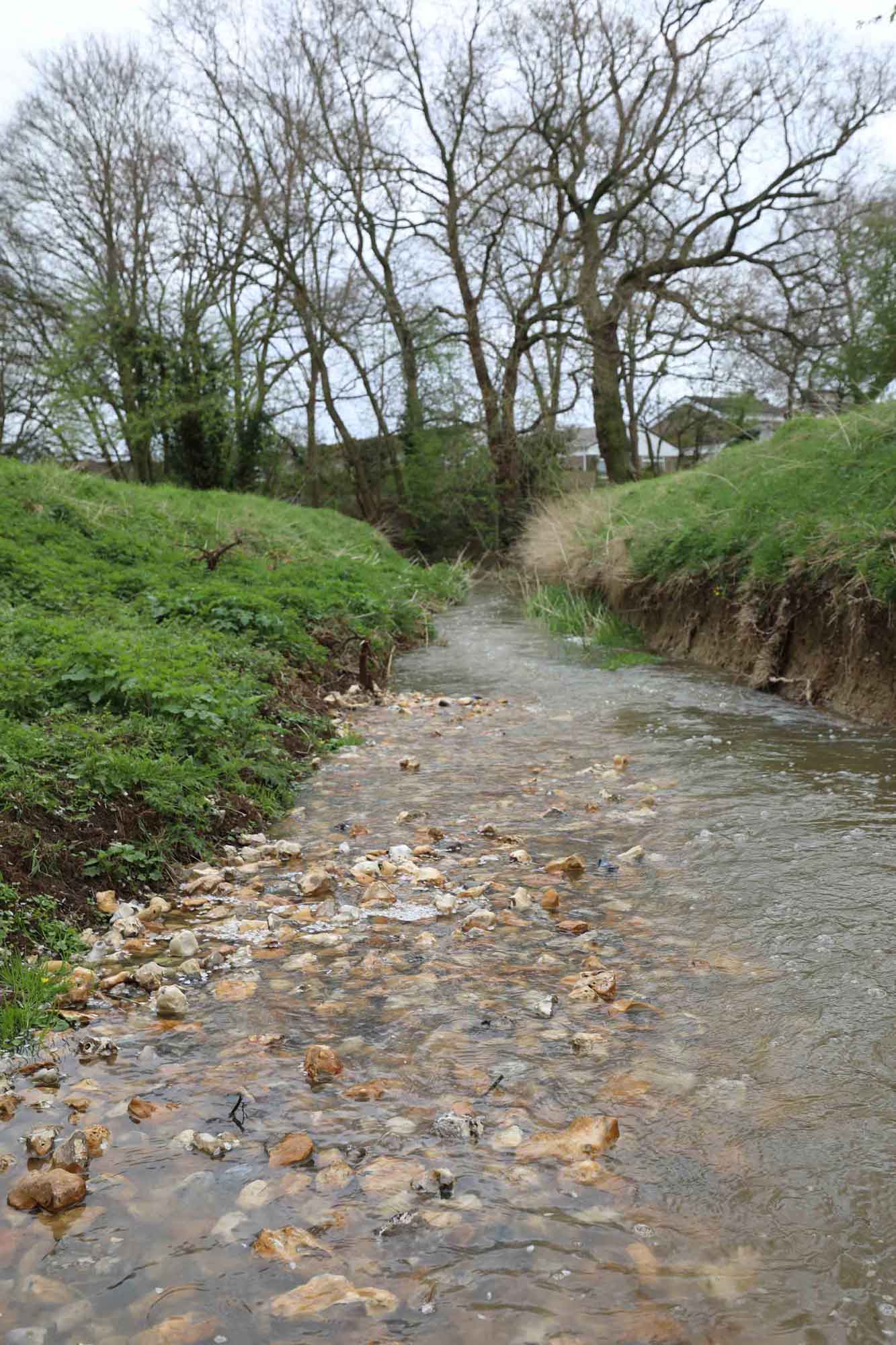
The Jackson team created gravel berms and installed woody bundles in the waterways, designed to ‘re-wiggle’ the rivers to restore their natural shape and improve the flow of water. Over time these features will embed into the riverbank, creating more energy through the channel alongside other features like riffles and pool sequences.
By changing the river’s shape – narrowing or shallowing some parts – the aim is to increase habitat diversity and allow the river to function more how nature intended it to. This work will also help make the rivers more resilient during dry conditions.
Surveys and dialogue
Jackson’s engaged design partner Stantec to undertake much of the preparatory work for the projects.
The process involved a significant number of stages, including topographic, ecological and arboricultural surveys, along with extensive dialogue with the Environment Agency, riparian landowners, and other local stakeholders, such as the River Lark Catchment Group, to agree outline designs.