An intricate fish pass on the River Trent opens up important spawning sites.
Our impact
20
Ascending chambers into which water flows through
60 km
Of new spawning habitat opened up
200m
Length of fish pass
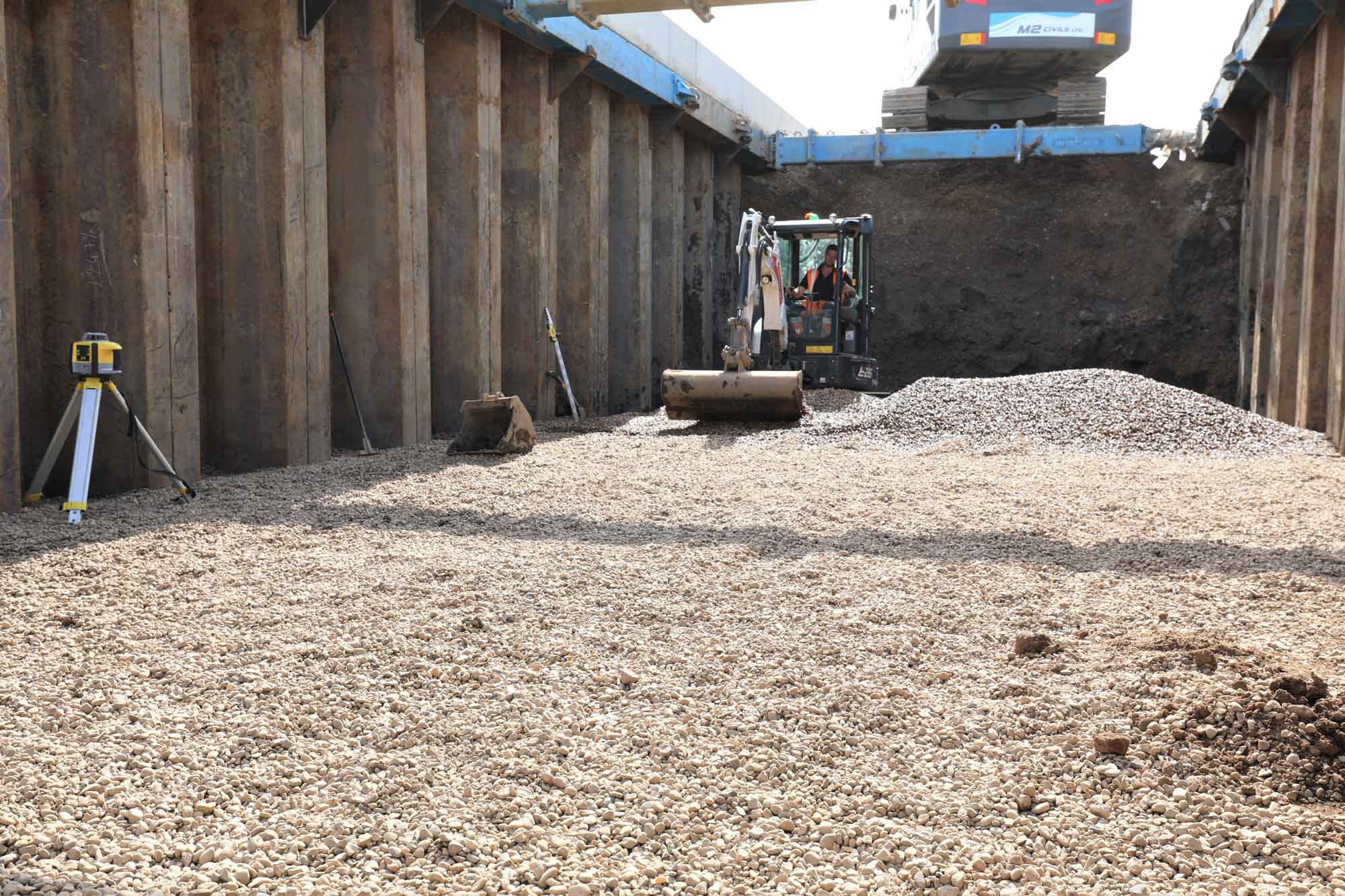
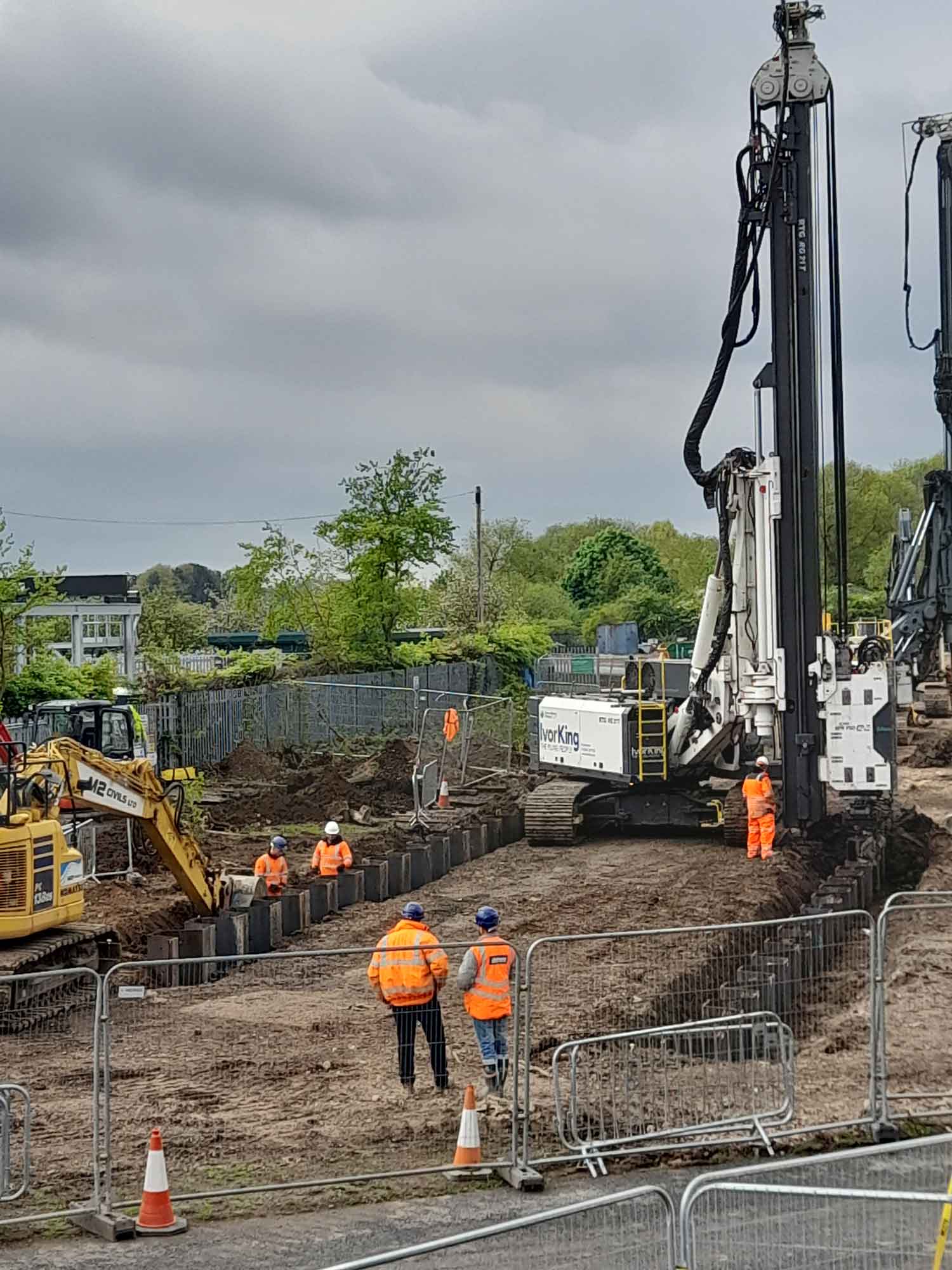
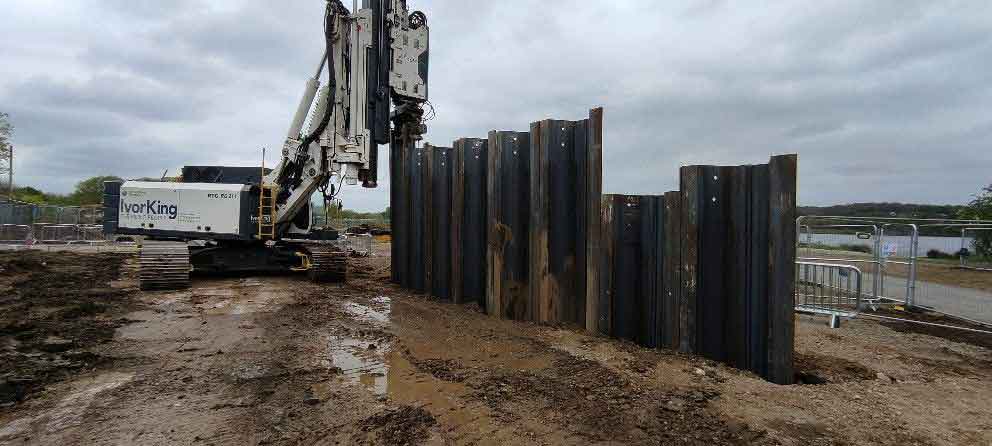
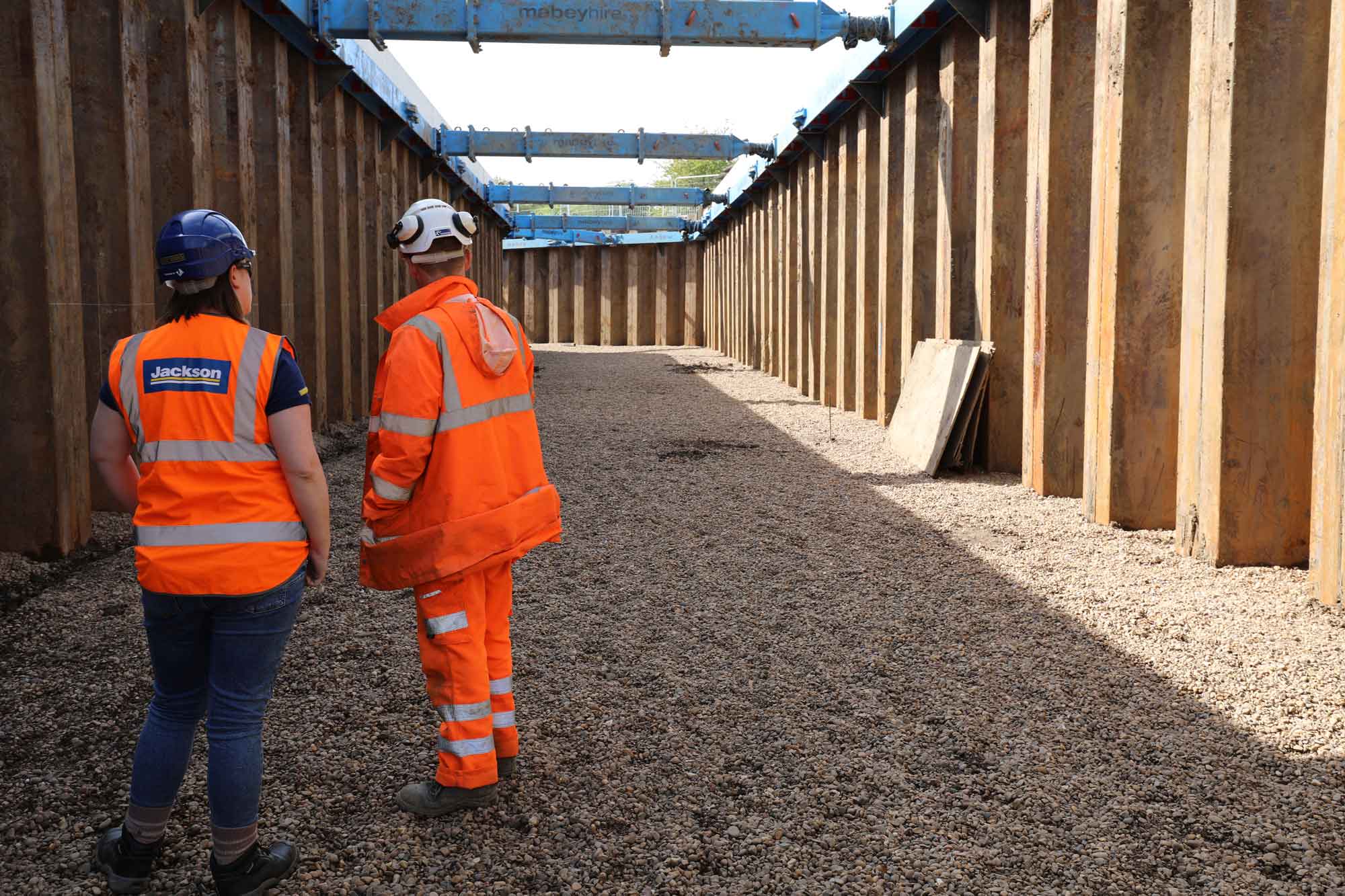
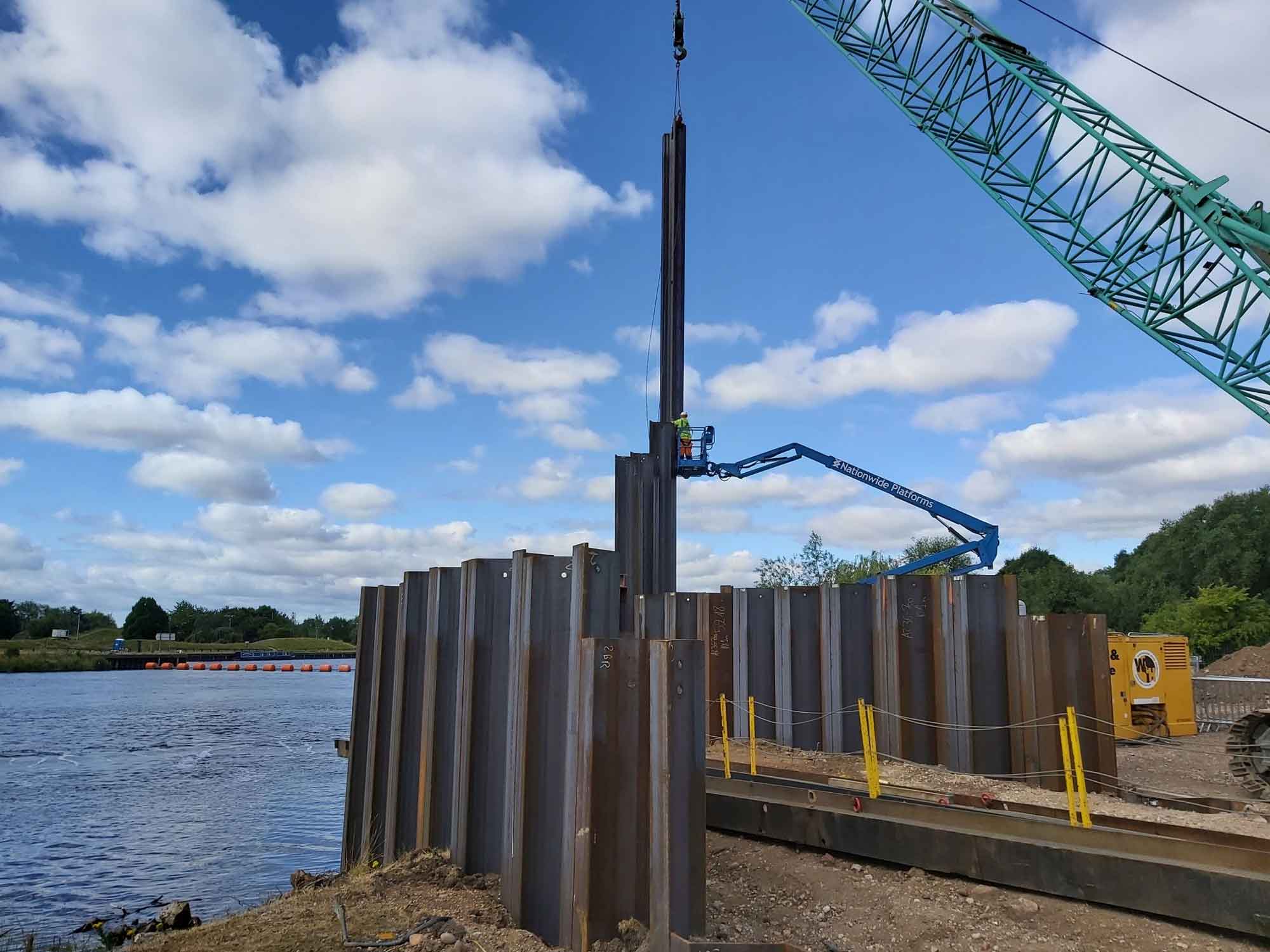
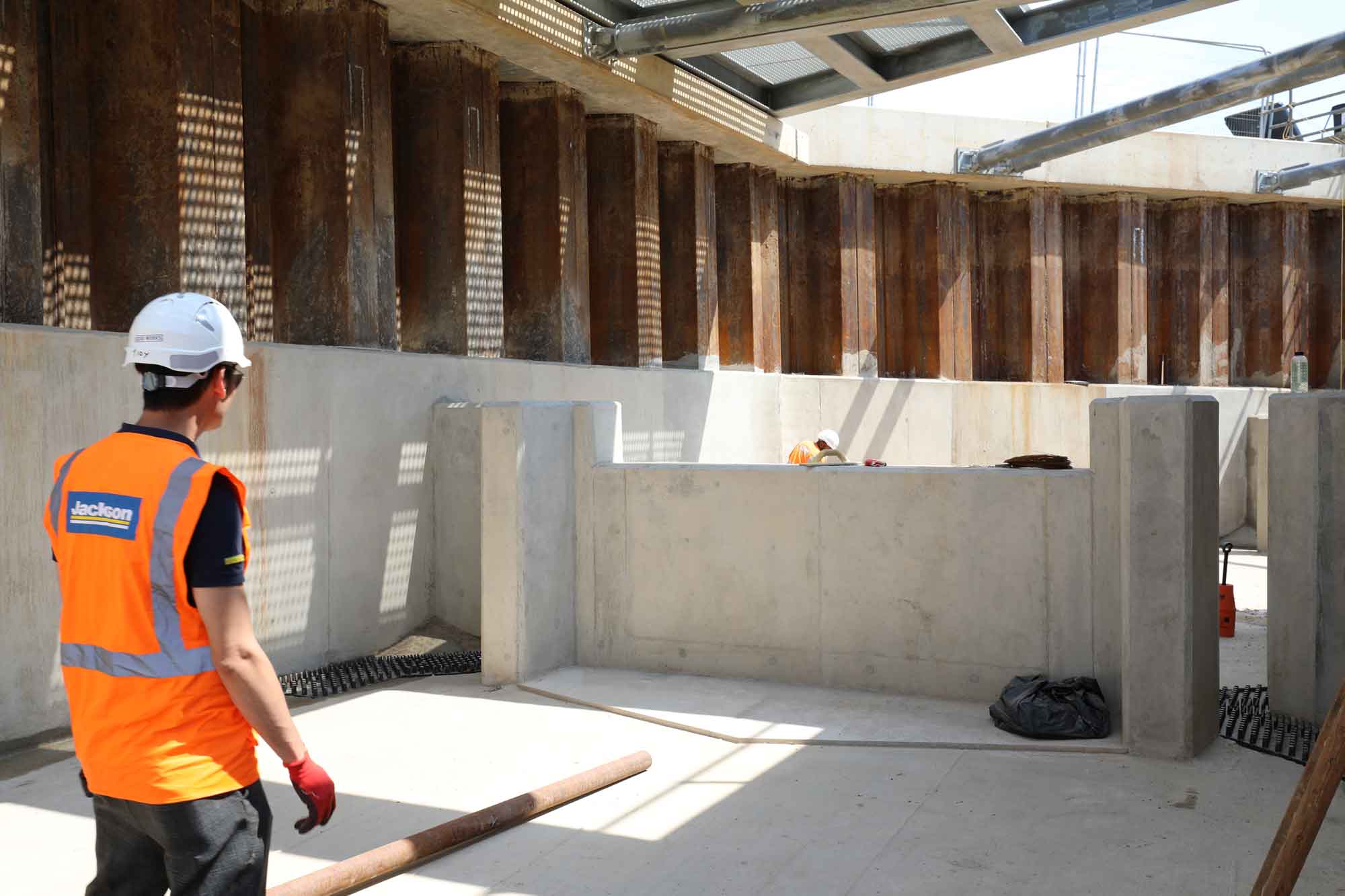
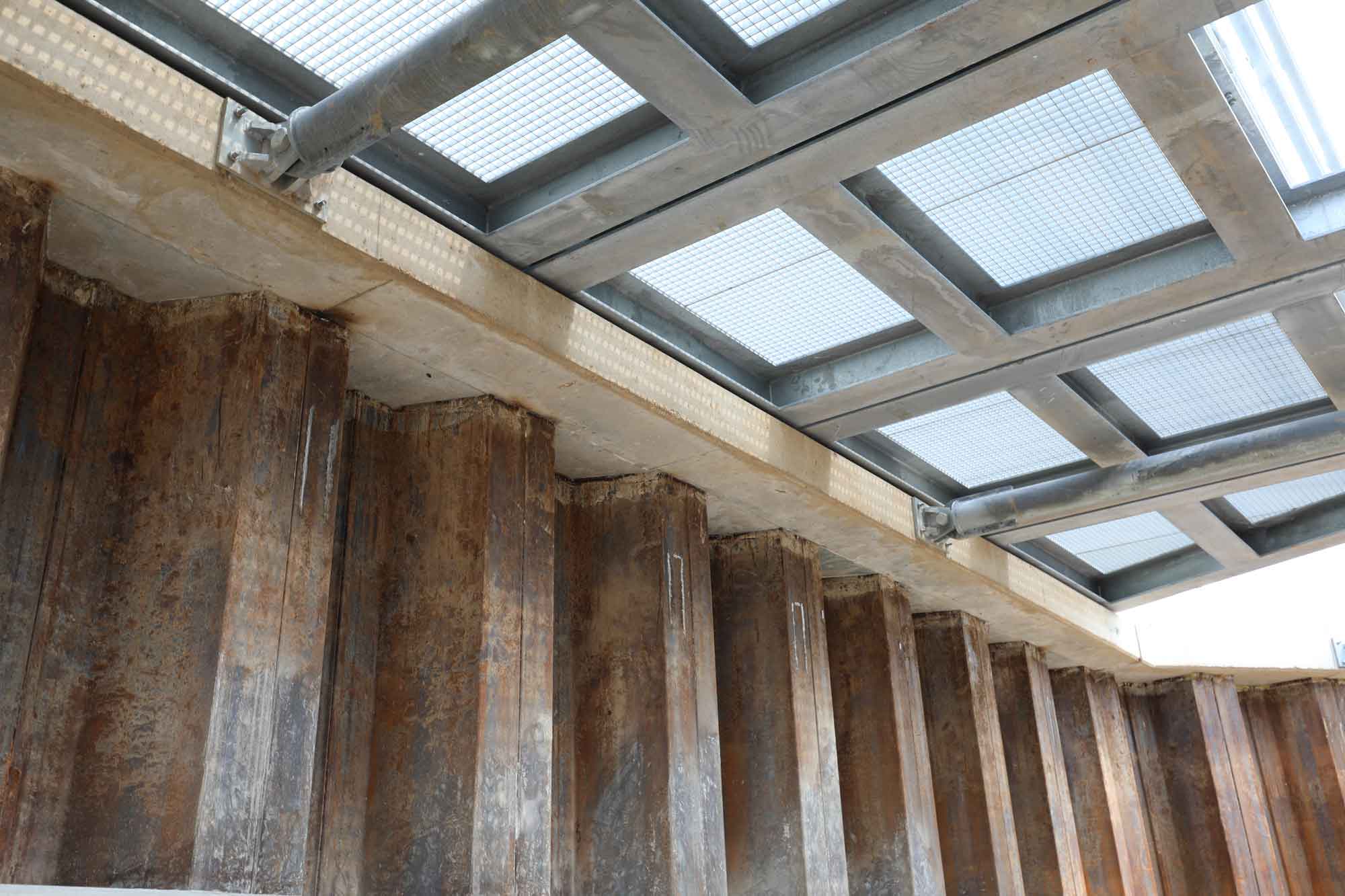
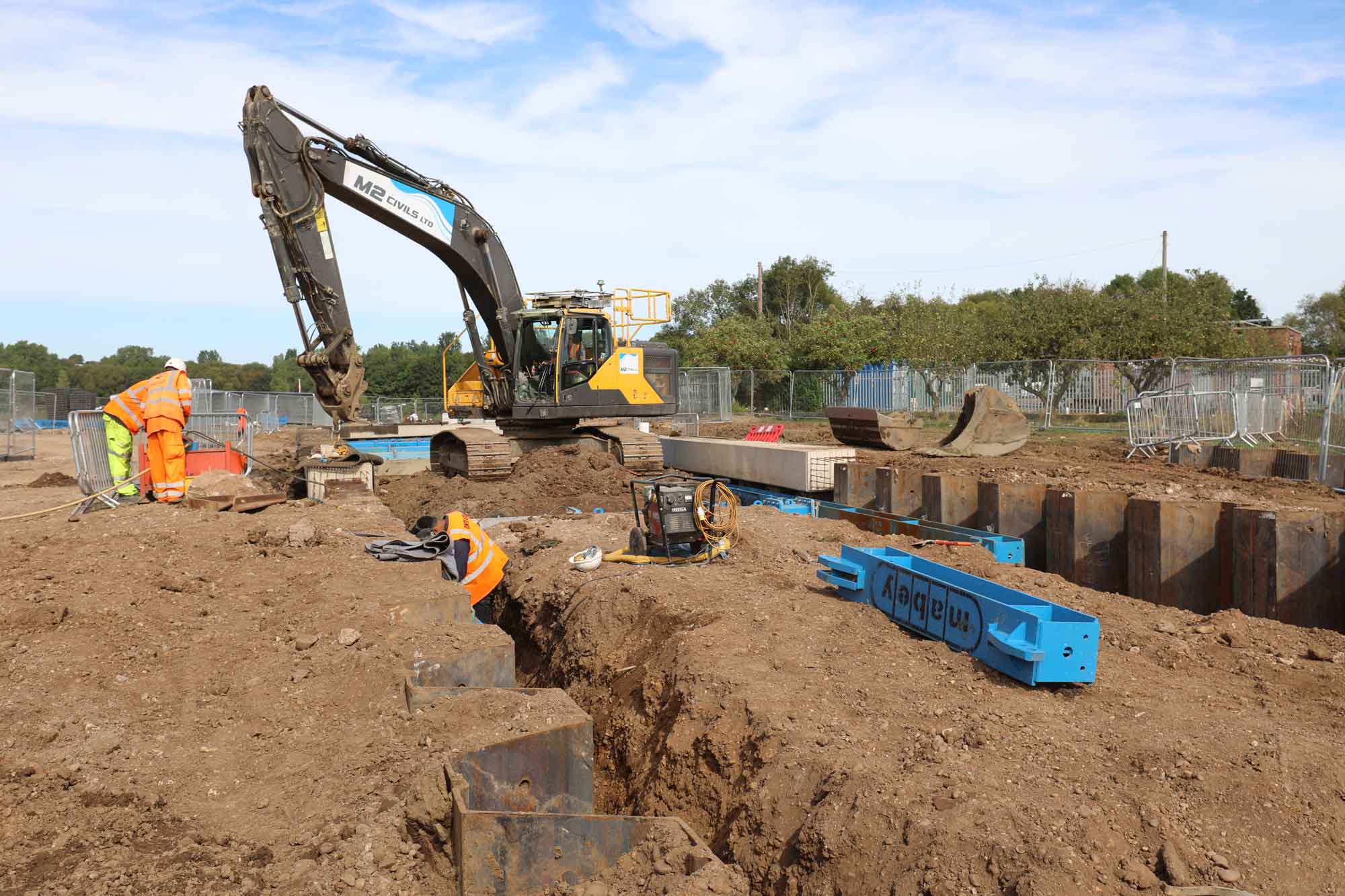
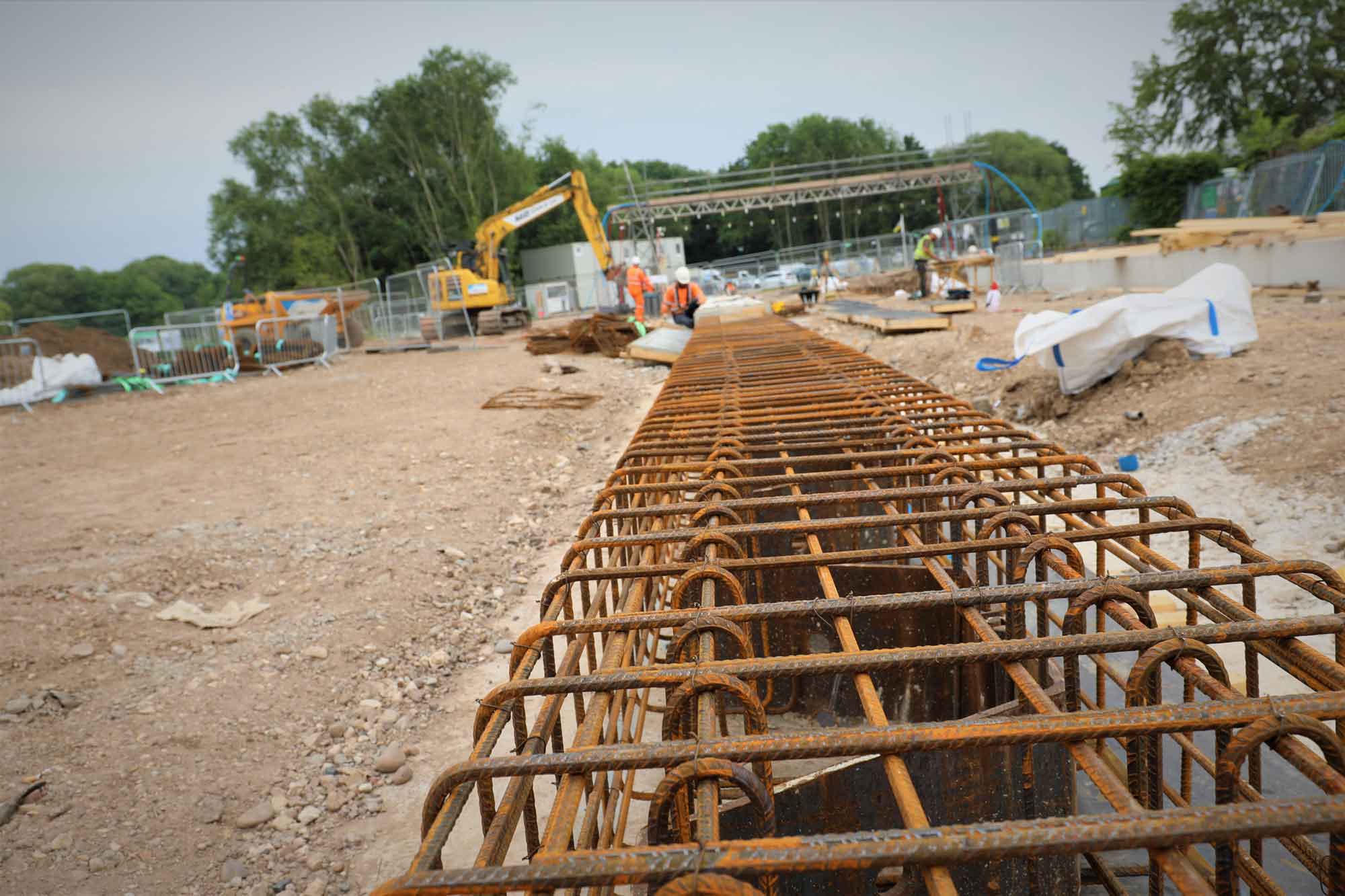
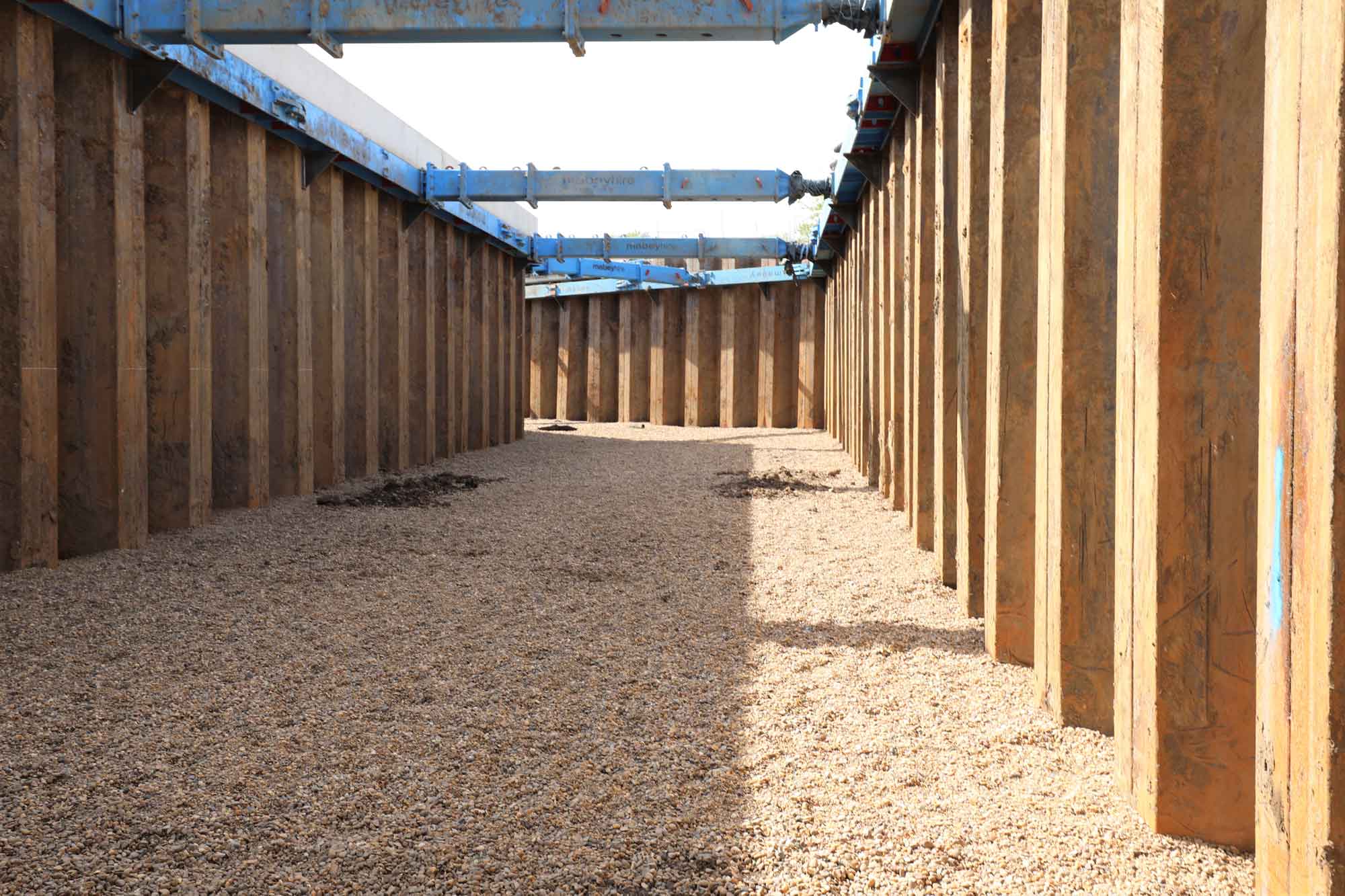
Piling work during the early construction stages of the build.
Circumnavigating the sluices
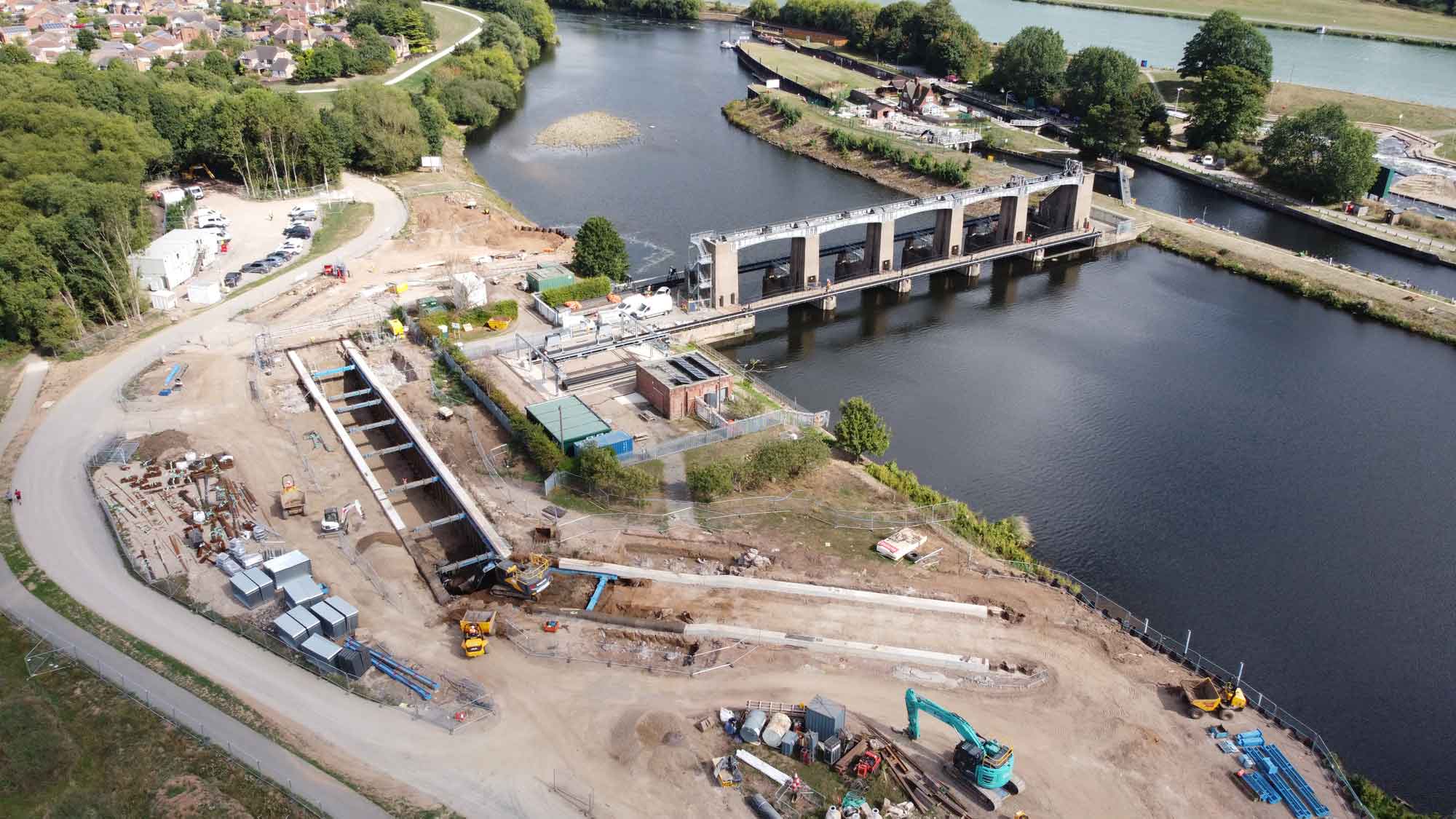
The Trent is the third longest of the UK’s rivers. Roughly halfway along its length at Colwick, Nottingham, the Holme sluices weir was installed in the 1950s to mitigate periodic flood risk.
But it also formed an effective barrier to annual migratory species intent on reaching spawning sites further up the river and among tributaries such as the Dove and the Derwent.
The Environment Agency commissioned a fish pass to be constructed on the south bank of the river, enabling around 13 species, including the endangered European eel, salmon, and sea trout, to circumnavigate the sluices and reach their home rivers.
Balancing act: Vehicle movements are restricted to protect wildlife including over-wintering as well as nesting birds.
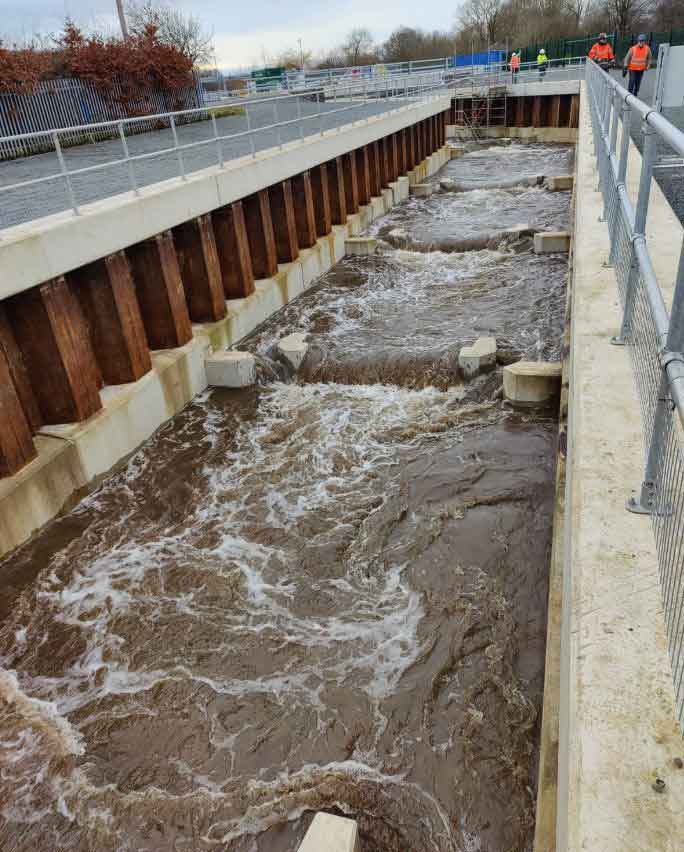
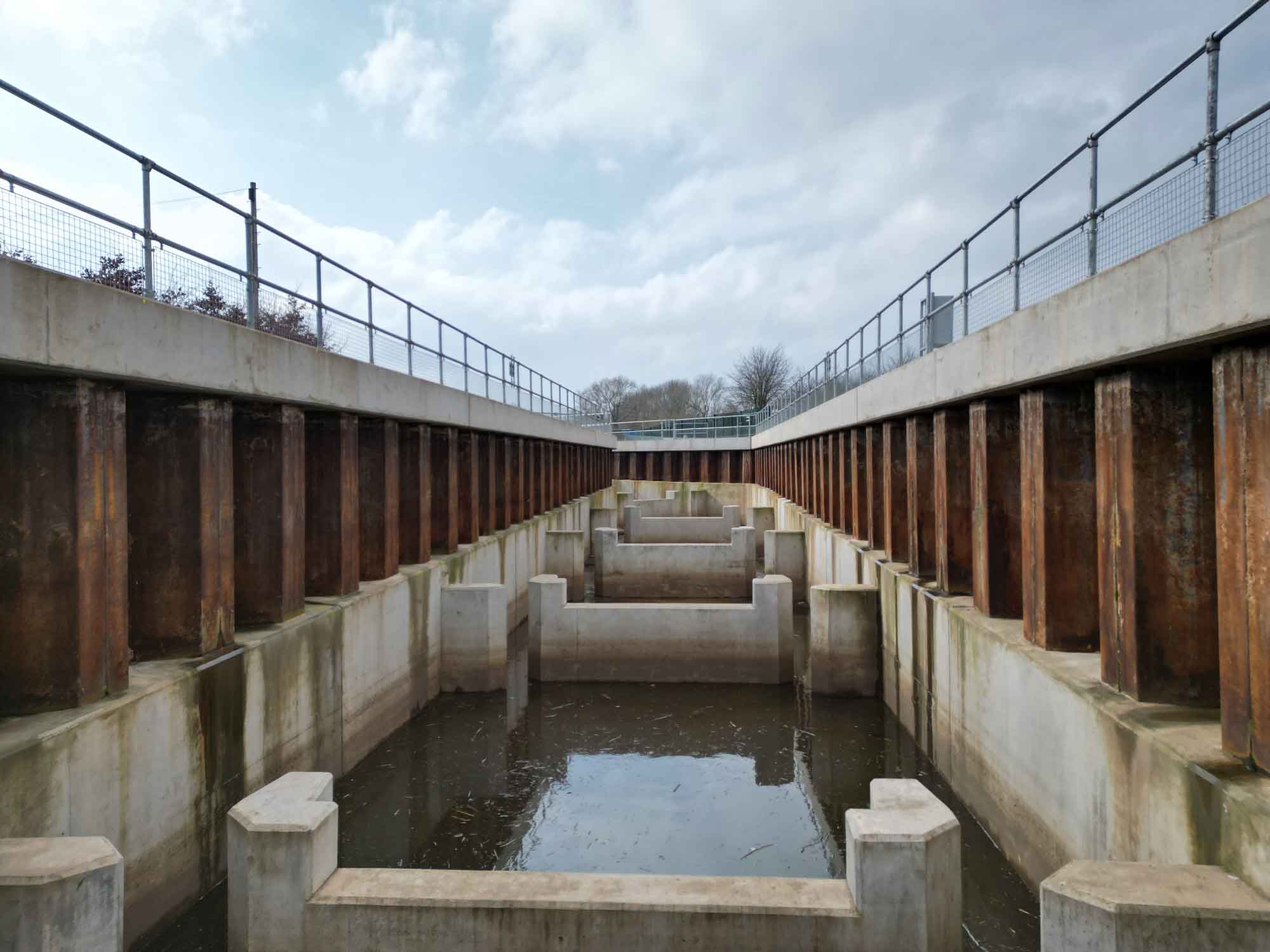
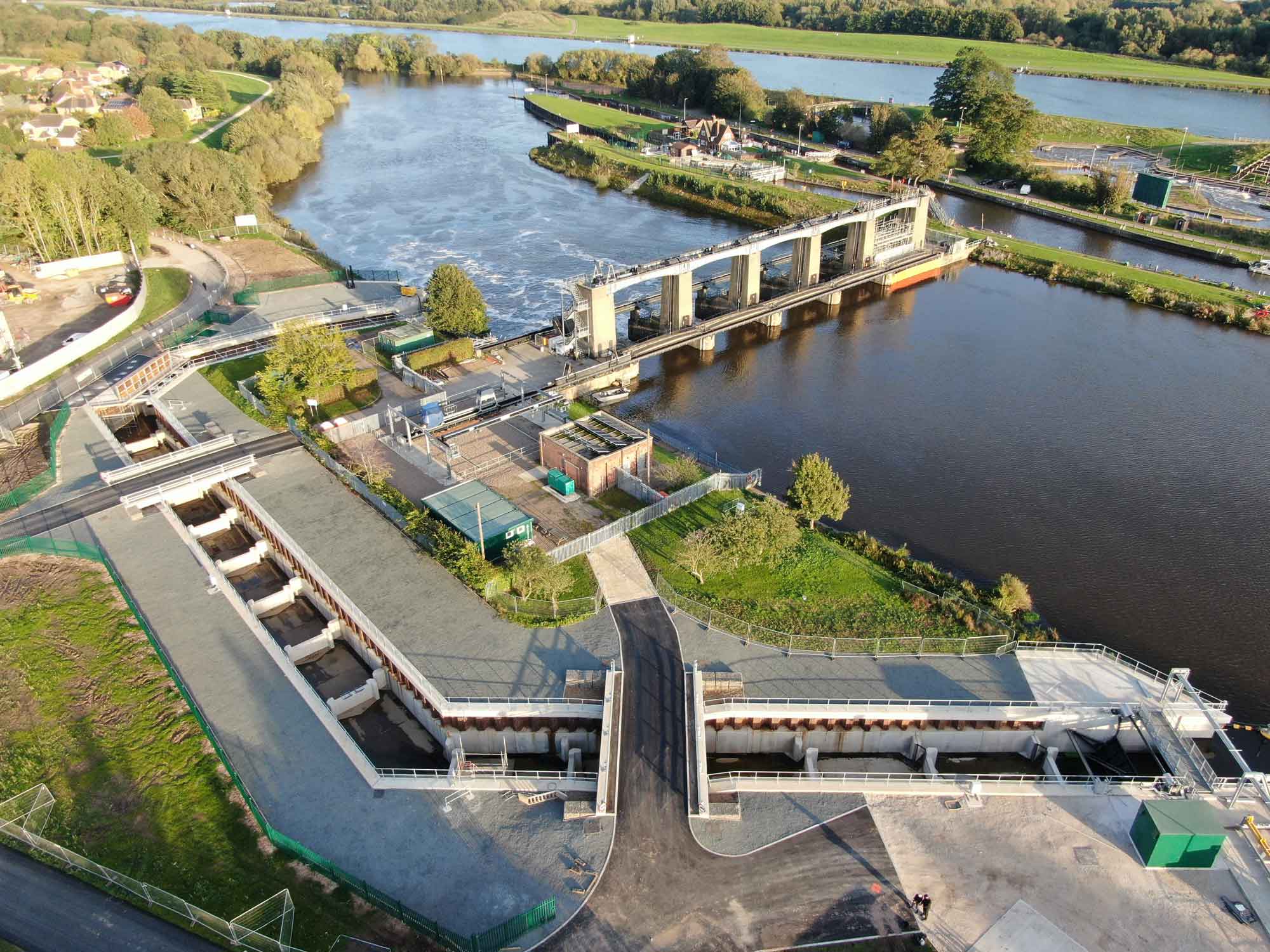
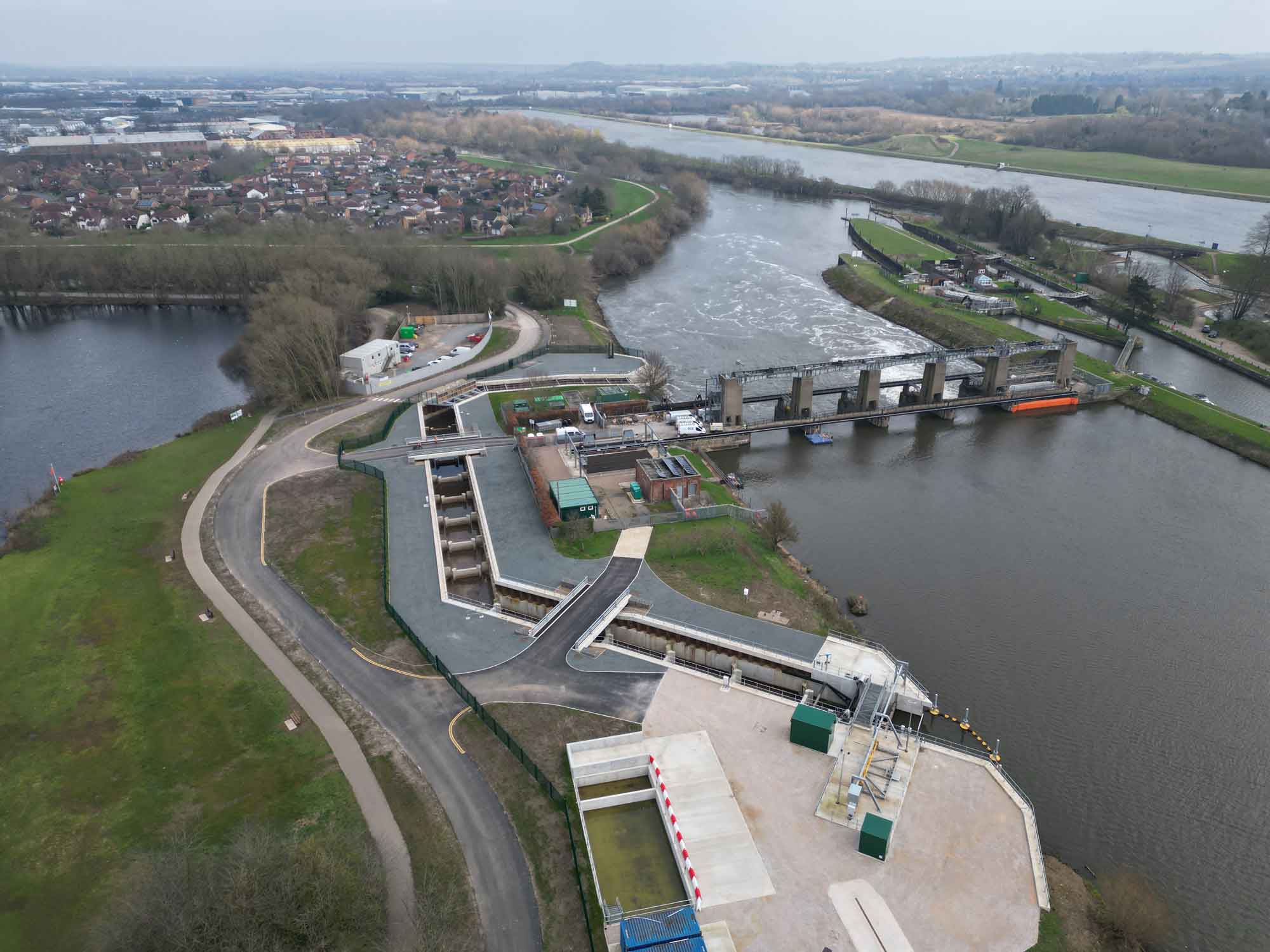
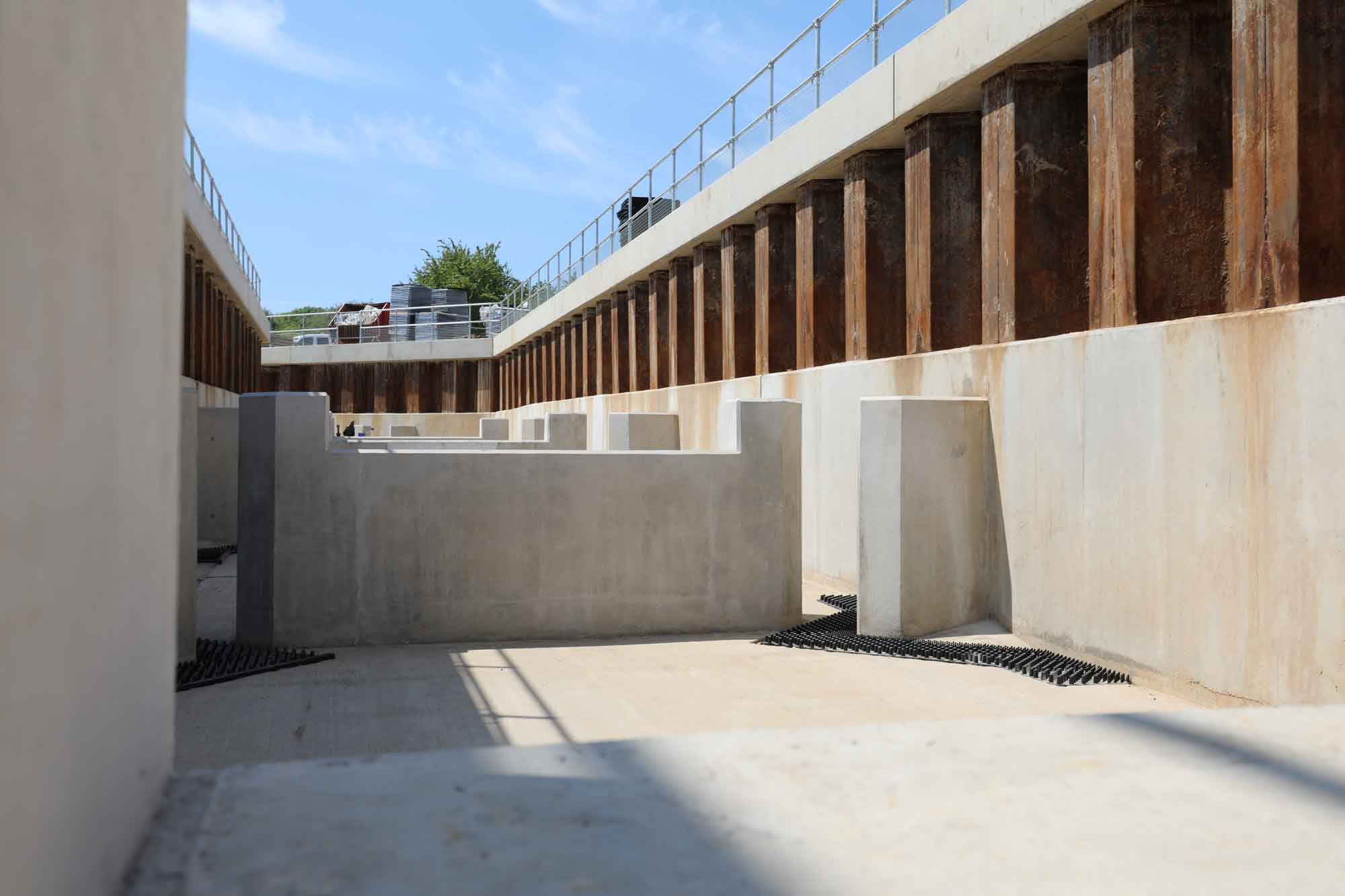
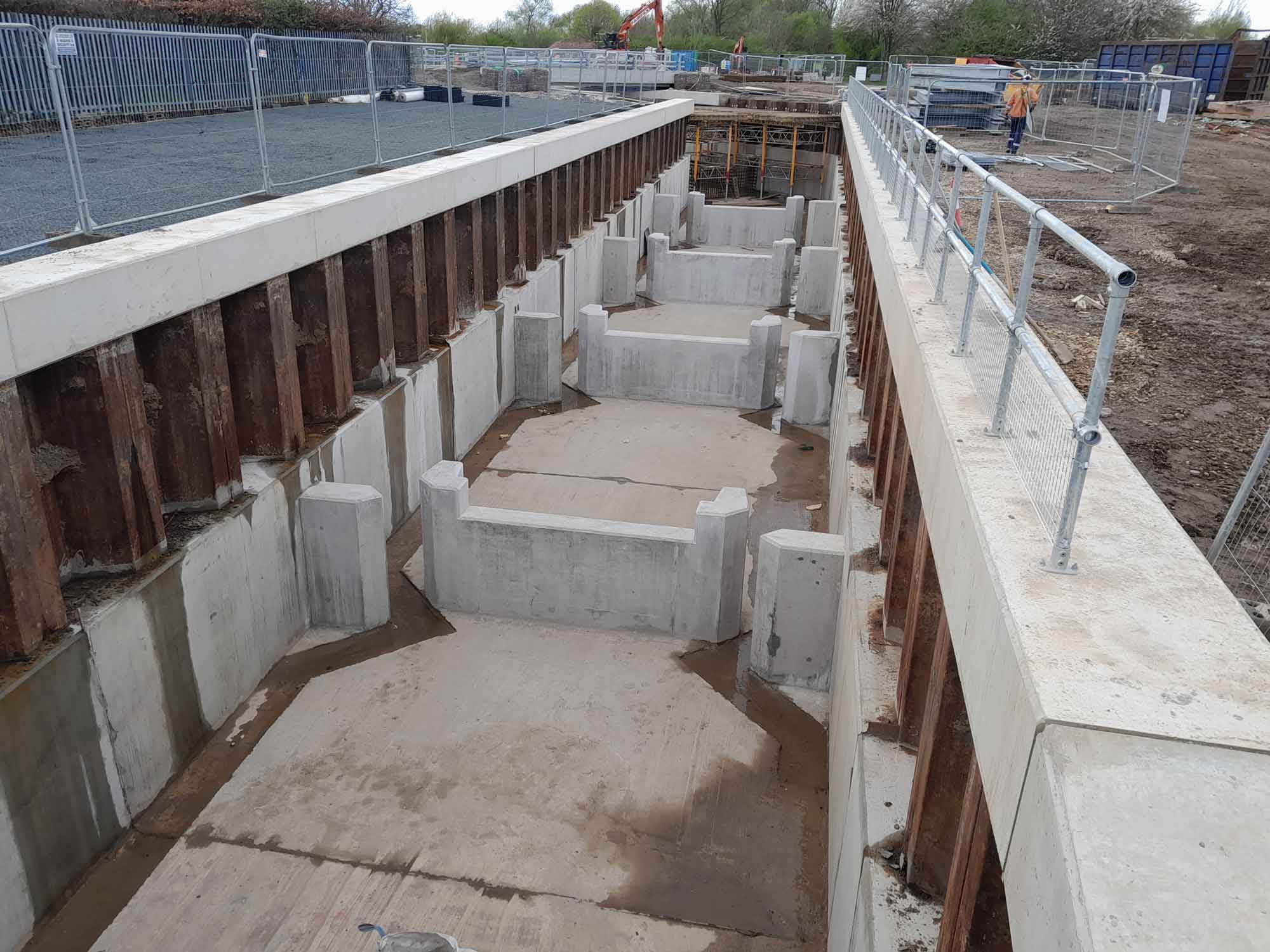
The fish pass is made up of 20 ascending chambers.
Environmental design
The benefits of the project are entirely driven by its environmental agenda, and that object was reflected in the approach to design and construction of the pass.
Completed in October 2024 at a cost of £10m, it is the UK’s largest fish pass, 200m long, 6m wide and 6m deep. Its design is based on modelling the water flow depth, flow velocity and energy dissipation conditions suitable for fish to navigate the channel.
Its multi-chambered design acts like pools in a river, providing resting places for fish, as well as acting as multiple hydraulic breaks to control water levels. Passive integrated transponder antennas mounted in the baffle walls count and identify species, and calculate the time taken to complete their journey.
Sustainable build
The transition from design to construction revealed a host of challenges, from complex hydrology and geology to the intricacies of the slotted design. Yet, each obstacle became an opportunity for sustainable innovation.
The existing site road, for instance, was repurposed as a piling platform, eliminating the need for 12,000 tonnes of imported aggregates.
The project also embraced energy recovery from waste, minimised in-river disturbance through bubble curtains and oxygen monitoring, and investigated the possibility to reuse excavated material for potential reed bed creation in a nearby lake.
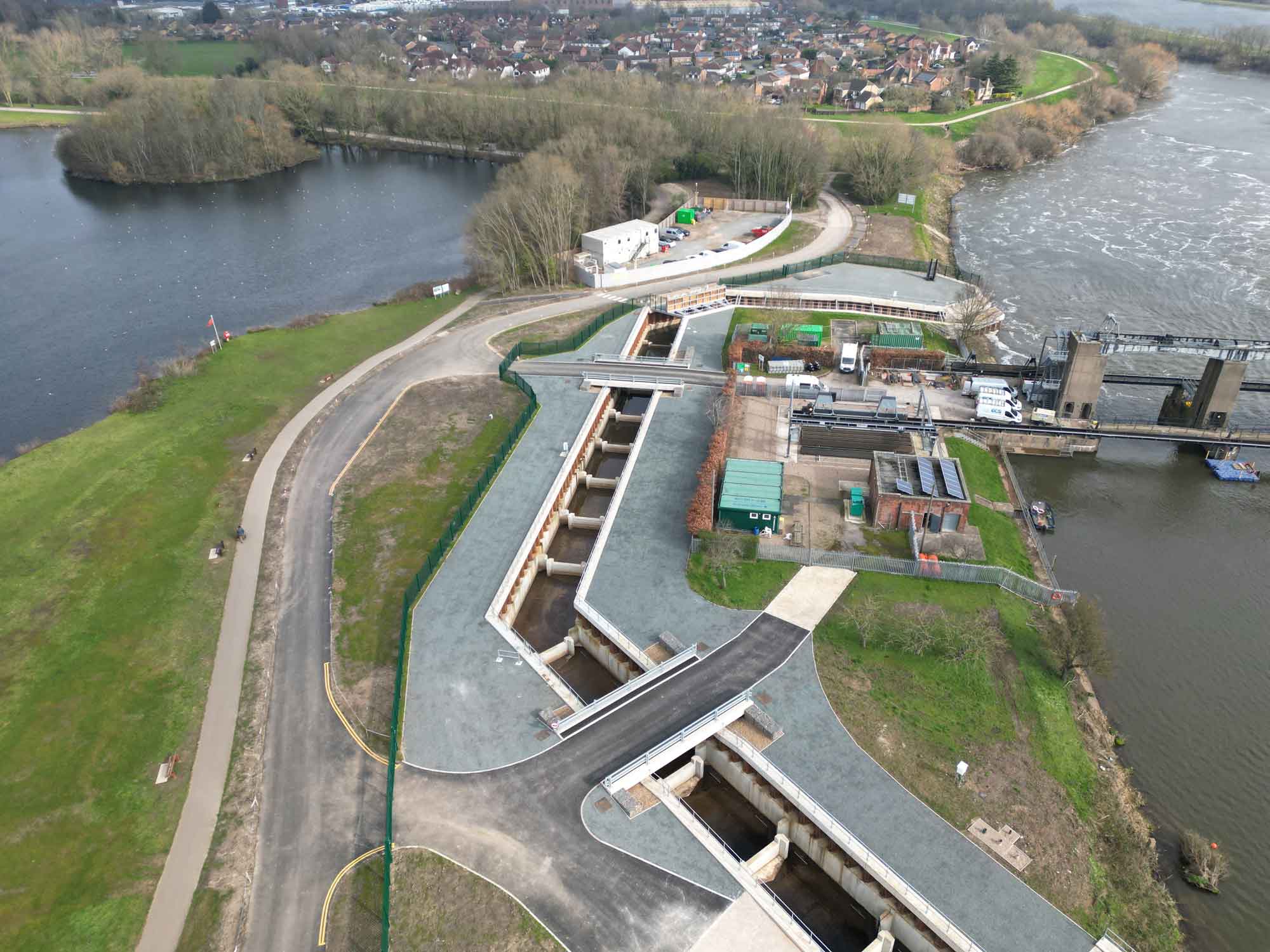
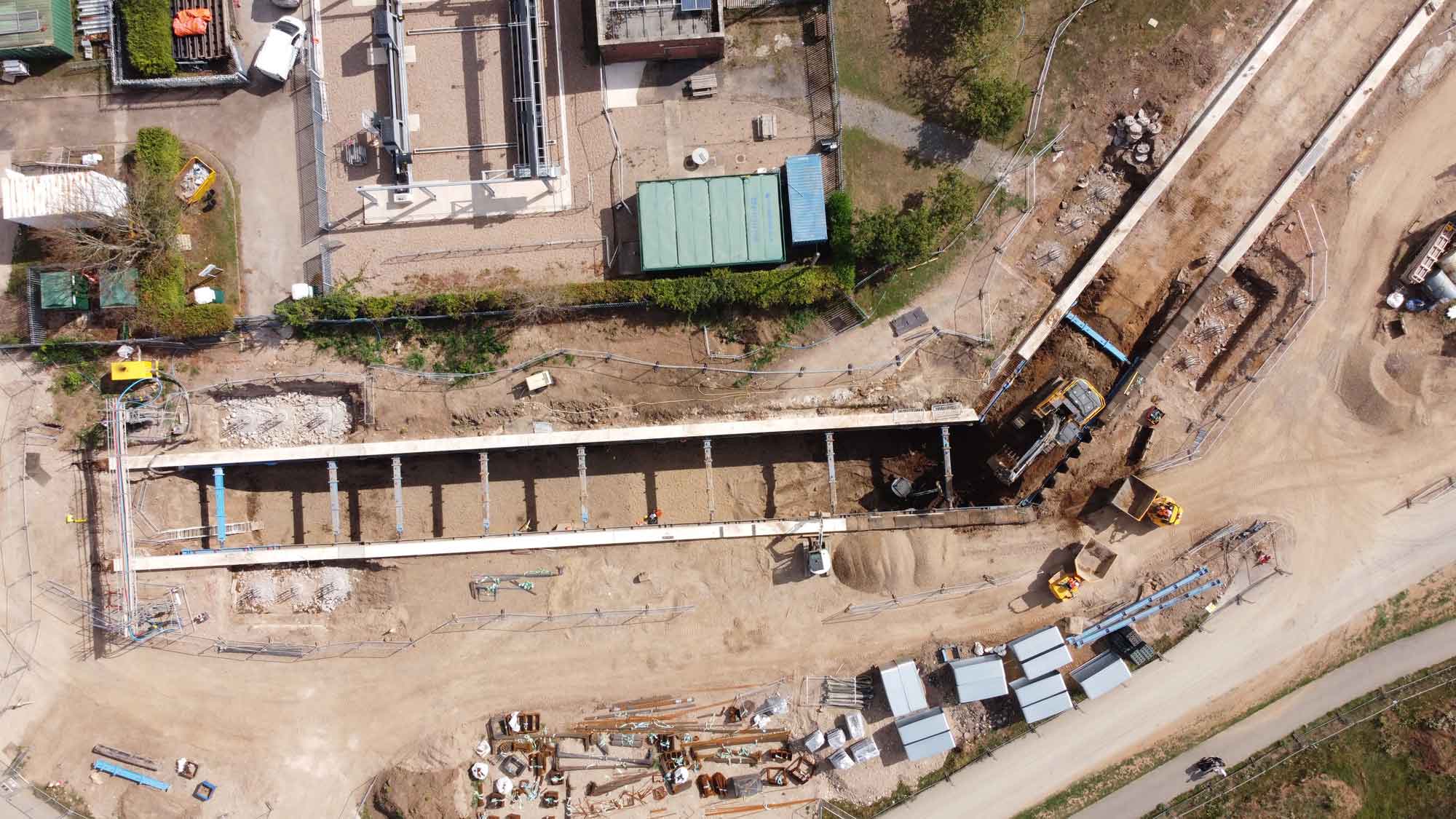
An aerial view of the fish pass at Colwick.
The remodelling of the riverbed and banks was conducted with meticulous care to protect spawning grounds.
Construction was shaped by a deep respect for the river’s ecology.
The remodelling of the riverbed and banks, essential to attract migrating fish, was conducted with meticulous care to avoid pollution and protect spawning grounds. Floodplain risks necessitated just-in-time deliveries and minimal stockpiling, while storms prompted emergency fish rescues, each involving around 1,000 fish.
In total, approximately 13,000 tonnes of material were excavated, with innovative reuse strategies employed throughout.
Over 1,000 trees were planted in and around Colwick Park and Nottingham, contributing to a 5:1 tree replacement ratio and enhancing the wider ecosystem.
The project achieved a rating of ‘Excellent’ from the Building Research Establishment Environmental Assessment Method (BREEAM), putting it within the top 10% of participating sites.
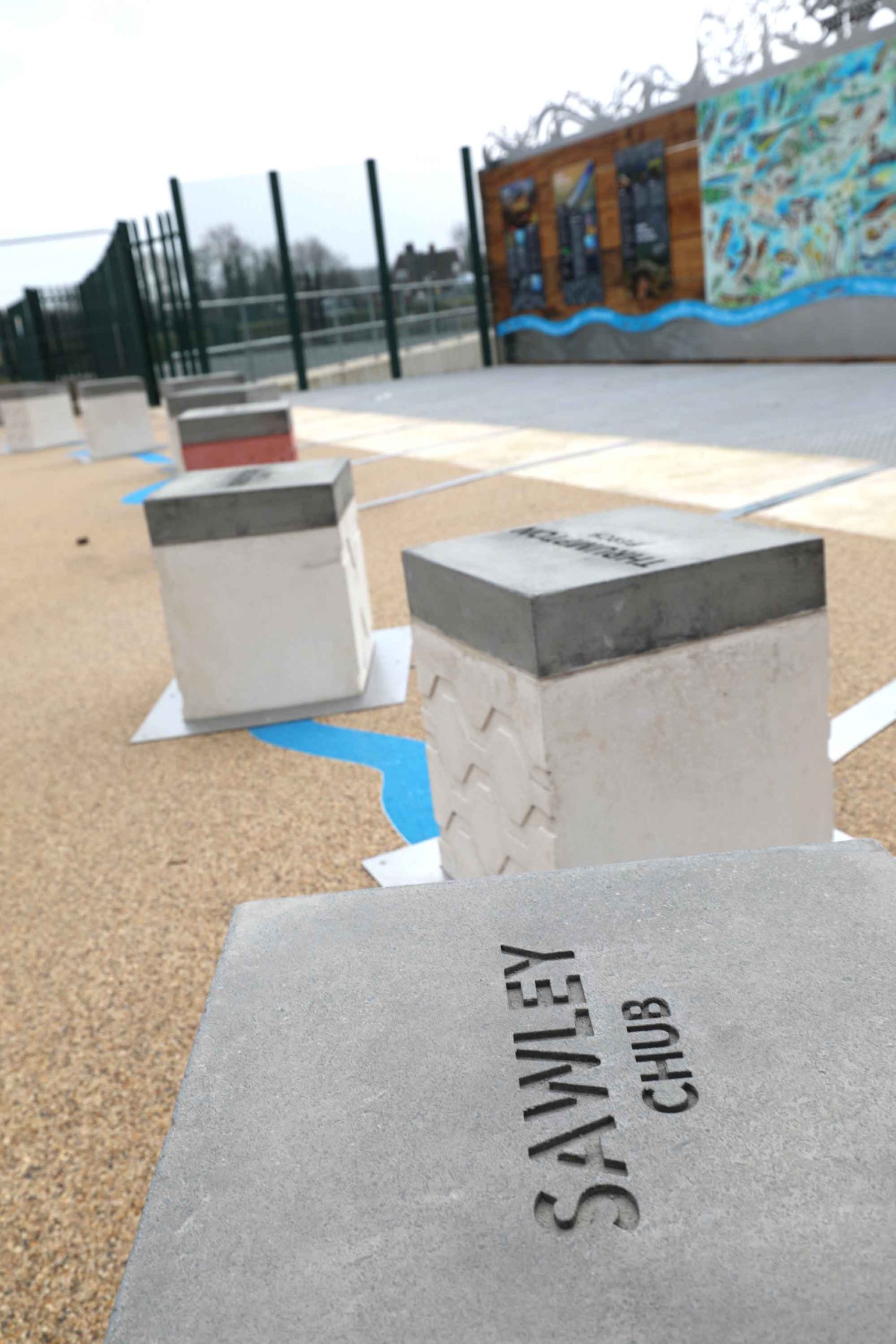
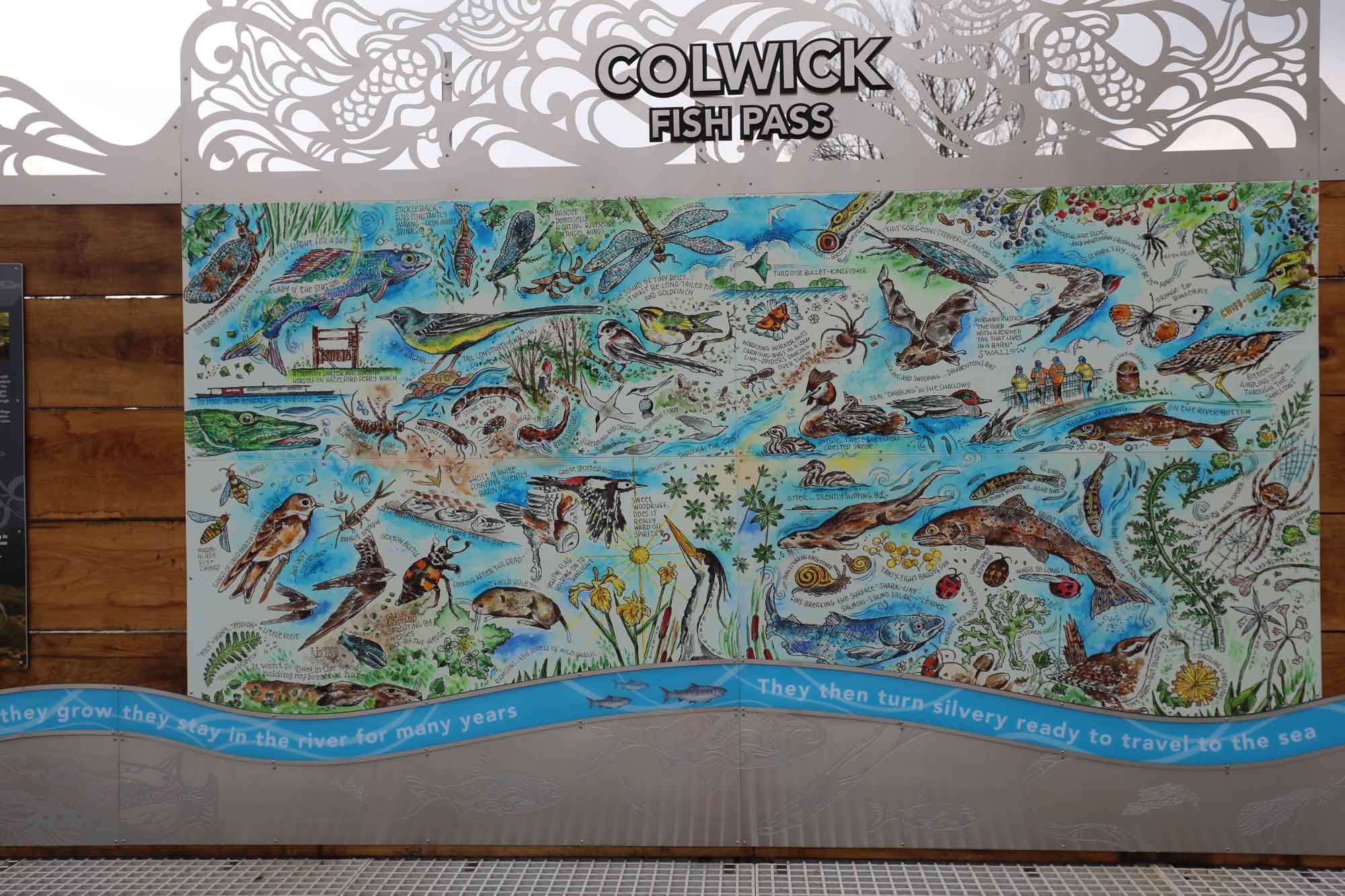
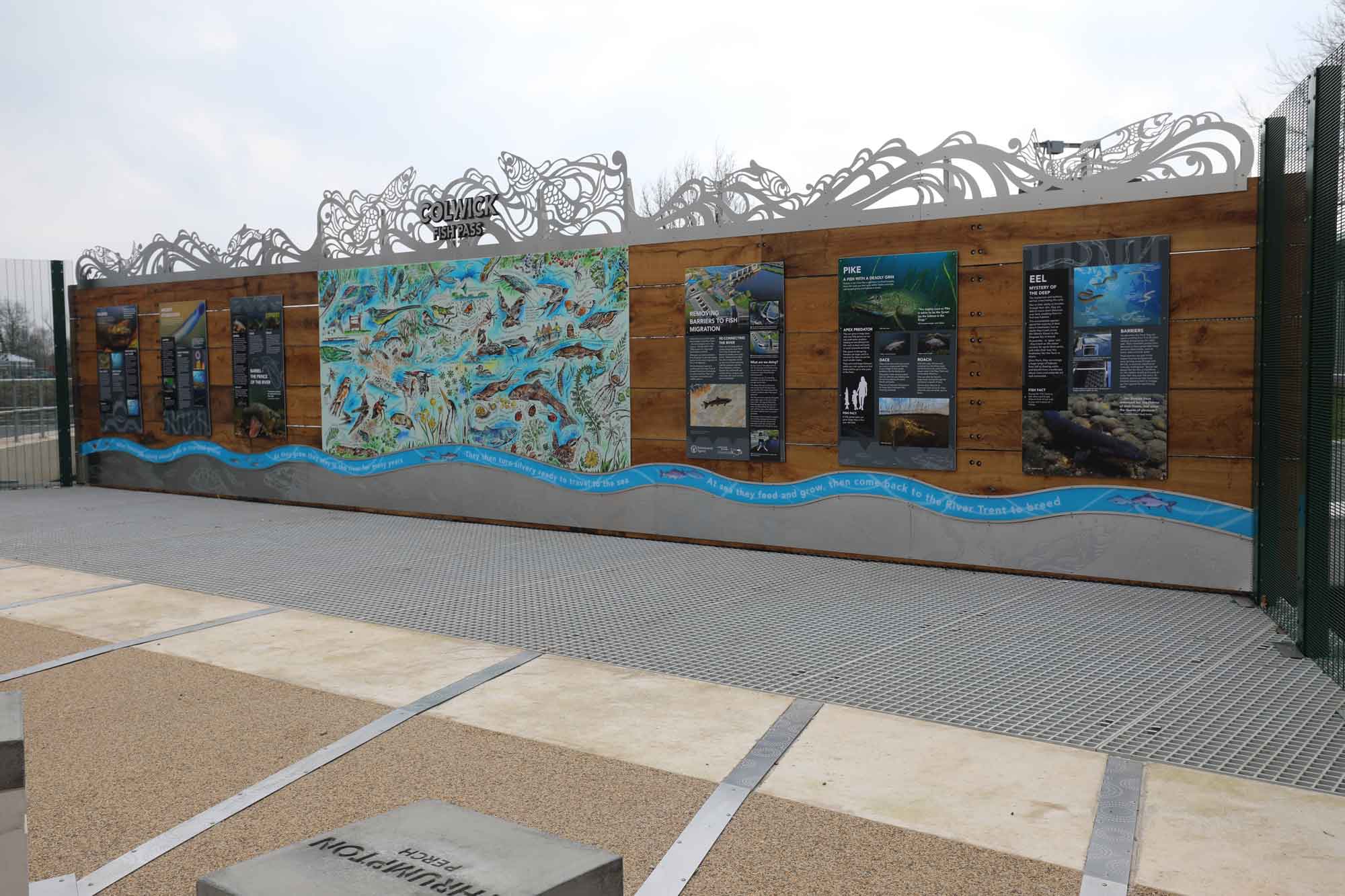
An interpretation area explains the benefits of the fish pass to park visitors.
Community engagement
Environmental engineering projects always attract interest, not least because innovative methods are often employed and complex problems solved in the best way possible to achieve stretching ecological outcomes.
Scores of students benefitted from the project team’s outreach work through engagement events, including hosting trainee engineers and quantity surveyors, and visits from students from local colleges.
An interpretation area provides an attractive space to explain the engineering task and the range of environmental issues and objectives. A reinforced mesh flooring allows visitors to see the channel, and hopefully catch a glimpse of different species passing through.