There's no place like Holme Sluices
Restoration of the largest structure on the River Trent
Refurbishment gives important sluice gates another 25 years of operational life.
Our impact
25yrs
Additional years of operational life
5
Number of sluice gates refurbished
12m
Width of each sluice gate
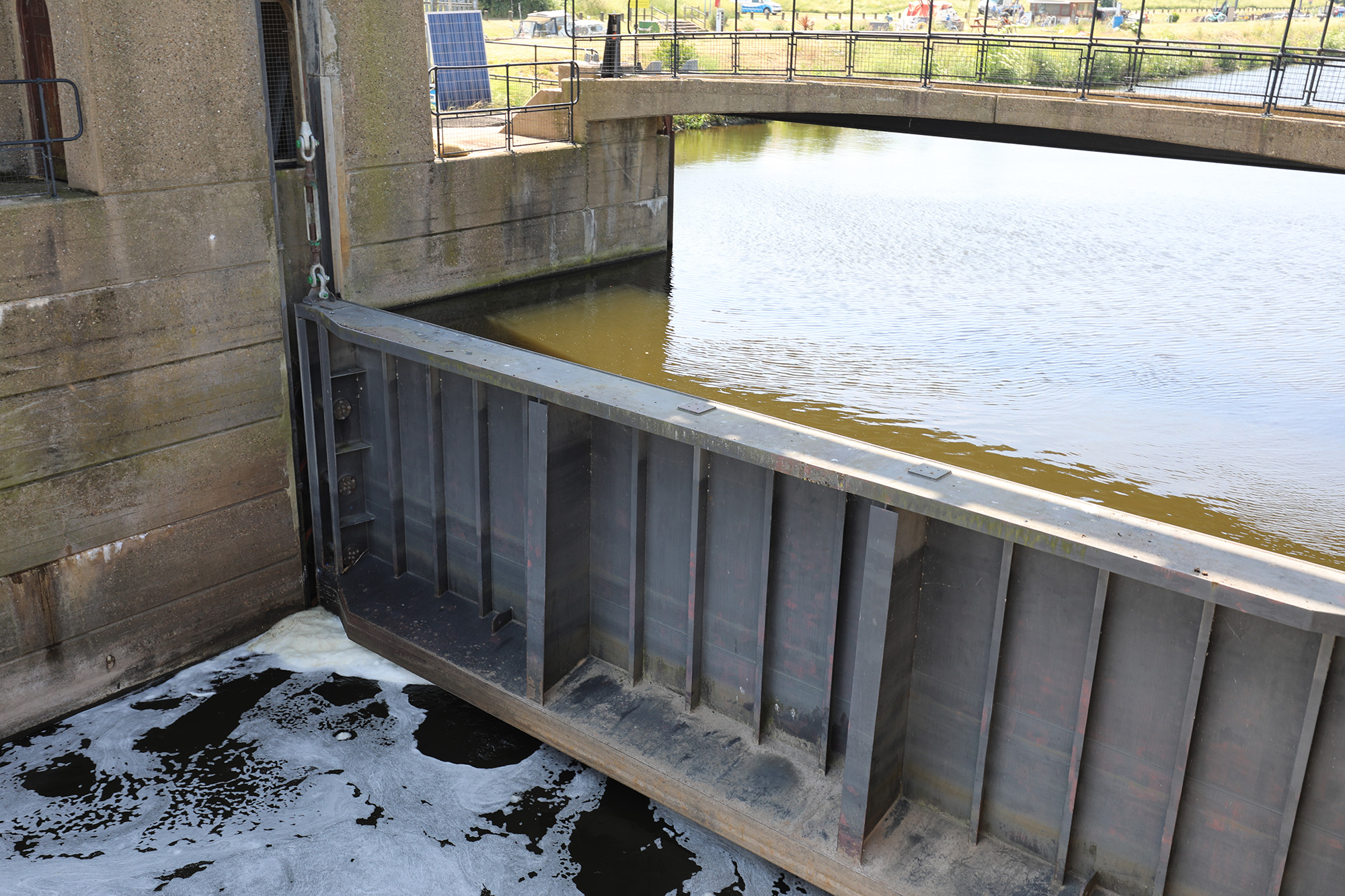
Each control gates is 12 metres wide and five metres high.
A major structure
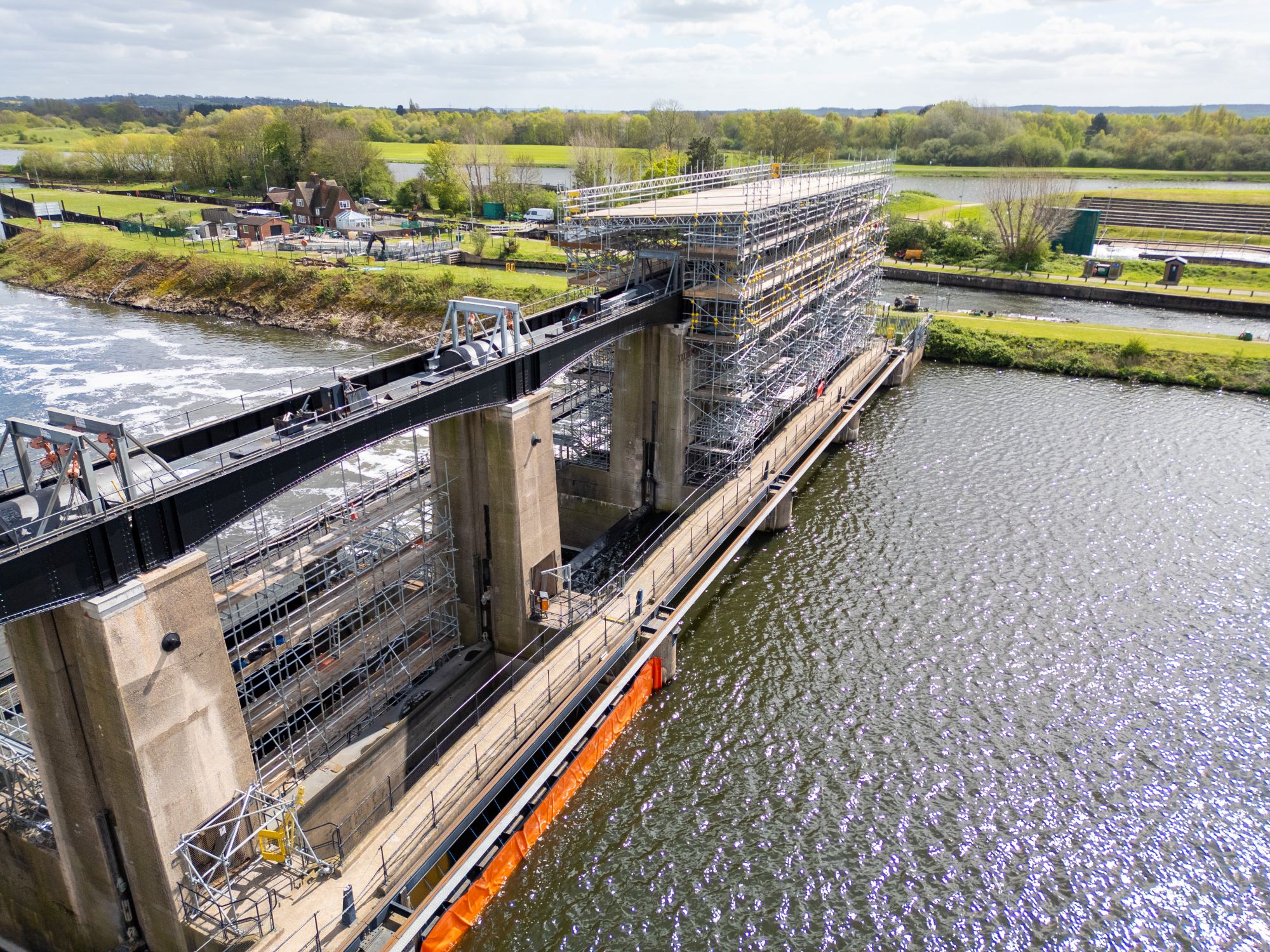
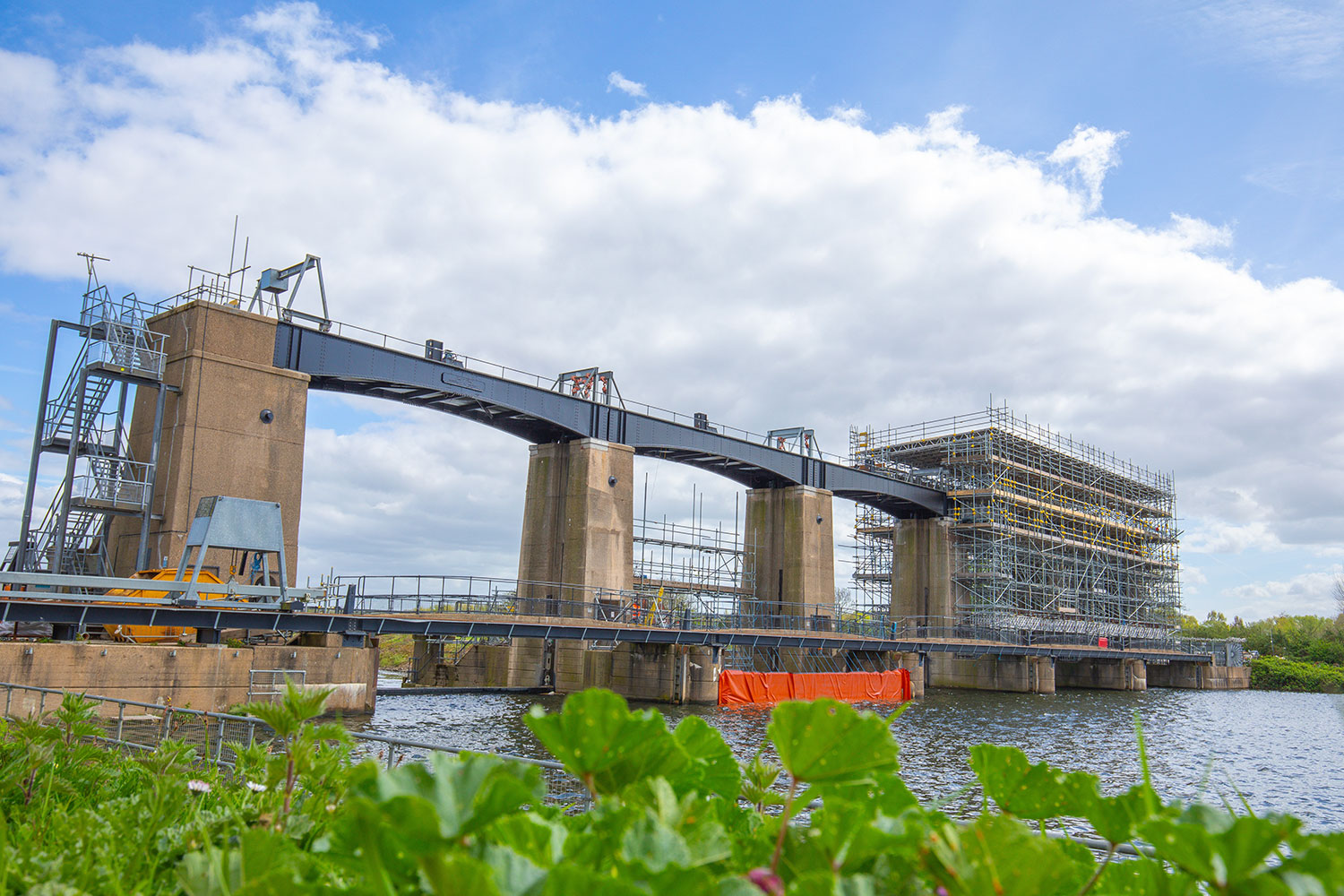
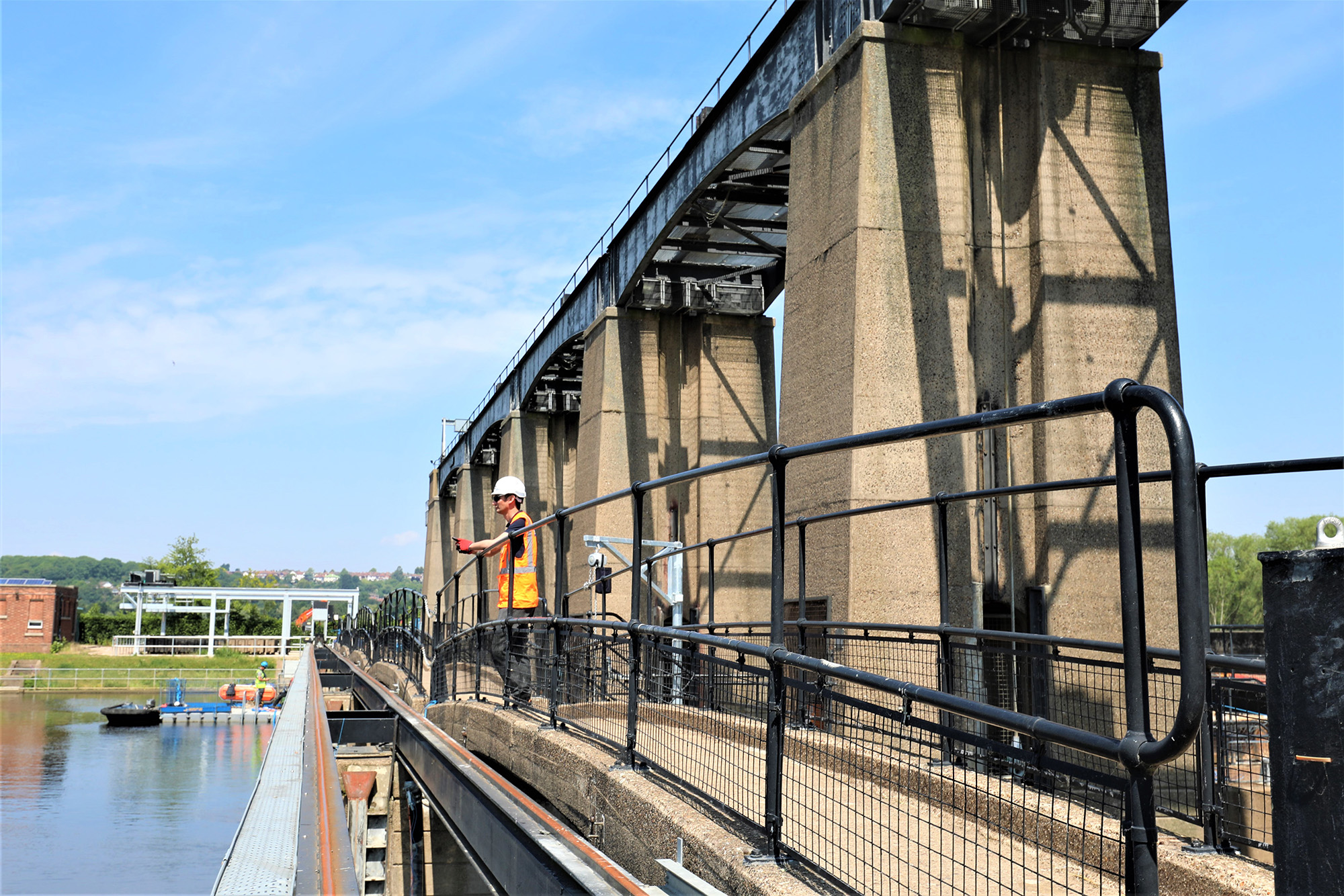
Holme Sluices spans the full width of the River Trent to the south of Nottingham and was built in the 1950s as part of a large-scale flood defence scheme.
It is a major structure owned and operated by the Environment Agency, that helps to protect Nottingham from flooding and controls river levels upstream.
The structure consists of five water flow control gates, each 12 metres wide and five metres high.
Jackson was appointed to oversee a major refurbishment project with the aim of giving the sluices at least another 25 years of operational life.
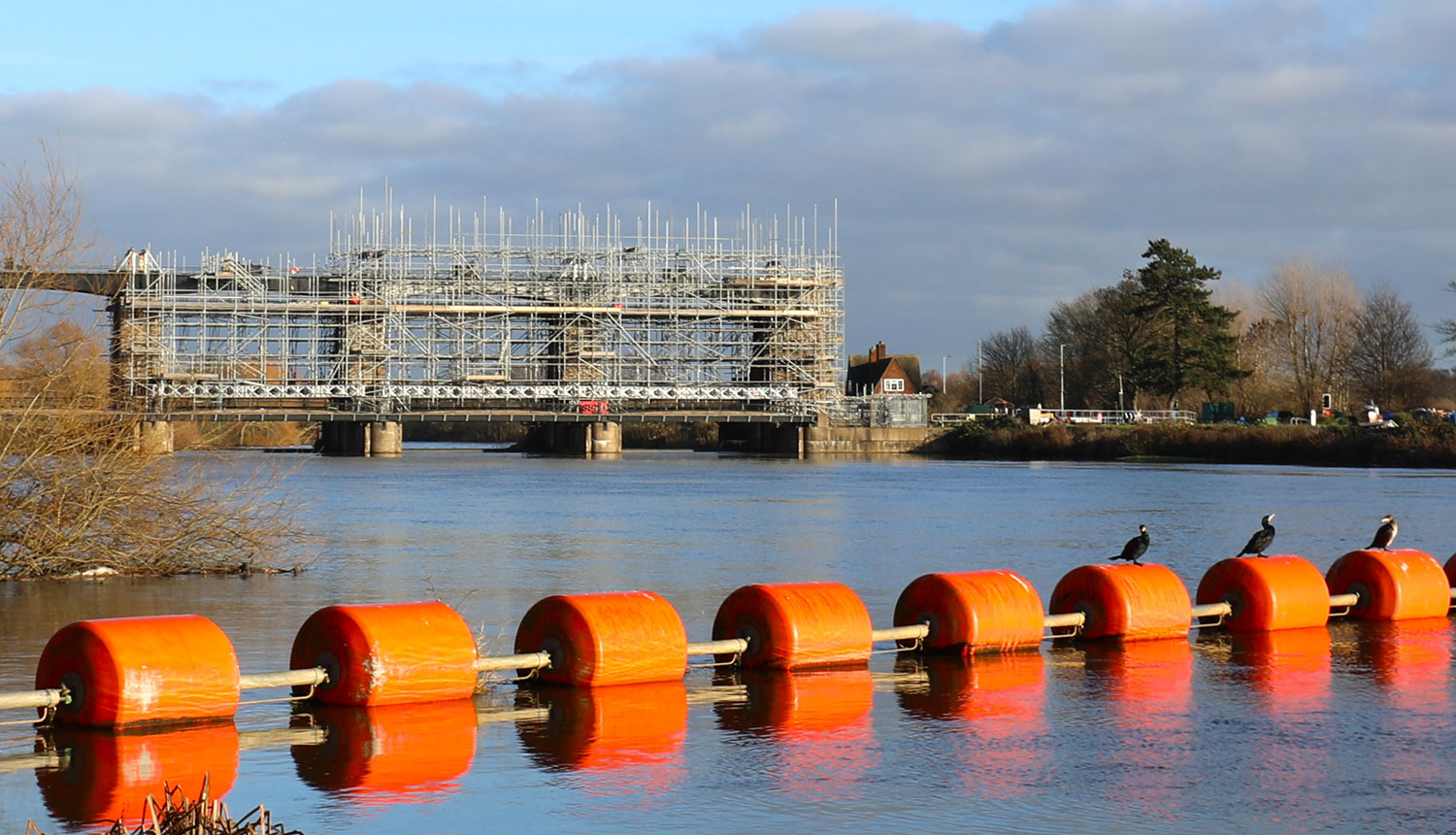
Balancing act: Vehicle movements are restricted to protect wildlife including over-wintering as well as nesting birds.
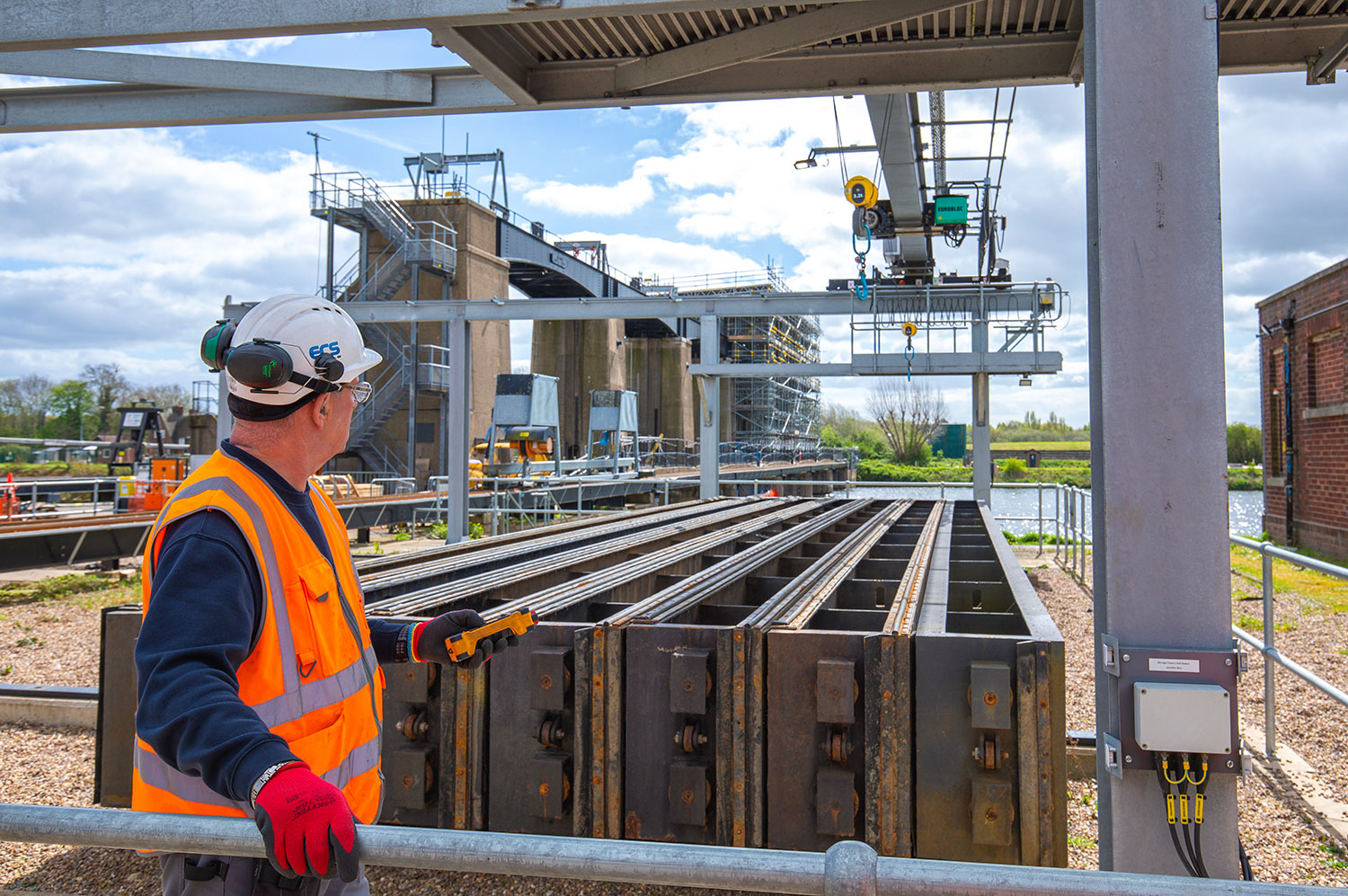
The stop logs can only be positioned between April and October.
Stop logs
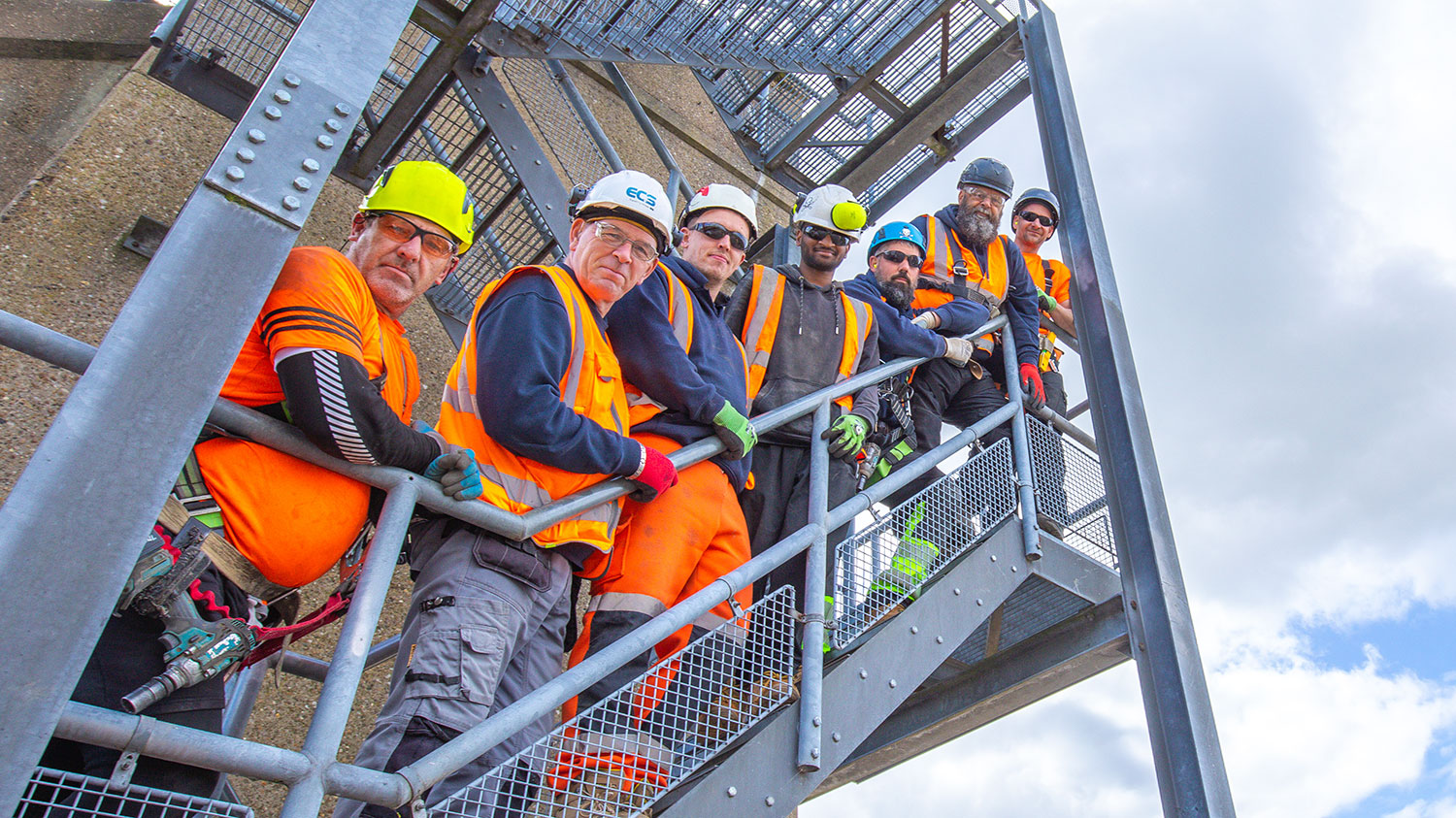
Jackson Civil Engineering is overseeing the project with the work being delivered predominantly by ECS Engineering Services.
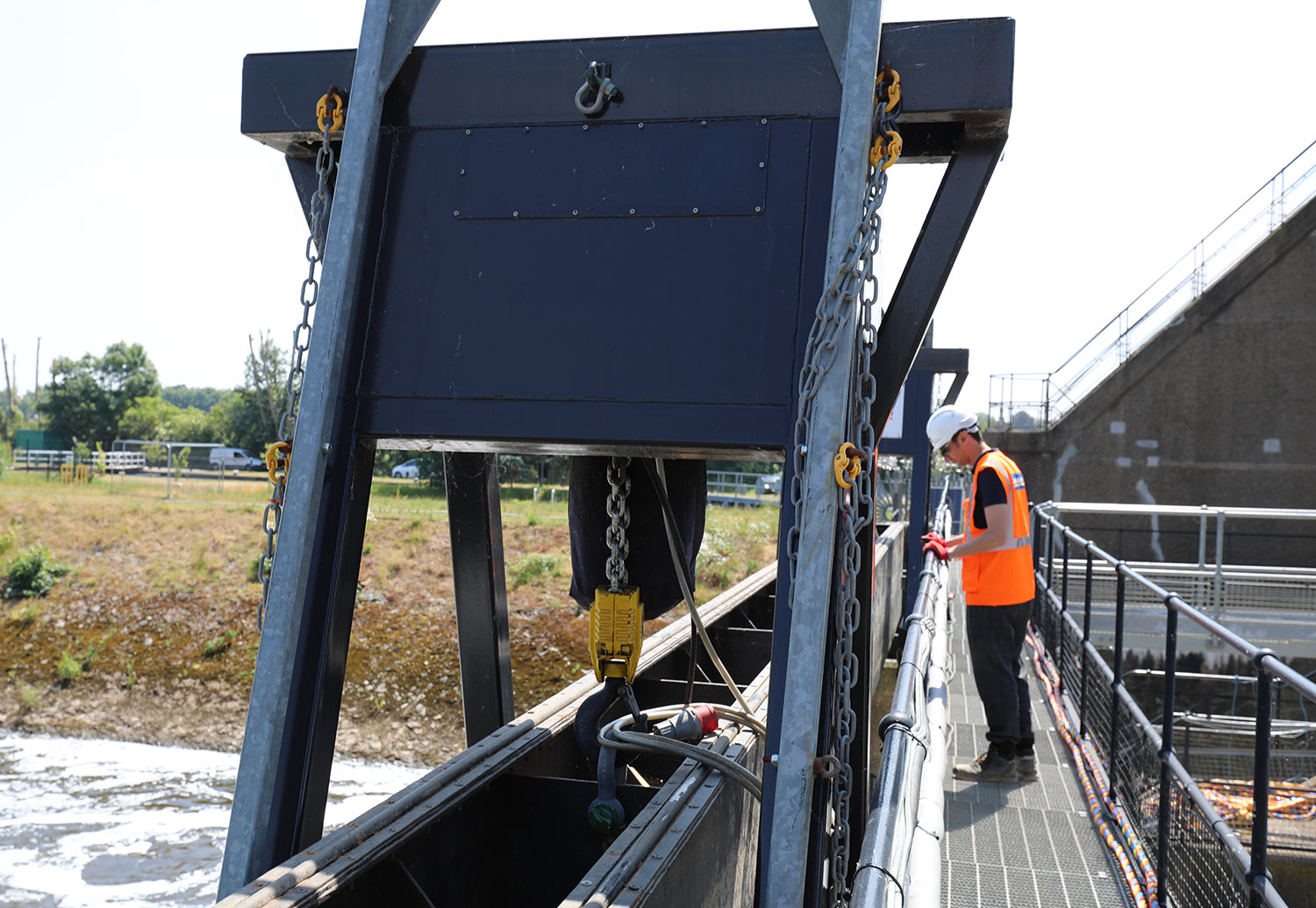
Access to the gates is tricky and they are too heavy and cumbersome to be removed, so they will be refurbished in situ.
In order to refurbish a gate, it must be isolated using stop logs; the water pumped out and the area tented before they are grit-blasted and plate-welded to repair any cracked or worn areas.
The stop logs can only be positioned between April and October because during autumn/winter the expected upturn in rainfall and water flows makes the job too difficult and dangerous.
Renovation process
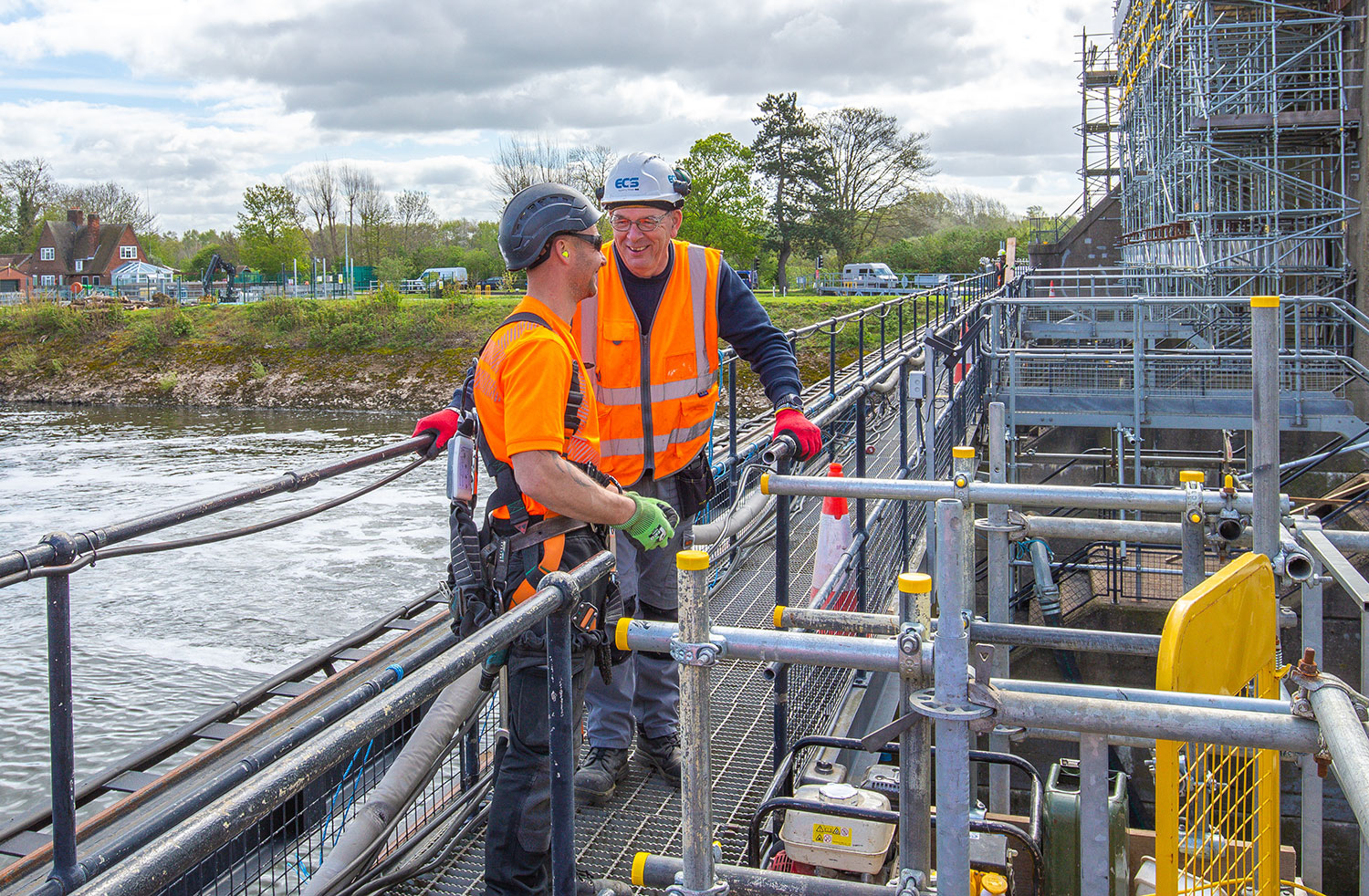
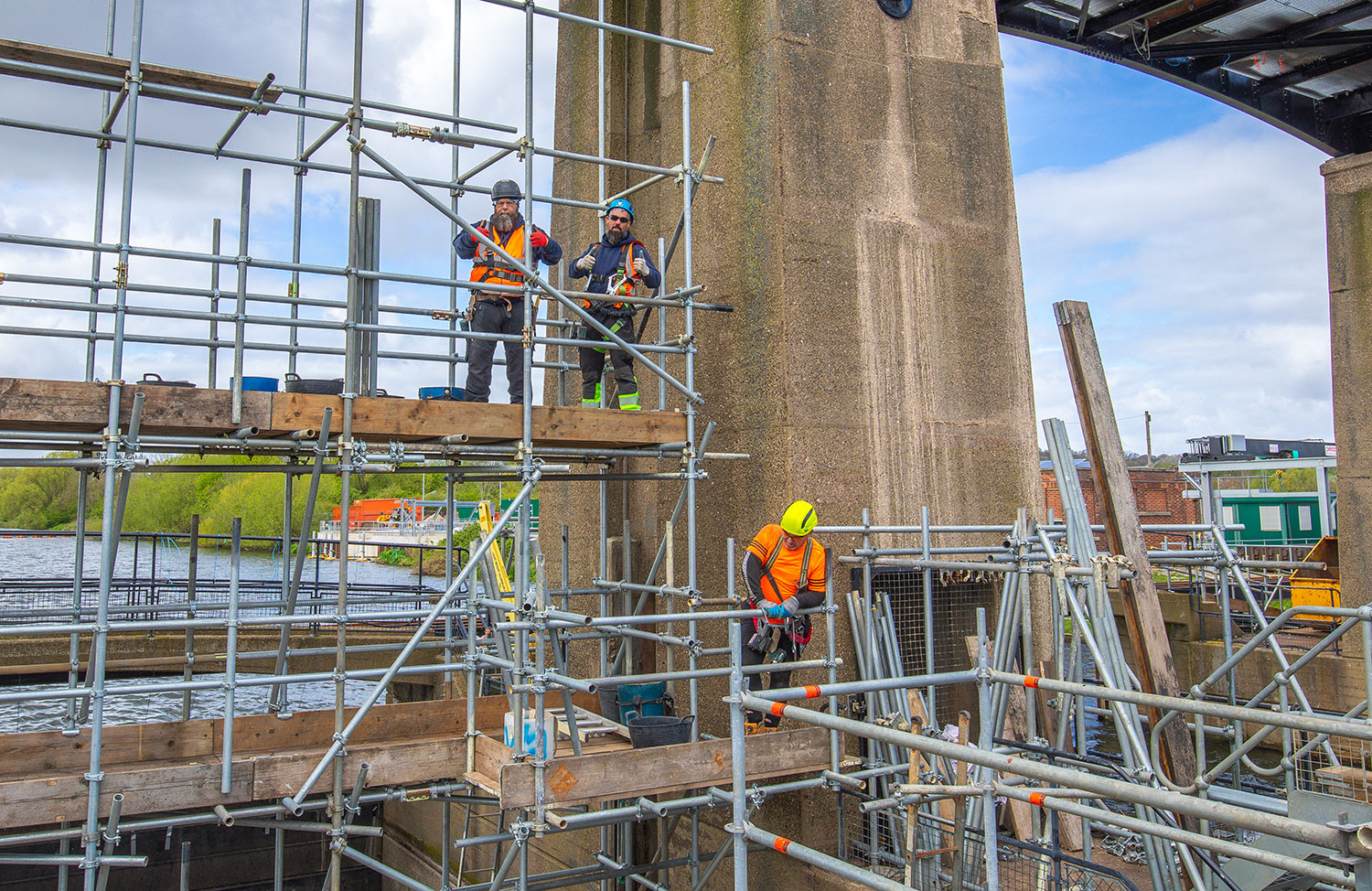
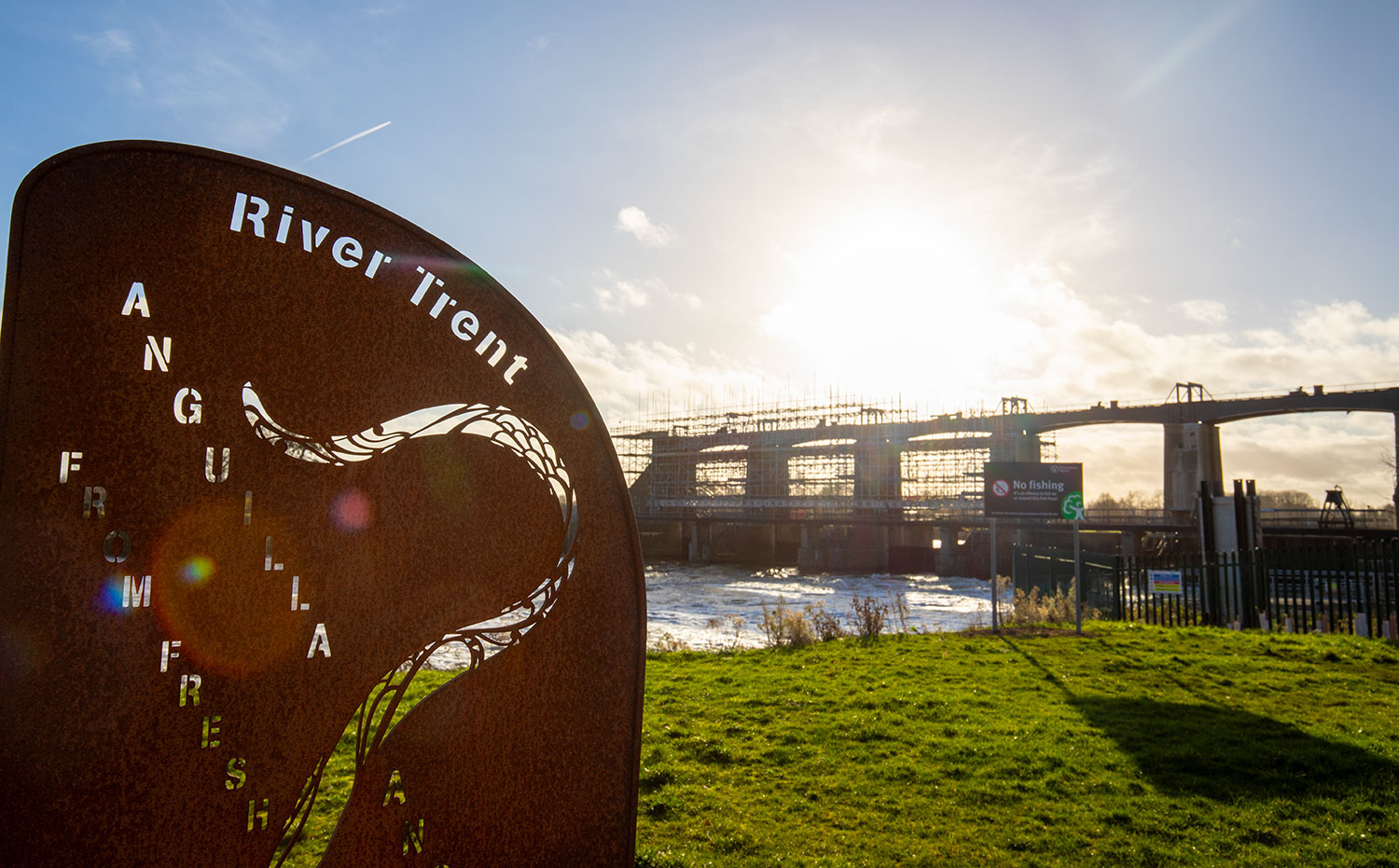
The renovation process, includes the erection of significant scaffolding to enable the inspection, repair, shot-blasting and painting of the five gates gates and the top steel bridge structures.
The bearings, which allow the steel bridges to expand and contract as temperatures change, were also replaced. The old bearings had ceased up and had caused some cracking on the concrete. Threaded tie-rods have been placed through the towers to pull the structure together.
The refurbishment also involved significant underwater works with divers including the installation of new stainless-steel sills for the stop logs to sit on.
Significant scaffolding enabled the refurbishment works.